
Introduction: Meaning, Examples, and How to Use Love Poetry That Touches Hearts
If you’ve ever scrolled through Instagram and paused at a beautifully written couplet expressing love in a way English words couldn’t capture, you’ve likely encountered romantic shyri. This centuries-old art form has found new life in text messages, social media captions, and heartfelt confessions across the United States, especially among those seeking poetic depth beyond typical love quotes.
Romantic shyri is Hindi–Urdu poetry that expresses love, longing, heartbreak, and passion through carefully crafted verses. Born from Persian-Arabic traditions and refined through centuries in South Asia, shayari uses metaphors, specific rhyme patterns, and emotional intensity to communicate feelings that ordinary language often fails to convey.
What Makes Romantic Shyri Different from Regular Poetry?
Unlike free-form Western poetry, romantic shayari follows structured rules. It typically appears in two-line couplets called sher, uses mandatory rhyme schemes (qafia), and includes repeated refrains (radif). The language blends Hindi and Urdu, creating soft, musical sounds that enhance emotional resonance.

Think of shayari as the sophisticated cousin of love quotes. Where English might say “I miss you,” romantic shayari paints the entire emotional landscape: “Tumhari yaadon mein kho jaate hain, hum raat bhar jaag kar bhi so jaate hain” (Lost in your memories, we fall asleep even while staying awake all night).
The beauty lies in layered meaning. A single sher about the moon isn’t just describing celestial bodies—the moon (chaand) represents the beloved’s face, a metaphor understood across generations of Urdu poetry lovers.
The History and Cultural Roots
Romantic shayari traveled from Persia to India during the 12th-13th centuries. The Mughal era (1526-1857) became its golden age, with royal courts hosting mushairas—poetry gatherings where poets recited their work to appreciative audiences who would exclaim “Wah wah!” at particularly moving verses.
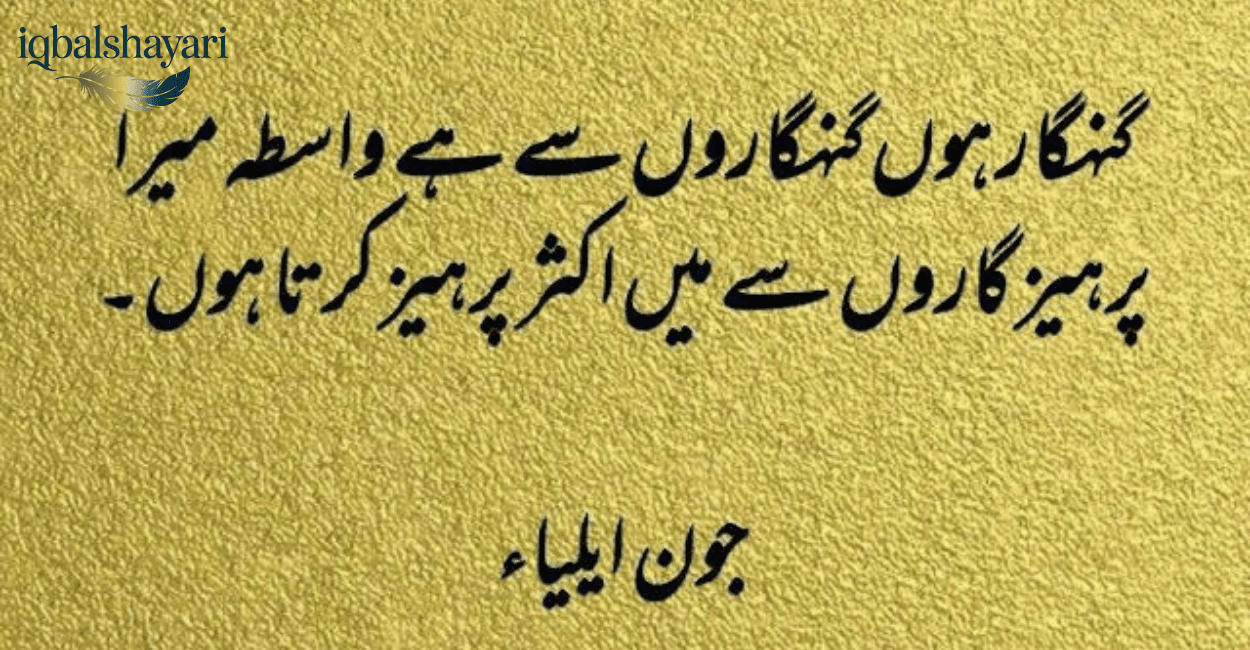
Classical masters like Mirza Ghalib (1797-1869) and Mir Taqi Mir (1723-1810) elevated romantic shayari to high art. Ghalib’s complex metaphors and philosophical depth made him legendary, while Mir earned the title “King of Romance” for his emotionally direct verses about love and separation.
Modern poets like Gulzar, Faiz Ahmed Faiz, and Javed Akhtar adapted the tradition for contemporary audiences. Bollywood integrated shayari into film songs, making it accessible to millions who might never attend a traditional mushaira. Today, romantic shayari thrives on WhatsApp statuses, Instagram captions, and text messages—ancient art meeting digital communication.
Types of Romantic Shayari You Should Know
Ghazal
The ghazal consists of 5-15 rhyming couplets, each standing independently while sharing the same meter and rhyme scheme. Every couplet tells its own story about love, making ghazals perfect for exploring different facets of romance within one poem. The last couplet traditionally includes the poet’s pen name (takhallus).
Sher (Couplet)
The basic building block: two lines with complete meaning. A sher works as standalone poetry, making it ideal for text messages or social media. The first line sets up the emotion or scene; the second delivers insight or emotional payoff.
Example: “Ishq ek ehsaas hai, sirf lafz nahi / Dil ki zubaan samajhna asaan nahi” (Love is a feeling, not just words / Understanding the heart’s language isn’t easy)
Nazm
Unlike ghazals with independent couplets, nazms tell one continuous story or explore a single theme throughout. Think of them as narrative love poetry with a beginning, middle, and end. Modern romantic shyri often uses this format for longer emotional journeys.
Rubaiyat
Four-line verses (rubaiyat) offer complete thoughts in compact form. Made famous by Omar Khayyam, these quatrains work beautifully for greeting cards or special occasion messages where you want substance without excessive length.
Famous Romantic Shayari Poets You’ll Encounter
Mirza Ghalib remains the most celebrated name. His work explores love’s philosophical dimensions—why we love, what it costs, and how it transforms us. His verses require contemplation but reward readers with profound insights.
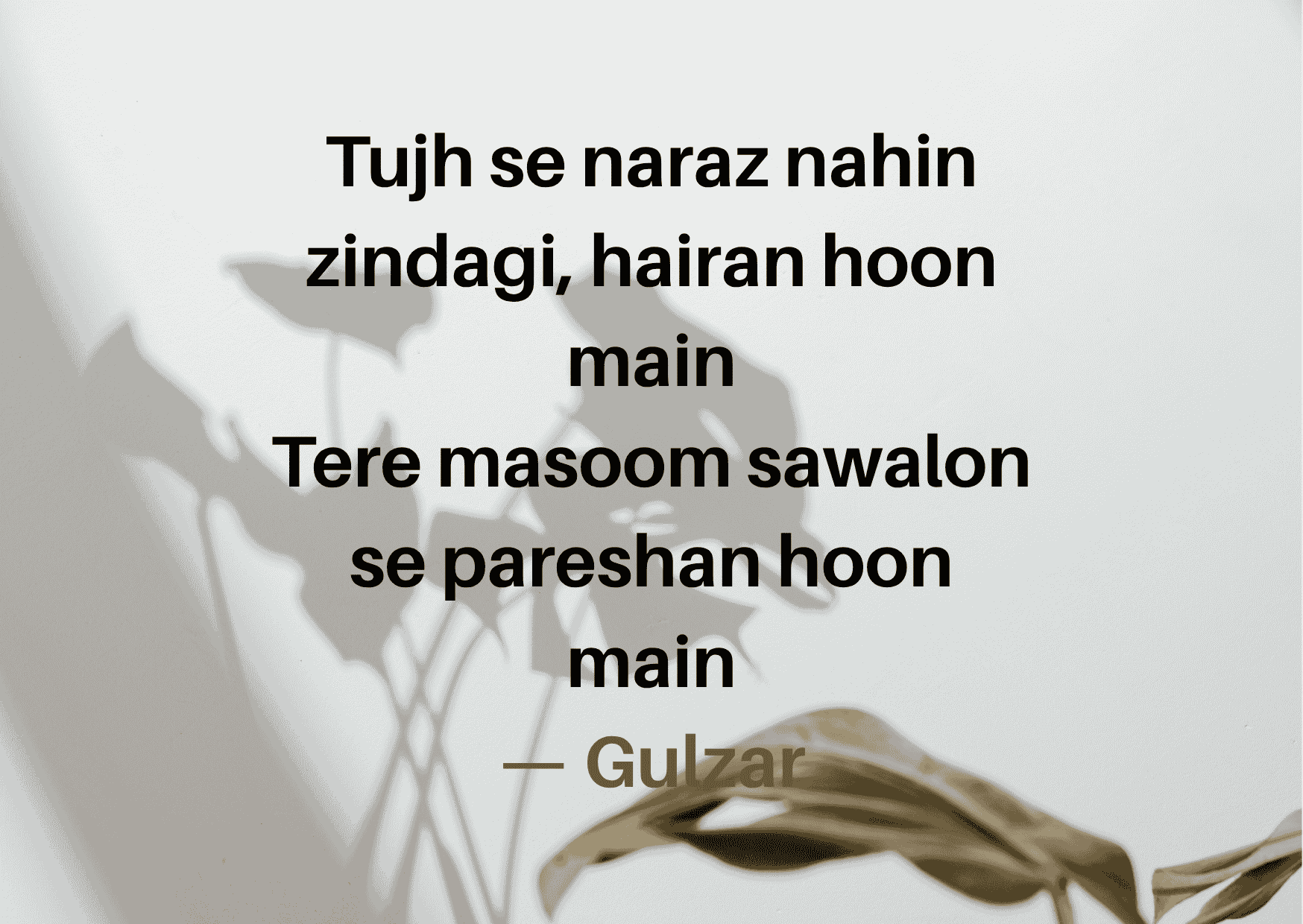
Gulzar dominates modern romantic shyri. His simple language and accessible metaphors make complex emotions understandable. As a Bollywood lyricist, his work reaches audiences who might find classical Urdu poetry intimidating. Lines like “Tere bina zindagi se koi shikwa to nahi” (I have no complaints about life without you) balance melancholy with acceptance.
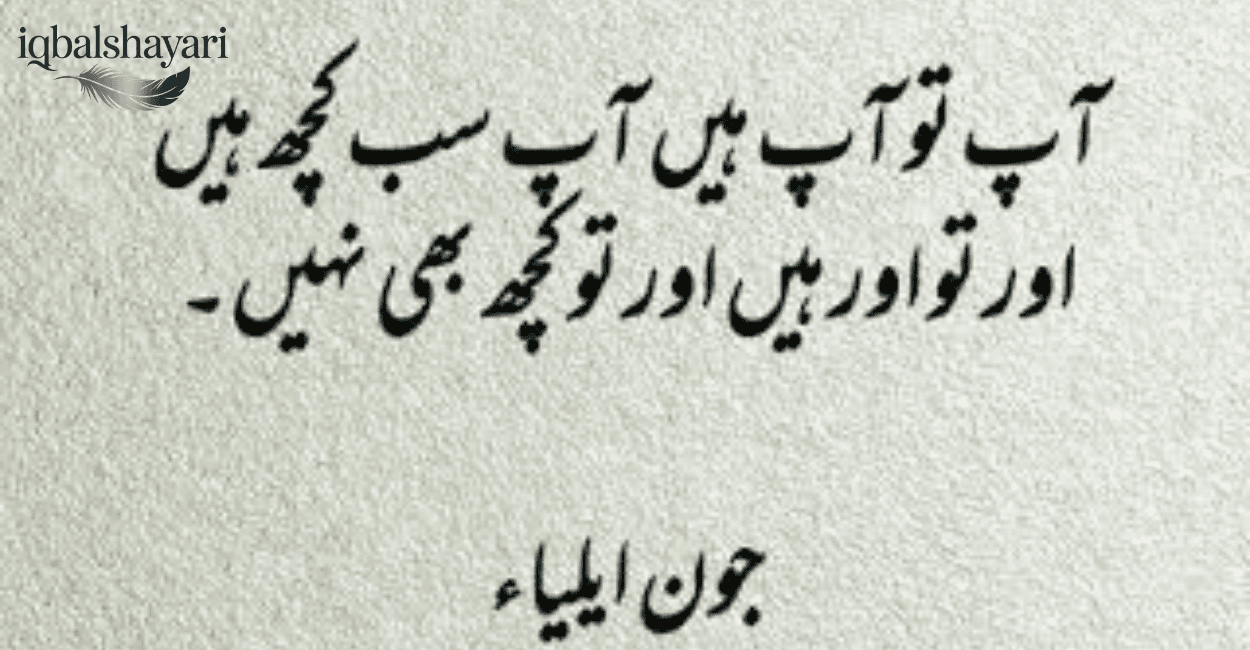
Faiz Ahmed Faiz merged revolutionary politics with romance. His poetry speaks to lovers and freedom fighters alike, using romantic metaphors to discuss broader human yearnings. Parveen Shakir brought female perspectives to romantic shyri, writing from women’s experiences in ways male poets hadn’t.
Contemporary voices like Kumar Vishwas and Wasim Barelvi keep traditional forms alive while addressing modern relationship dynamics—long-distance love, digital communication, and contemporary dating challenges.
How to Write Your Own Romantic Shyri
Start With Genuine Emotion
Authentic romantic shyri comes from real feelings, not forced rhymes. Identify your specific emotion: first love’s excitement, separation’s pain, or years-together contentment. Generic feelings produce generic poetry.
Choose Your Format
Beginners should start with two-line shers. They’re manageable, instantly shareable, and teach fundamental skills. Once comfortable, experiment with four-line rubaiyat or attempt full ghazals.
Use Traditional Metaphors
Romantic shayari has established symbolic language. The moon (chaand) represents the beloved’s face. Stars (sitare) symbolize eyes or destiny. The heart (dil) is emotions’ center. Tears (aansu) express separation’s pain. Using these shared metaphors connects your work to centuries of tradition while making meaning clear to other shayari enthusiasts.
Establish Rhythm
Read classical shayari aloud until you internalize the meter (bahr). Count syllables. Tap out rhythms. Urdu poetry’s musicality comes from consistent patterns. Your first line’s rhythm must match your second’s.
Craft the Turn
Great shers setup expectations in line one, then deliver insight or emotional twist in line two. The second line shouldn’t just rhyme—it should deepen, complicate, or resolve the first line’s emotion.
Setup: “Mohabbat mein logon ne sabr khoya” (In love, people lost patience)
Payoff: “Hum toh tumhare intezar mein boya” (We planted seeds in waiting for you)
The second line transforms impatience into cultivation, loss into growth.
Avoid Common Mistakes
Don’t sacrifice meaning for rhyme. Forced rhyming destroys authenticity. Don’t overuse clichés—every moon-face comparison needs fresh context. Don’t break meter inconsistently. Don’t plagiarize famous poets without credit.
When and How to Use Romantic Shayari
Text Messages and Daily Communication
Romantic shayari elevates ordinary “good morning” texts into memorable moments. Keep selections short—two to four lines maximum. Match complexity to your relationship stage. Save elaborate ghazals for established relationships; simpler shers work for newer connections.
Morning messages might use: “Subah teri yaadon se hoti hai shuru / Din bhar tera intezar hota hai” (Morning begins with your memories / All day I await you)
Social Media and Instagram
Romantic shayari performs exceptionally well on visual platforms. Pair verses with aesthetic imagery—rain, sunsets, coffee shops. Use relevant hashtags: #RomanticShayari #LovePoetry #UrduPoetry #HindiShayari.
Credit original poets when sharing their work. For classical poetry (pre-1920s), attribution shows respect even though it’s public domain. Modern shayari often has copyright, so credit prevents issues.
Special Occasions
Valentine’s Day calls for passionate declarations. Anniversaries suit reflective poetry about journey and growth. Proposals need personalized shayari that references your specific relationship. Apologies require humble, sincere verses acknowledging mistakes.
Birthday wishes: “Janamdin mubarak ho jaan-e-jahaan / Tum jio hazaaron saal, yahi dua hai” (Happy birthday, love of my world / May you live thousands of years, this is my prayer)
What to Avoid
Don’t use romantic shyri in professional settings unless you’re absolutely certain it’s appropriate. Don’t overwhelm—one thoughtful sher beats five mediocre ones. Don’t use complex Urdu in situations where translations aren’t available. Don’t share shayari about heartbreak immediately after someone else’s breakup unless they’ve expressed interest in such poetry.
Understanding Cultural Sensitivity
If you’re not from South Asian background, using romantic shayari requires thoughtful approach. Appreciation differs from appropriation through genuine engagement. Learn meanings, understand context, and credit sources.
Urdu carries Islamic cultural influences. Some shayari references Sufi mysticism or religious imagery. Understanding these contexts prevents misuse. When in doubt, stick with secular romantic shayari focused purely on human emotions.
Pronunciation matters. If sharing verbally, learn correct pronunciation or stick to written forms. Mispronouncing Urdu poetry can seem disrespectful, like badly butchering French at a bistro.
For Americans in intercultural relationships, romantic shayari can bridge cultural gaps beautifully. It shows effort to understand your partner’s heritage while expressing feelings in language carrying special significance for them.
Beautiful Romantic Shayari Examples
For Expressing Deep Love
Tumse ishq karke dekha hai humne
Zindagi ko zinda hote dekha hai
(Having fallen in love with you
I’ve seen life come alive)
Tum ho toh sab kuch hai
Warna zindagi ek khali kitab hai
(With you, everything exists
Otherwise life is an empty book)
For Longing and Distance
Door rehkar bhi tumhe paas mehsoos karte hain
Har saans mein tumhari khushbu ko talaash karte hain
(Even far away, I feel you near
In every breath I search for your fragrance)
Faasle hain lekin ehsaas tumhara paas hai
Tum yahaan nahi, magar dil mein tumhara vaas hai
(Distance exists but your presence is close
You’re not here, but in my heart you reside)
For First Love
Pehli mohabbat ka asar kuch alag hota hai
Dil ke samandar mein toofan-e-naya chalta hai
(First love’s effect is different
A new storm flows in the heart’s ocean)
For Marriage and Long-term Love
Saal guzar gaye saath chalte chalte
Pyaar badhta gaya yun milte milte
(Years passed walking together
Love grew thus, meeting and meeting)
Short Shayari for WhatsApp Status
Teri muskaan meri dua
Tera saath meri justaju
(Your smile is my prayer
Your company is my quest)
Tools and Resources for Learning
Rekhta.org offers the largest digital archive of Urdu poetry, including thousands of romantic shayari examples with translations and audio recitations. Search by poet, theme, or keyword.
Mobile apps like “Shayari Studio” and “Hindi Shayari” provide categorized collections perfect for quick browsing. Most include sharing features optimized for social platforms.
YouTube channels offer pronunciation guides crucial for non-Urdu speakers. Channels featuring mushaira recordings let you hear how poets perform their work, teaching rhythm and emphasis.
For serious learners, universities like Columbia, University of Texas at Austin, and University of Chicago offer Urdu language programs. Online platforms like Udemy host introductory courses ranging from free to $200.
The Bollywood Connection
Bollywood transformed romantic shayari from elite art to mass phenomenon. Film songs by Gulzar, Javed Akhtar, and Irshad Kamil introduced Urdu poetry to audiences who might never read classical collections.
Songs like “Tum Hi Ho” or “Tujhe Kitna Chahne Lage” use shayari structures even when sung in simpler Hindi. This accessibility made romantic shayari part of everyday romantic expression across South Asia and its diaspora.
The challenge: Bollywood also produced simplified, sometimes generic shayari that lacks classical depth. Learning to distinguish quality classical work from mass-market simplifications develops with exposure and study.
FAQs About Romantic Shyri
What is the difference between shayari and poetry?
Shayari is a specific form of Urdu-Hindi poetry that follows structured rules including mandatory rhyme schemes, meters, and traditional metaphors. While all shayari is poetry, not all poetry is shayari—Western free verse, for example, lacks the formal constraints that define shayari.
Can I write romantic shayari in English?
Yes, but it loses cultural authenticity and musical quality inherent to Urdu-Hindi. English translations exist and help non-speakers understand meaning, but romantic shayari’s emotional power comes from the original language’s sounds and cultural context.
How do I know if my shayari is good?
Good romantic shayari has consistent meter, meaningful rhyme (not forced), emotional authenticity, and delivers insight or emotional payoff in the second line. Share with Urdu poetry enthusiasts for feedback, or compare against classical examples to develop your judgment.
Is it okay to use romantic shayari if I’m not South Asian?
Yes, when approached respectfully. Learn meanings, credit sources, understand cultural context, and avoid misusing religious or cultural references. Appreciation becomes appropriation when divorced from understanding and respect.
What’s the best romantic shayari for a wedding card?
Choose shayari celebrating commitment, partnership, and lifelong love. Avoid heartbreak or separation themes. Traditional wedding shayari wishes happiness, prosperity, and eternal togetherness: “Do dilon ka milan ho, ek jaan do jism / Sadiyon tak rahe yeh pyaar ka mausam” (Two hearts unite, one soul two bodies / May this season of love last centuries).
How can I learn to pronounce Urdu words correctly?
Use resources like Rekhta.org with audio recitations, YouTube channels dedicated to Urdu poetry, or language learning apps. Listen repeatedly to native speakers and practice pronunciation guides. Many mushaira recordings demonstrate proper emphasis and rhythm.
What are the most romantic words in Urdu?
Common romantic Urdu words include: ishq (love/passion), mohabbat (love), jazbaat (emotions), pyaar (love), dil (heart), yaadon (memories), intezar (waiting), chaand (moon/beloved), khwab (dreams), and judaai (separation). These words carry emotional weight beyond literal translations.
Can romantic shayari help in long-distance relationships?
Absolutely. Romantic shyri about longing, distance, and emotional connection resonates powerfully in long-distance relationships. Sharing thoughtful shers maintains emotional intimacy, demonstrates effort, and provides poetic language for feelings that simple texts can’t capture.
Conclusion
Romantic shyri offers timeless elegance for expressing love in the digital age. Whether you’re writing your own verses, sharing classical poetry, or simply appreciating the art form, this Hindi-Urdu tradition provides emotional depth that transcends language barriers.
Start by reading classical masters like Mirza Ghalib and modern voices like Gulzar. Practice writing simple two-line shers from genuine emotion. Share thoughtfully on social media and in personal messages. Most importantly, approach romantic shayari with respect for its cultural roots and centuries of refinement.
The beauty of romantic shayri lies not in perfection but in authentic expression. Your first attempts may be imperfect, but sincerity resonates more than technical mastery. As you immerse yourself in this poetic tradition, you’ll discover why millions find shayari the most beautiful way to speak the heart’s language.