
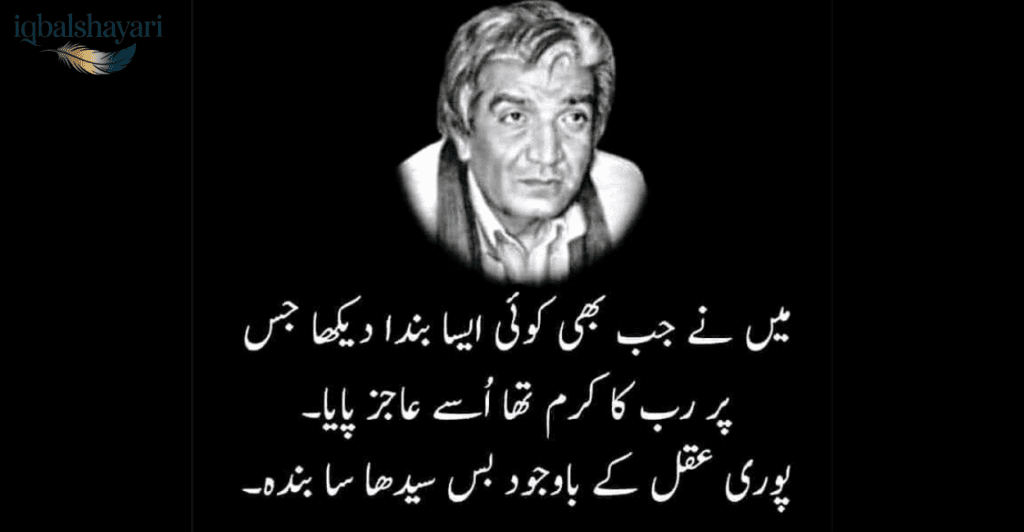
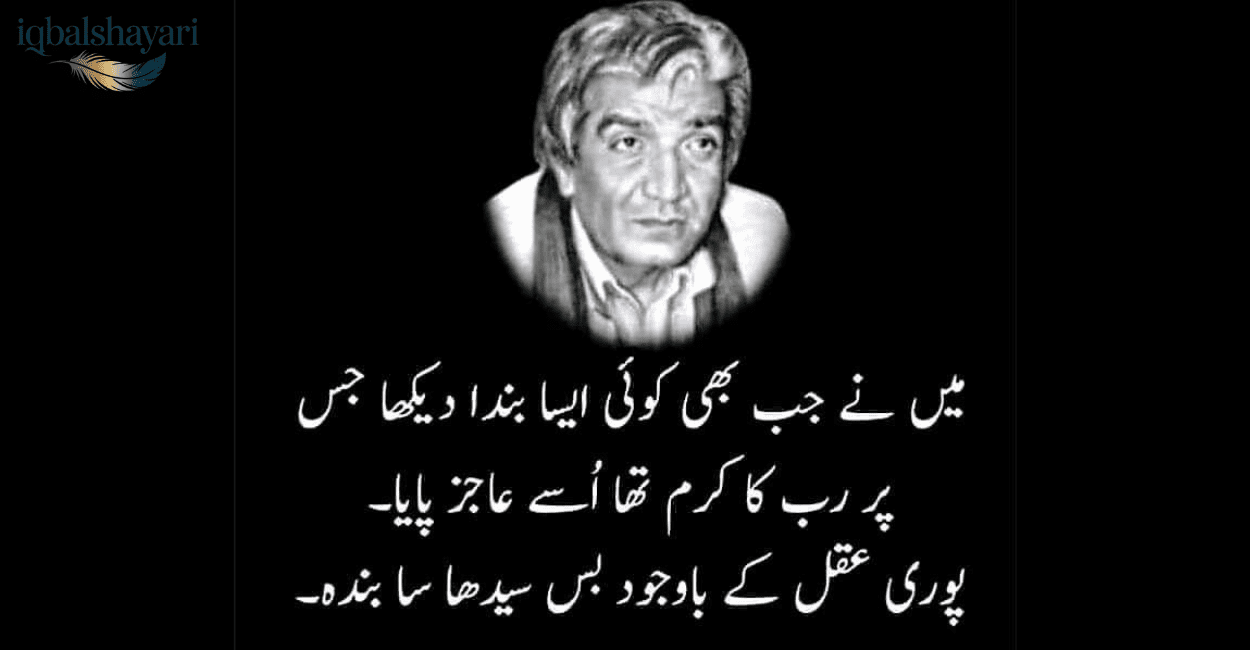
Introduction: The Life and Legacy of Pakistan’s Master of Aphoristic Wisdom
When Wasif Ali Wasif passed away on January 18, 1993, Pakistan lost more than just a writer. The nation mourned a spiritual guide whose words had become proverbs, a teacher who chose wisdom over prestige, and a mystic whose simple prose held the depth of oceans. Today, decades after his death, his aphorisms remain the most quoted in contemporary Urdu literature, and his books continue to guide seekers across continents.
Wasif Ali Wasif was born Malik Muhammad Wasif on January 15, 1929, in Khushab, a small town in Punjab, Pakistan. From these humble beginnings emerged a literary giant whose “Wasifian style” would redefine how profound spiritual truths could be expressed through breathtakingly brief prose.
Early Life and the Seeds of Wisdom
Wasif Ali Wasif’s early years in Khushab were shaped by his family’s Awan clan heritage and his father’s influence. His father provided him with traditional religious education, while his maternal grandfather played a significant role in his upbringing. This dual foundation—Islamic scholarship and familial wisdom—would later blossom into his unique philosophical voice.
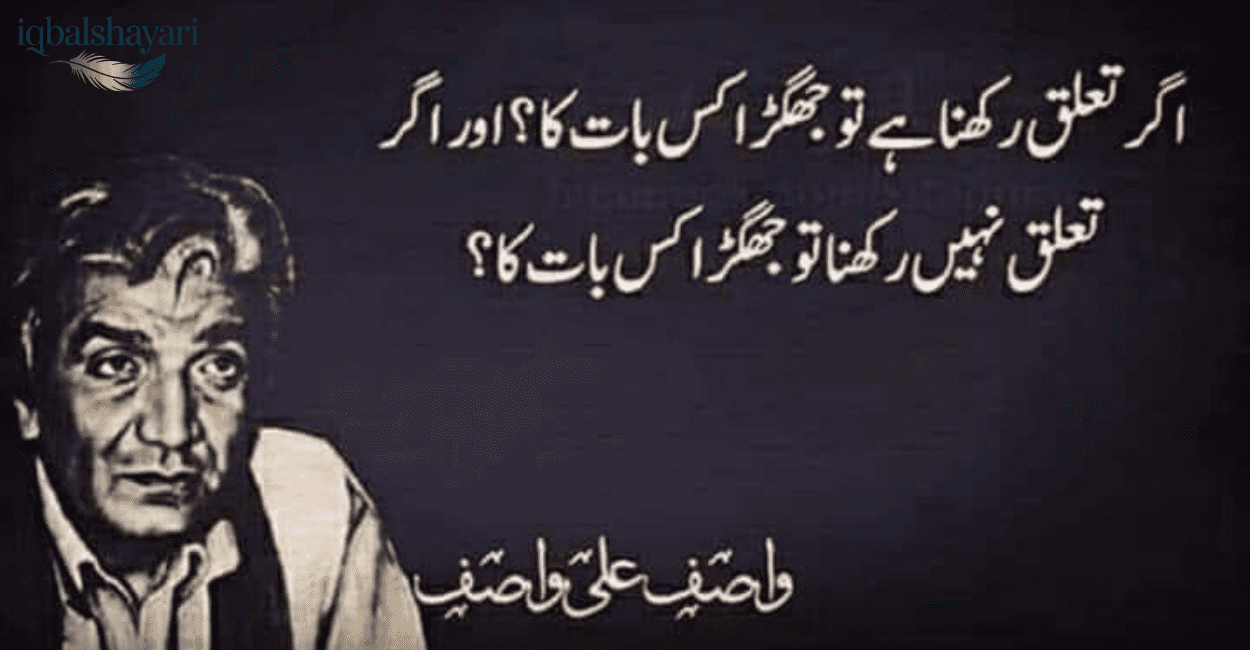
As a student at Government High School Khushab, young Wasif showed promise not just academically but athletically. He was an excellent hockey player who won awards for his sporting achievements. This physical excellence mirrored an inner discipline that would characterize his entire life.
His educational journey took him to Jhang and eventually to Government College Lahore, where he earned both an MA in English and an MSc in Mathematics. This unusual combination of literary and scientific training gave him a precision with words that few writers possess—the ability to condense vast meaning into minimal space.
The Teacher Who Chose Passion Over Power
In 1954, Wasif Ali Wasif passed the prestigious Provincial Civil Service (PCS) examination, a gateway to government power and prestige in Pakistan. Most would have celebrated this achievement as the pinnacle of success. Wasif rejected it.
He chose instead to become a teacher, founding Lahore English College in 1958. This decision revealed his true priority: nurturing minds mattered more than wielding authority. His college operated in two shifts to accommodate more students, and he poured himself into teaching with the same intensity that would later mark his writing.
His students remember a man “given to silence” who spoke only when words carried weight. This economy of speech would become the hallmark of his literary style.
The Birth of a Literary Revolution
While teaching, Wasif Ali Wasif began contributing to his college magazine “Ravian,” but his major literary breakthrough came in 1984 when he started writing a column for Daily Nawa-i-Waqt, one of Pakistan’s leading Urdu newspapers. His first column, titled “Muhabbat” (Love), introduced readers to something entirely new.
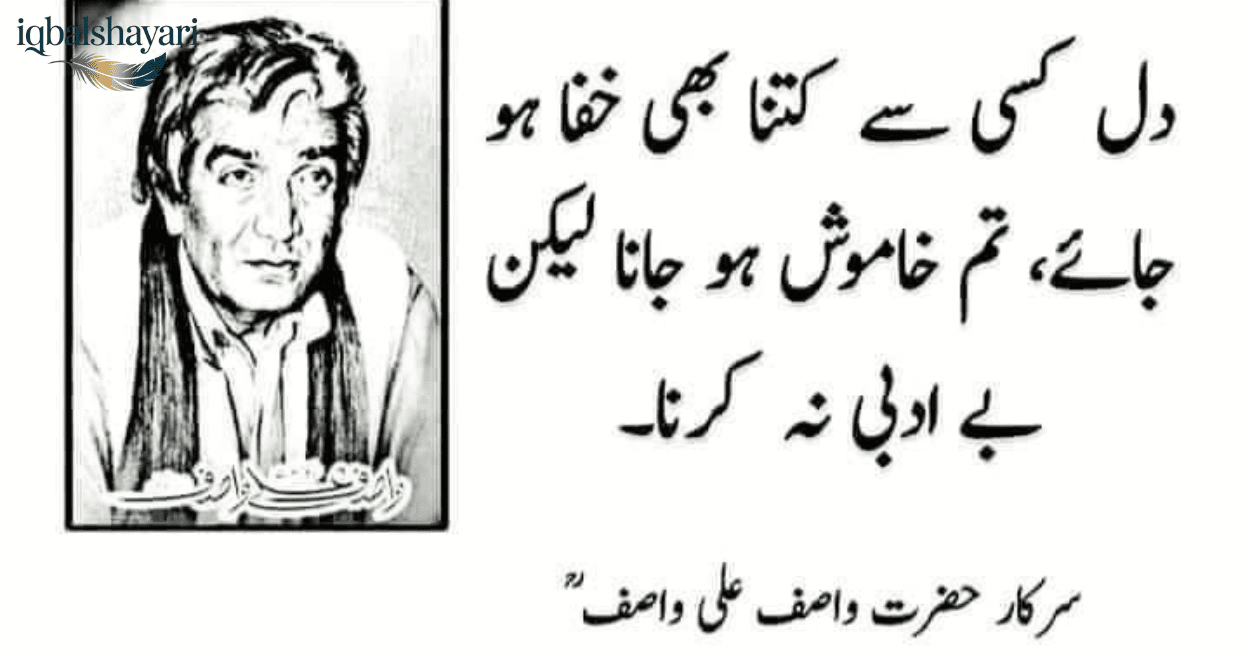
What emerged on those newspaper pages was revolutionary. While other columnists wrote lengthy essays, Wasif crafted what would become known as the “Wasifian style”—brief, metaphorical expressions that captured “a rainbow of meaning in a few dewdrops of words,” as critics later described it.
His aphoristic writing wasn’t mere brevity. Each sentence carried layers of meaning, inviting readers to pause, reflect, and discover personal insights. Where others explained, Wasif suggested. Where others argued, he illuminated.
The Master Works That Define a Legacy
Over his lifetime, Wasif Ali Wasif authored approximately 40 books spanning poetry, essays, and transcribed dialogues. Several stand as monuments in Urdu literature:
Kiran Kiran Suraj (The Beaming Soul), published in 1983, became an instant bestseller and remains his most celebrated work. The book consists entirely of aphorisms, each one a complete philosophical statement compressed into a single sentence. Literary critic Hanif Ramay noted that no contemporary Urdu writer is more cited in quotations than Wasif.
Dil Darya Samandar (The Heart: A River, An Ocean), released in 1987, explores themes of love, spirituality, and human consciousness through his distinctive prose style. The title itself demonstrates his gift for metaphor—the heart as simultaneously intimate as a river and vast as an ocean.
Qatra Qatra Qulzum (Ocean in a Drop), published in 1989, further developed his philosophy that profound truths exist in the smallest moments. The paradox of finding an ocean in a single drop became a central metaphor for his approach to spirituality.
Beyond these prose masterpieces, Wasif Ali Wasif published poetry collections including Shab Chiragh (1978) and Bharay Bharolay in Punjabi, demonstrating his versatility across genres and languages.
Perhaps most unique was his Guftgoo series—over 30 volumes transcribed from public gatherings where people asked him questions about life, faith, and meaning. His friend Sher Ali recorded these mehfil sessions, preserving spontaneous wisdom that might otherwise have been lost.
The Sufi Mystic and Spiritual Guide
To call Wasif Ali Wasif merely a writer misses half his identity. He was a Sufi mystic and spiritual guide (murshid) whose teachings were rooted firmly in Islamic Shariah, the Quran, and Hadith. His approach to Sufism wasn’t theoretical—it was lived experience translated into accessible wisdom.
His public gatherings (mehfils) drew seekers who came not just to listen but to ask questions about their spiritual struggles. Unlike many spiritual teachers who spoke in complex terminology, Wasif addressed life’s deepest questions with disarming simplicity.
His philosophy, sometimes called “Wasfiyaat,” blended Islamic mysticism with practical ethics and a deep love for Pakistan. Close friend Qudratullah Shahab praised his work extensively, while fellow writer Ashfaq Ahmed engaged with him in profound conversations that explored the boundaries of spiritual wisdom.
Central to his teaching was the concept that prayer surpasses intellectual certainty, that waiting is a sacred act of preparation, and that true love transforms the human heart into a mirror of divine presence.
The Philosophy Behind the Aphorisms
What made Wasif Ali Wasif’s writing revolutionary wasn’t just its brevity but its accessibility. He took concepts that Sufi masters had explored for centuries and made them comprehensible to ordinary readers without diluting their depth.
His major themes included:
Love (Muhabbat) as the transformative force that elevates human consciousness toward divine awareness. Unlike romantic love alone, he wrote about love as a spiritual state that changes how we perceive reality itself.
Self-realization through inner silence rather than external noise. In an age growing increasingly loud, his emphasis on quietude and introspection offered an alternative path to wisdom.
The sacred nature of waiting challenged modern impatience. He taught that certain fruits of life ripen only through patience, and rushing disrupts the natural unfolding of spiritual growth.
Simplicity as profundity—his writing demonstrated that the deepest truths don’t require complex language. A simple sentence, properly crafted, could carry more wisdom than volumes of academic discourse.
His style avoided excessive figures of speech, relying instead on natural prose that felt like overheard wisdom rather than formal instruction. This “between the lines” quality invited readers to become active participants in discovering meaning.
Recognition and Influence
Professor Gilani Kamran and other scholars have described Wasif Ali Wasif as a “Reformist of Pakistan,” placing him in the intellectual lineage of Allama Muhammad Iqbal. Like Iqbal, Wasif supported the Two Nation Theory and Pakistani nationalism, viewing spiritual awakening as essential to national development.
His influence extended beyond literature into academia. Multiple MPhil and PhD theses have analyzed his work, examining everything from his linguistic innovations to his philosophical contributions. His writings have become not just popular reading but subjects of serious scholarly inquiry.
What distinguishes him from other intellectuals of his era is his continued relevance. While many writers become historical footnotes, Wasif’s aphorisms circulate daily on social media, appear in public discourse, and guide new generations seeking wisdom.
Access for English Readers and Global Audiences
For decades, Wasif Ali Wasif’s profound insights remained locked behind the language barrier, accessible primarily to Urdu readers. Recent years have changed this landscape dramatically.
Translators Ghaith Irshaidat and Hafsa Tahir have brought several major works into English, including The Beaming Soul (Kiran Kiran Suraj), The Heart: A River, An Ocean (Dil Darya Samandar), and Doors to the Insight (Dareechay). Dr. Saleem-ur-Rahman’s translation of Ocean in a Drop (Qatra Qatra Qulzum) provides another English access point.
These translations face the challenge of preserving what makes Wasif’s prose special—the compression of meaning, the musical quality of Urdu, the cultural context. While some nuance inevitably shifts in translation, the core wisdom remains intact enough to resonate with English-speaking audiences worldwide.
For Pakistani Americans and diaspora communities in the United States, these English editions offer a bridge to heritage. Second-generation immigrants can now access the wisdom their parents and grandparents quoted, understanding not just the words but the worldview behind them.
Digital platforms like Rekhta archive his works online, while YouTube channels and Spotify podcasts make his Guftgoo sessions accessible globally. This digital presence ensures his teachings reach seekers regardless of geography or native language.
Death, Legacy, and Continuing Influence
Wasif Ali Wasif died on January 18, 1993, in Lahore and was buried in the Mianiasaab graveyard. His annual Urs (death anniversary commemoration) is observed from the 22nd to 24th of Rajab according to the Islamic calendar, drawing admirers who gather to remember his teachings and recite his words.
But his real immortality lives in daily usage. His aphorisms have entered the Urdu language as proverbs. People quote him without attribution because his words feel timeless rather than authored—they’ve become part of collective wisdom.
His influence on modern Urdu prose established a benchmark for aphoristic writing that subsequent writers measure themselves against. The “Wasifian style” didn’t die with him; it evolved into a recognized literary technique studied in universities.
What separates Wasif Ali Wasif from mere literary success is the depth of transformation his readers report. His isn’t wisdom for intellectual appreciation alone—it’s guidance that changes how people navigate grief, uncertainty, love, and the search for meaning.
Understanding Wasif for Modern Seekers
Western readers familiar with Rumi’s accessible mysticism or Kahlil Gibran’s spiritual prose will find similar resonance in Wasif Ali Wasif. Like Marcus Aurelius’ meditations, his aphorisms offer daily wisdom for reflection.
The key to approaching his work is patience. Unlike contemporary content designed for rapid consumption, his prose rewards slow reading. A single aphorism might deserve an entire day’s contemplation.
Begin with The Beaming Soul if reading in English—it provides the purest distillation of his aphoristic method. Ocean in a Drop offers slightly longer essays that explore themes more expansively while maintaining his characteristic style.
For those interested in his conversational teaching, the Guftgoo series (available in audio and print) captures the spontaneous wisdom that emerged when seekers asked him direct questions about life’s challenges.
Frequently Asked Questions
Who was Wasif Ali Wasif and what is he known for?
Wasif Ali Wasif (1929-1993) was a Pakistani teacher, writer, poet, and Sufi mystic renowned for developing the “Wasifian style” of aphoristic writing. He’s most famous for his book Kiran Kiran Suraj and for being the most quoted contemporary writer in Urdu literature. He founded Lahore English College and wrote approximately 40 books exploring spirituality, love, and human consciousness.
What makes Wasif Ali Wasif’s writing style unique?
His aphoristic style, called “Wasifian style,” compresses profound philosophical and spiritual insights into extremely brief, metaphorical prose. Critics describe it as capturing “a rainbow of meaning in dewdrops of words.” Unlike traditional lengthy exposition, each sentence stands as a complete thought inviting deep reflection.
Can I read Wasif Ali Wasif’s work in English?
Yes, several major works have been translated to English including The Beaming Soul (Kiran Kiran Suraj), The Heart: A River, An Ocean (Dil Darya Samandar), Ocean in a Drop (Qatra Qatra Qulzum), and Doors to the Insight (Dareechay). These translations by Ghaith Irshaidat, Hafsa Tahir, and Dr. Saleem-ur-Rahman make his wisdom accessible to English-speaking audiences worldwide.
Was Wasif Ali Wasif a Sufi? What were his spiritual beliefs?
Yes, Wasif Ali Wasif was a Sufi mystic and spiritual guide (murshid) whose teachings were firmly rooted in Islamic Shariah, the Quran, and Hadith. His approach to Sufism emphasized self-realization, divine love, prayer over intellectual certainty, and the transformative power of patience. He conducted public spiritual gatherings (mehfils) where he answered seekers’ questions.
What are Wasif Ali Wasif’s most important books?
His most celebrated works include Kiran Kiran Suraj (The Beaming Soul, 1983), his bestselling aphorism collection; Dil Darya Samandar (The Heart: A River, An Ocean, 1987); Qatra Qatra Qulzum (Ocean in a Drop, 1989); the Guftgoo series (30+ volumes of transcribed dialogues); and poetry collections Shab Chiragh (1978) and Bharay Bharolay (Punjabi).
How did Wasif Ali Wasif influence Urdu literature?
He revolutionized Urdu prose by introducing the aphoristic style as a legitimate literary form. Literary critic Hanif Ramay noted that no contemporary Urdu writer is more frequently quoted. His style became a benchmark for brevity with depth, influencing subsequent generations of writers. His work is now the subject of multiple academic theses and scholarly analysis.
Where can I find Wasif Ali Wasif’s books and recordings?
Physical books are available through Amazon and specialty South Asian bookstores in the USA. Digital editions exist on Kindle and other platforms. The Rekhta digital archive provides free access to many works online. Audio recordings from his Guftgoo sessions are available on YouTube and Spotify. Libraries with South Asian collections often carry his major works.
What was Wasif Ali Wasif’s educational and professional background?
He earned an MA in English and MSc in Mathematics from Government College Lahore. Despite passing the prestigious Provincial Civil Service examination in 1954, he chose teaching over government service, founding Lahore English College in 1958. He later became a columnist for Daily Nawa-i-Waqt starting in 1984, where his aphoristic style first reached mass audiences.
Conclusion
Wasif Ali Wasif’s biography tells the story of a man who chose depth over prominence, teaching over power, and timeless wisdom over temporal success. Born in the small town of Khushab in 1929, he became one of Pakistan’s most influential spiritual voices—not through seeking fame but through authentic living and profound writing.
His aphoristic style transformed how Urdu literature could convey spiritual truth, proving that brevity and depth aren’t opposites but partners. Each carefully crafted sentence in works like Kiran Kiran Suraj demonstrates that wisdom doesn’t require lengthy explanation—it requires precise articulation and receptive hearts.
For contemporary readers, whether in Lahore or Los Angeles, whether reading in Urdu or English translation, Wasif Ali Wasif offers something increasingly rare: guidance that transcends cultural boundaries while remaining rooted in specific tradition. His Sufi insights speak to universal human experiences—love, loss, longing, and the search for meaning.
His legacy lives not in monuments but in daily conversations where people still quote his aphorisms, often without knowing the source. When someone says “prayer is better than certainty” or speaks of finding oceans in drops, they’re echoing Wasif Ali Wasif, whether they realize it or not.
That’s the mark of genuine wisdom—it becomes inseparable from truth itself.