
Introduction:
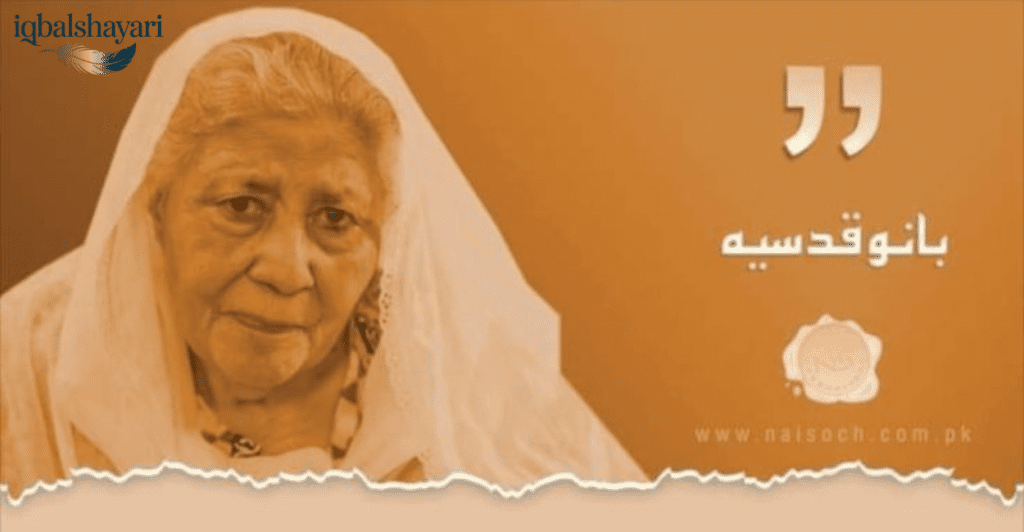
When Bano Qudsia passed away in February 2017, millions across Pakistan and India mourned the loss of one of Urdu literature’s most profound voices. Her funeral in Lahore drew poets, philosophers, students, and ordinary readers who had found solace in her words. Yet her departure marked not an ending, but a testament to a literary legacy that continues to shape how South Asians understand morality, spirituality, and human relationships.
Born on November 28, 1928, in Firozpur (then British India), Bano Qudsia emerged as more than just a novelist. She became a spiritual guide wrapped in the guise of a storyteller, addressing the deepest questions of existence through characters that felt startlingly real.
The Woman Behind the Words
Bano Qudsia’s early life was shaped by partition’s upheaval. Her family migrated to Lahore in 1947, carrying memories of a fractured homeland. This displacement would later echo through her work, manifesting as themes of loss, identity, and the search for belonging.
She studied English literature at Kinnaird College before pursuing her Master’s in Urdu at Government College University, Lahore. It was here she met Ashfaq Ahmed, the man who would become both her husband and intellectual companion for nearly five decades.
Their 1956 marriage created one of Pakistan’s most celebrated literary partnerships. While Ashfaq Ahmed explored rationalist philosophy and Sufi thought through his writings and radio broadcasts, Bano delved into the psychological and spiritual dimensions of human behavior. Together, they hosted gatherings at their Lahore home that became legendary among Pakistan’s intellectual elite.
Raja Gidh: The Masterpiece That Defined a Generation
No discussion of Bano Qudsia is complete without examining Raja Gidh (The King of Vultures), published in 1981. This novel didn’t just top bestseller lists—it fundamentally altered how Urdu readers approached fiction.
The story centers on Qayyum, a brilliant university student whose intellectual prowess masks profound moral bankruptcy. He manipulates those around him, particularly women, treating relationships as transactions to be exploited. His childhood friend Seemi becomes collateral damage in his quest for selfish gratification.
Bano Qudsia chose the vulture as her central metaphor deliberately. In Islamic tradition, vultures feed on carrion—dead, impure flesh representing haram (forbidden). Qayyum’s relationships, built on deception and exploitation, are equally tainted. No matter how intellectually sophisticated he appears, his foundations rest on moral rot.
The novel’s central philosophy revolves around fitrat—the natural divine order ingrained in creation. When humans violate this order through unethical actions, they invite destruction into their lives. Bano doesn’t preach; instead, she shows consequences unfolding with the inevitability of natural law.
Raja Gidh has sold over half a million copies, extraordinary for Urdu literature. It’s taught in universities across Pakistan and India, analyzed in countless doctoral dissertations, and adapted for television and stage. Young readers in 2026 still discover it and find their assumptions about relationships challenged.
The Spiritual Philosopher in Fiction’s Clothing
Bano Qudsia’s spirituality wasn’t abstract theology—it was deeply rooted in Sufism’s mystical traditions. Her spiritual mentor, Qudrat Ullah Shahab, guided both her and Ashfaq Ahmed toward a practical mysticism that emphasized inner transformation over ritualistic performance.
Her novels explore ishq (divine love) not as romantic sentiment but as the soul’s longing for its Creator. In Amar Bail and Haasil Ghaat, characters navigate the tension between earthly attachments and spiritual awakening. She asked uncomfortable questions: Can romantic love coexist with spiritual devotion? What happens when material success distances us from our authentic selves?
Unlike purely secular writers, Bano integrated Islamic ethics seamlessly into psychological narratives. Her characters struggle with recognizable modern problems—career pressures, relationship conflicts, family dynamics—but resolution comes through spiritual insight rather than materialistic solutions.
This approach resonated powerfully in Pakistan’s evolving society. As the country modernized through the 1980s and 1990s, many felt caught between Western materialism and traditional values. Bano Qudsia offered a third path: modernity grounded in spiritual consciousness.
Beyond Novels: Television and Cultural Impact
During Pakistan Television’s (PTV) golden era, Bano Qudsia wrote dramas that elevated the medium from entertainment to art. Her screenplay for Aadhi Baat (Half the Story) explored how incomplete communication destroys relationships. Khaleej examined generational conflict through a family’s internal divisions.
Her television work followed the same principles as her novels—character depth over plot gimmicks, philosophical dialogue advancing narrative, and subtle social commentary. She avoided the melodrama that characterized much of South Asian television, trusting viewers to engage with complex ideas.
These dramas reached millions who might never pick up a novel. Housewives in Karachi, students in Rawalpindi, diaspora communities in Dubai and London—all absorbed her philosophy through their television screens.
The Writing Style That Changed Urdu Prose
Bano Qudsia’s prose style balanced accessibility with literary sophistication. She used Urdu’s rich Persian-Arabic vocabulary without alienating general readers. Her sentences flowed with poetic rhythm, yet maintained narrative clarity.
She employed interior monologue masterfully, revealing characters’ psychological depths. Readers don’t just observe actions—they inhabit minds, experiencing moral struggles from within. This technique made her characters unforgettable. Qayyum from Raja Gidh remains vivid decades after readers close the book because Bano made them complicit in his thoughts.
Her narrative structures often defied convention. She used frame stories, non-linear timelines, and symbolic imagery that rewarded careful reading. A garden might represent spiritual cultivation; a crumbling house, moral decay. These weren’t heavy-handed symbols but organic elements of her fictional worlds.
Compared to contemporaries like Ismat Chughtai’s bold social realism or Qurratulain Hyder’s historical epics, Bano’s work occupied unique territory—psychological depth meeting spiritual inquiry.
A Pioneer for Women’s Voices
In 1950s and 60s Pakistan, women writers faced enormous barriers. Conservative social norms questioned women’s participation in public intellectual life. Publishing opportunities favored male writers. Critical establishment often dismissed women’s work as domestic or trivial.
Bano Qudsia shattered these constraints. Her success demonstrated that women could tackle philosophy, theology, and existential questions as authoritatively as men. She explored female interiority with unprecedented depth—women’s desires, ambitions, spiritual yearnings, and moral complexities.
Yet she avoided confrontational feminism. Her female characters possessed agency and depth, but operated within recognizably Pakistani contexts. This allowed her work to reach conservative readers who might reject overtly feminist literature, while still expanding understanding of women’s inner lives.
Major Works Beyond Raja Gidh
While Raja Gidh dominates discussions, Bano Qudsia authored over 50 books spanning genres:
Haasil Ghaat (1986) explores wasted potential—talented individuals who squander gifts through poor choices. Amar Bail (1989) uses a family saga to examine how past actions echo through generations. Toota Hua Taara (1994) addresses broken dreams and resilience.
Her short story collections like Purva’i contain concentrated bursts of insight. In just pages, she could illuminate entire philosophies. Her spiritual reflections in Footpath Ki Ghaas (Grass on the Footpath) offer meditations on everyday life’s sacred dimensions.
Bano’s autobiography, Hasina Maan Jaye Gi, provides rare glimpses into her creative process and personal philosophy. She wrote with characteristic honesty, neither aggrandizing nor diminishing her journey.
Recognition and Awards
Pakistan honored Bano Qudsia with its highest civilian awards. The Pride of Performance (1983) recognized her contributions to arts and literature. The Hilal-e-Imtiaz (2010), Pakistan’s second-highest honor, acknowledged her exceptional lifetime achievement.
These weren’t merely ceremonial. They represented official recognition that literature mattered, that philosophical inquiry enriched national culture, that a woman’s intellectual contributions deserved the highest respect.
Universities across Pakistan and India teach her work. Literary festivals feature panels on her legacy. New writers cite her influence. The Bano Qudsia who once struggled to find publishers became a pillar of Urdu literature’s canon.
Finding Her Books Today
Bano Qudsia’s works remain widely available across Pakistan and India. Major bookstores in Lahore, Karachi, Islamabad, Delhi, and Mumbai stock her titles. Sang-e-Meel Publications and Maktaba-e-Daniyal keep most works in print.
Raja Gidh typically costs PKR 400-800 in Pakistan, INR 300-500 in India. Collected works range from PKR 1,500-3,000.
For digital access, Rekhta.org offers free online versions of many titles. The Rekhta mobile app provides convenient reading on smartphones and tablets. English translations of Raja Gidh appear on Amazon, though scholars note that much nuance disappears in translation.
International readers can find her work through specialized South Asian bookstores in the UK, US, Canada, and Middle East. Online retailers ship globally, making her accessible to diaspora communities worldwide.
The Philosophy That Endures
What makes Bano Qudsia relevant in 2026? Her core insights transcend time and geography.
She understood that technological progress doesn’t resolve fundamental human questions. We still struggle with meaning, morality, relationships, and purpose. Her work addresses these perennial concerns with wisdom that doesn’t age.
Her emphasis on fitrat—living aligned with our authentic nature—resonates in an era of performative identity and social media facades. She advocated discovering who we truly are beneath conditioning and social expectations.
Her critique of relationships built on exploitation speaks powerfully to generations navigating dating apps, workplace dynamics, and transactional interactions. She insisted that how we treat others matters spiritually, not just socially.
Her integration of faith and intellect offers alternative to both religious fundamentalism and secular materialism. She demonstrated that deep spiritual commitment can coexist with sophisticated philosophical inquiry.
Legacy and Continuing Influence
Bano Qudsia’s death in 2017 closed a chapter in Urdu literature, but her influence expands. Contemporary Pakistani and Indian writers acknowledge her impact on their work. Her novels remain bestsellers years after publication—unusual longevity in commercial fiction.
Literary criticism continues examining her contributions. Scholars compare her existential themes to Camus and Sartre, her psychological insights to Dostoyevsky, her spiritual philosophy to Rumi and Iqbal. She belongs in global conversations about literature and philosophy, not merely regional discussions.
Her marriage to Ashfaq Ahmed created a joint legacy. Their complementary approaches—his rational mysticism, her intuitive spirituality—created complete worldview. The Ashfaq Ahmed and Bano Qudsia intellectual partnership set standards for collaborative thinking.
Reading groups across South Asia and diaspora communities continue discussing her work. Students discover her novels and find guidance for contemporary dilemmas. Teachers use her stories to explore ethics, relationships, and meaning.
Frequently Asked Questions
What is Bano Qudsia most famous for?
Bano Qudsia is most renowned for her novel Raja Gidh (1981), which explores moral corruption through the metaphor of vultures feeding on carrion. She’s also celebrated for integrating Sufi spirituality into modern Urdu literature, writing over 50 books, and creating influential television dramas during PTV’s golden era. Her work bridges Islamic values with psychological depth, making complex philosophy accessible to general readers.
When did Bano Qudsia die and where is she buried?
Bano Qudsia died on February 4, 2017, in Lahore, Pakistan, at age 88 from cardiac arrest. She is buried in Lahore beside her husband Ashfaq Ahmed, who passed away in 2004. Thousands attended her funeral, including Pakistan’s literary and political elite, reflecting her immense cultural impact.
What is the main theme of Raja Gidh?
Raja Gidh’s central theme is that relationships built on moral corruption (haram) bring spiritual and material destruction. Using vulture imagery, Bano Qudsia illustrates how exploitation, dishonesty, and selfish manipulation poison all life aspects. The novel advocates living according to fitrat (natural divine order) and maintaining ethical integrity in relationships, showing that intellectual brilliance cannot compensate for moral bankruptcy.
How did Bano Qudsia influence Pakistani literature?
Bano Qudsia pioneered serious philosophical fiction by women in Pakistan, demonstrating women could authoritatively explore theology and existentialism. She sparked renewed interest in Sufi spirituality among educated classes, provided moral frameworks for Pakistan’s expanding middle class, and elevated television drama from entertainment to intellectual engagement. Her maintenance of high Urdu literary standards while remaining accessible influenced generations of subsequent writers.
Is Raja Gidh available in English translation?
Yes, Raja Gidh has been translated into English, available through select online retailers and academic publishers. However, literary scholars note that much linguistic beauty and cultural nuance is difficult to capture in translation. The original Urdu version remains the preferred reading experience for those with language proficiency. English versions provide access for non-Urdu readers but represent approximations of Bano’s artistry.
What awards did Bano Qudsia receive?
Bano Qudsia received Pakistan’s two highest civilian honors: Pride of Performance (1983) for contributions to arts and literature, and Hilal-e-Imtiaz (2010) for exceptional literary achievement. She also received the Graduate Award from Government College University, Kamal-e-Fun Award, and numerous lifetime achievement recognitions from Pakistani literary organizations.
Who was Ashfaq Ahmed in relation to Bano Qudsia?
Ashfaq Ahmed (1925-2004) was Bano Qudsia’s husband and intellectual partner. They married in 1956 after meeting at Government College Lahore, creating one of South Asia’s most celebrated literary partnerships. Ashfaq was himself a renowned Urdu writer, broadcaster, and philosopher. Their 48-year marriage was characterized by mutual respect, spiritual collaboration, and complementary literary pursuits, with their Lahore home becoming a salon for Pakistan’s intellectual elite.
What was Bano Qudsia’s writing style?
Bano Qudsia employed elegant, flowing Urdu prose characterized by psychological depth, symbolic imagery, and philosophical dialogue. Her style balanced accessibility with literary sophistication, using Persian-Arabic vocabulary judiciously without alienating general readers. She favored character-driven narratives exploring interior lives, employed interior monologue masterfully, and integrated Sufi concepts organically. Her work avoided both academic density and commercial simplification, appealing to educated general audiences.
Conclusion
Bano Qudsia transformed Urdu literature by proving that commercial success and philosophical depth need not conflict. Her novels sold hundreds of thousands of copies while grappling with existence’s most challenging questions. She demonstrated that spirituality could inform modern fiction without becoming didactic, that women’s voices deserved prominence in intellectual discourse, and that ethical living remained relevant in materialistic times.
For readers seeking introduction to her work, Raja Gidh remains essential. Follow with Haasil Ghaat for accessible entry into her style, then explore Footpath Ki Ghaas for direct spiritual reflections. Those interested in her intellectual partnership should read Ashfaq Ahmed’s works alongside hers, experiencing their complementary perspectives.
Bano Qudsia’s legacy extends beyond books. She shaped how millions understand relationships, morality, and meaning. In Pakistan and India, across diaspora communities globally, readers continue discovering her work and finding it speaks to contemporary concerns with timeless wisdom. That is the mark of literature that truly matters—relevance that transcends its moment, insight that illuminates across generations.