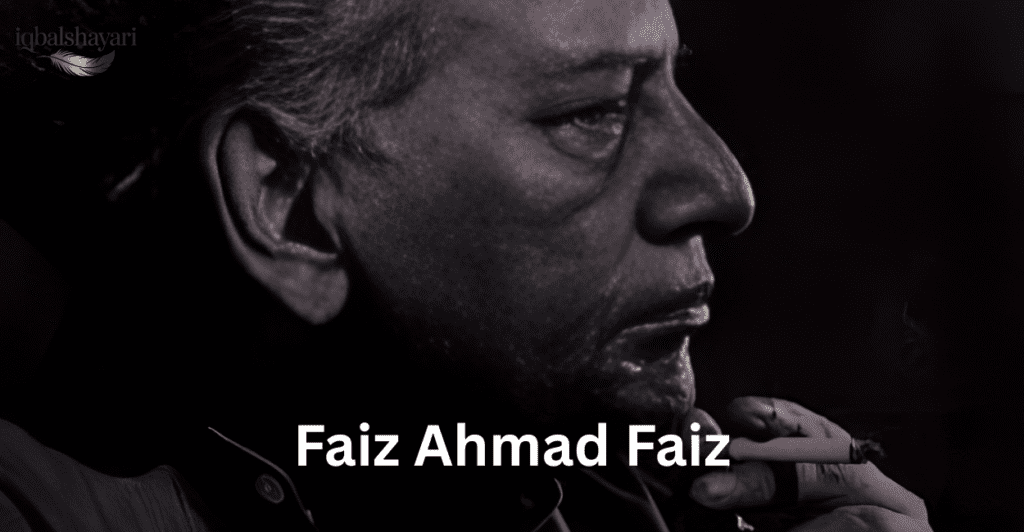
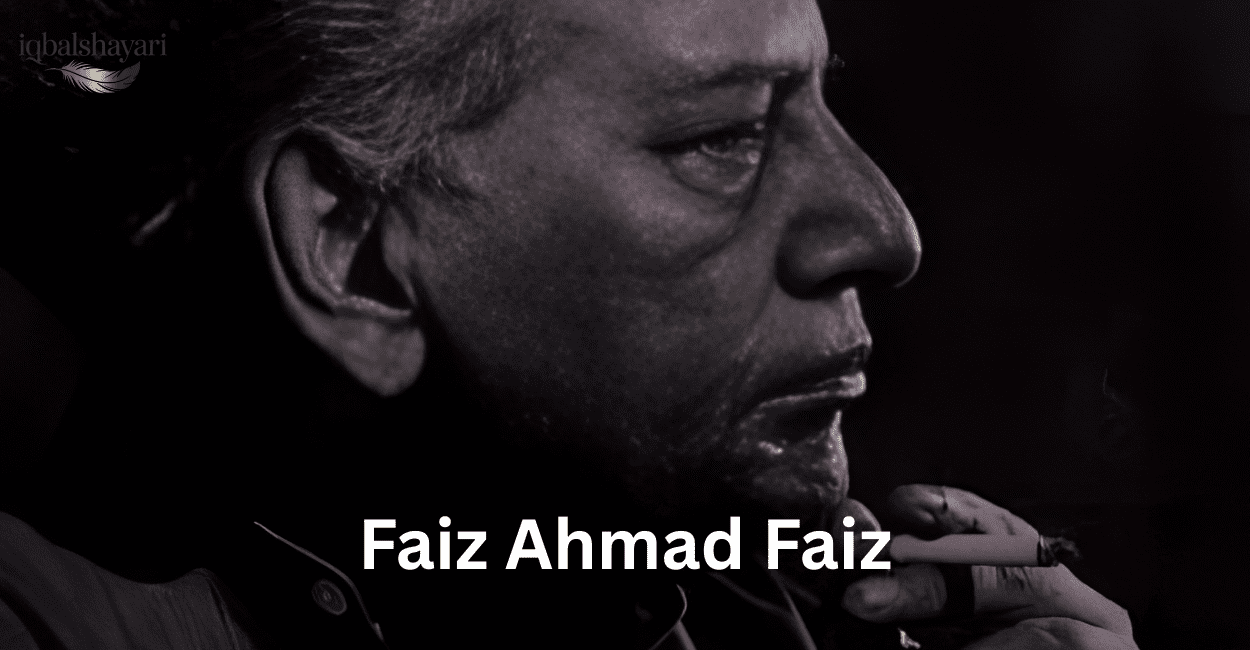
Introduction: Faiz Ahmad Faiz: Who Changed Political Literature Forever
When Iqbal Bano sang “Hum Dekhenge” at a packed stadium in Lahore in 1986, defying General Zia-ul-Haq’s martial law, she wasn’t just performing a poem. She was igniting a revolution. The words belonged to Faiz Ahmad Faiz, a poet who had passed away two years earlier but whose voice continued to shake the foundations of tyranny across South Asia.
Faiz Ahmad Faiz stands as one of the twentieth century’s most remarkable literary figures—a man who transformed classical Urdu poetry from courtly romance into a weapon for social justice. His unique genius lay in proving that revolutionary content and aesthetic beauty weren’t enemies but could exist in perfect harmony.
Who Was Faiz Ahmad Faiz?
Born on February 13, 1911, in Sialkot (now in Pakistan), Faiz came from a privileged family that valued both traditional Islamic learning and Western education. His father, Sultan Muhammad Khan, was a barrister who ensured young Faiz received instruction in Arabic, Persian, and English alongside his formal schooling.
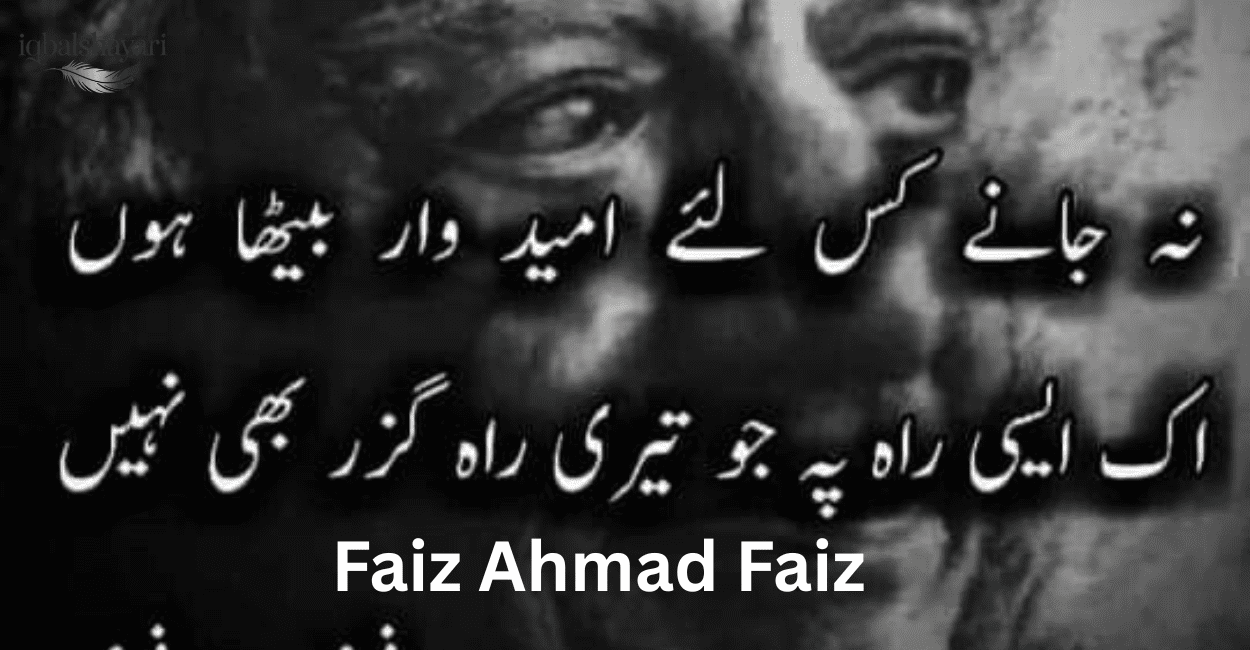
This dual heritage became foundational to Faiz’s poetic voice. He mastered the classical ghazal form—with its intricate meters, rhyme schemes, and centuries-old conventions—while absorbing modern political thought from Marx, Lenin, and English Romantic poets like Shelley.
Faiz studied at Government College Lahore, earning degrees in both Arabic and English literature. This wasn’t common. Most Urdu poets of his era chose either the traditional Eastern path or the modern Western one. Faiz walked both roads simultaneously, and this unique positioning allowed him to create something entirely new.
The Birth of a Revolutionary Poet
The 1930s transformed Faiz from a talented young poet into a revolutionary voice. In 1936, he joined the Progressive Writers’ Movement, a group of South Asian intellectuals who believed literature should serve the people, not just the elite.
This wasn’t about abandoning beauty for propaganda. The Progressive Writers wanted to expand what poetry could discuss while maintaining literary excellence. They asked: Why can’t a ghazal about love also address a laborer’s exploitation? Why can’t romantic longing symbolize the people’s yearning for freedom?
Faiz found his answer by reimagining the beloved. In traditional Urdu poetry, the mahboob (beloved) was an object of romantic desire. In Faiz’s hands, the beloved became freedom itself, justice, revolution, the masses. When he wrote of separation from his beloved, he meant separation from a just society. When he described longing, he meant the people’s hunger for dignity.
His early collection Naqsh-e-Faryadi (1941) announced this new voice to the literary world. Critics were stunned. Here was a poet who could satisfy the most demanding traditionalist with his mastery of form while thrilling progressives with his radical content.
Prison: Where Poetry Met Power
March 1951 changed everything. Faiz was arrested along with several military officers in what became known as the Rawalpindi Conspiracy Case. The group was accused of plotting to overthrow Prime Minister Liaquat Ali Khan’s government and establish communist rule.
Faiz was sentenced to death. The sentence was later commuted to life imprisonment, and he spent four years in various Pakistani prisons before his release in 1955.
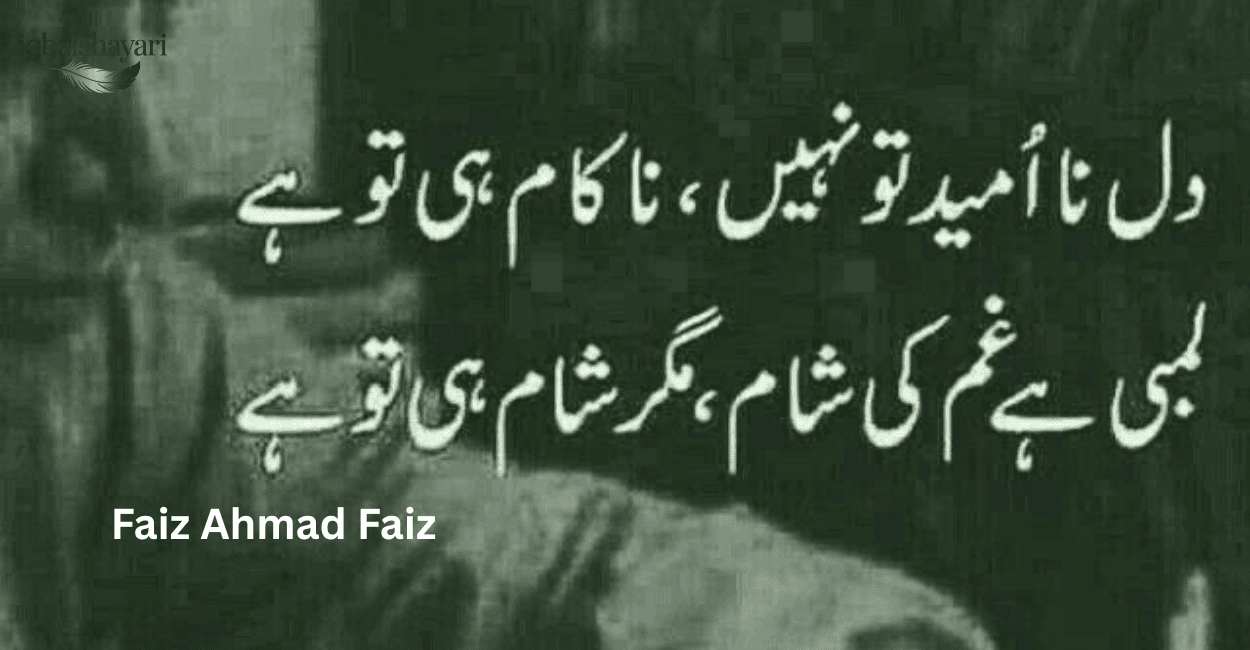
Many writers would have been broken by this experience. Faiz created some of his finest work. His prison collections Dast-e-Saba (Hand of the Morning Breeze) and Zindan-Nama (Prison Notebook) contain poems that resonate decades later.
What makes prison poetry powerful isn’t just the dramatic circumstances. It’s the compression of human experience. Behind bars, stripped of freedom, a poet confronts fundamental questions: What is liberty? What makes life worth living? How does the human spirit survive confinement?
Faiz answered these questions with poems that were simultaneously personal and universal. He wrote letters to his British-born wife Alys, expressing intimate longing. He wrote about fellow prisoners, creating portraits of dignity under oppression. He wrote about the prison yard’s small beauties—flowers, dawn light, birds—transforming them into symbols of resilience.
The poem “Tanhai” (Solitude) captures this perfectly. It’s ostensibly about loneliness, but reading it, you understand it’s also about mental freedom despite physical chains, about the tyranny of silence, about solidarity with all the imprisoned.
The Poetry That Shook Dictators
If you know only one Faiz poem, it’s probably “Hum Dekhenge” (We Shall Witness). Written in 1979 during General Zia-ul-Haq’s brutal martial law, it became the anthem of resistance not just in Pakistan but across South Asia.
The poem’s power comes from its certainty. Faiz doesn’t hope tyranny will fall—he declares it inevitable. Using imagery from Islamic eschatology (the Day of Judgment), he promises that crowns will be tossed, thrones demolished, and the common people will witness the downfall of every oppressor.
Religious conservatives later tried to claim the poem was anti-Islamic because it appropriated Quranic imagery for political purposes. This misses Faiz’s point entirely. He was using his culture’s most powerful symbolic language to speak truth to power, just as prophets had done throughout history.
The poem has been sung at protests against military dictatorships, at India’s anti-CAA demonstrations in 2019-2020, at student movements demanding democracy, and at workers’ strikes demanding dignity. Iqbal Bano’s 1986 performance remains legendary—a woman in a black sari, defying censorship, her voice carrying Faiz’s words to thousands who roared approval after each couplet.
Love, Revolution, and the Art of Dual Meaning
“Mujh Se Pehli Si Mohabbat Mere Mehboob Na Maang” (Do Not Ask Me For That Old Passion, My Love) might be Faiz’s most brilliantly constructed poem. On the surface, it’s a lover telling his beloved that he cannot give her his undivided attention anymore.
But why? Because the world’s suffering demands his commitment. He describes seeing disease, hunger, and oppression everywhere. How can he focus solely on personal romance when human beings are degraded daily?
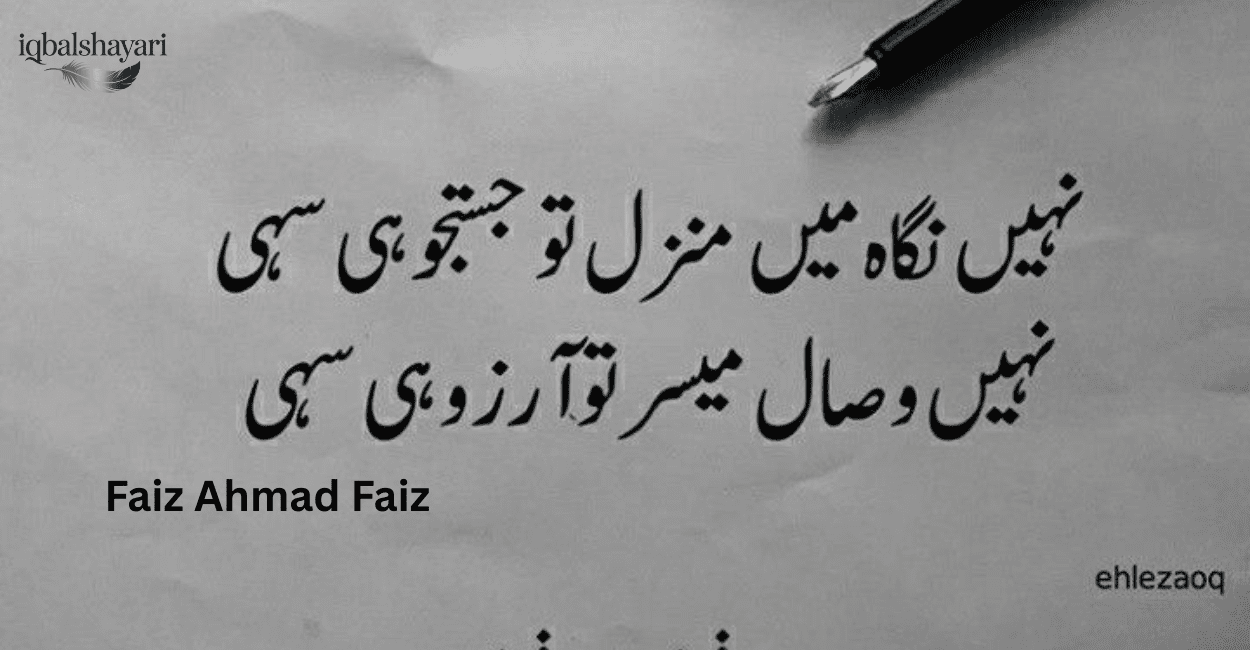
This is Faiz’s signature move: making personal and political inseparable. He’s not rejecting love—he’s expanding what love means. True love must include love of humanity, commitment to justice, recognition of others’ pain.
Traditional critics initially didn’t know what to do with this. Was it a good ghazal if it talked about labor exploitation? Wasn’t that too prosaic for poetry’s elevated language?
Faiz’s answer was the poems themselves. They proved that political consciousness elevated rather than degraded poetry. They showed that a poem could make your heart ache with beauty while awakening your conscience about injustice.
The Global Revolutionary
Faiz’s politics forced him into exile during the 1960s. He lived in the Soviet Union and various Middle Eastern countries, editing Lotus magazine for the Afro-Asian Writers’ Association. This period connected him with revolutionary poets worldwide—Pablo Neruda in Chile, Nazim Hikmet in Turkey, Bertolt Brecht’s legacy in Germany.
In 1962, he received the Lenin Peace Prize, the Soviet Union’s highest civilian honor. He was nominated multiple times for the Nobel Prize in Literature, though he never won—a decision many literary scholars consider one of the Nobel Committee’s significant oversights.
What’s remarkable about Faiz’s international recognition is how his deeply Urdu, deeply South Asian poetry translated across cultures. The specifics were local—Lahore’s streets, Sialkot’s landscapes, Pakistan’s political dramas—but the themes were universal: human dignity, freedom from oppression, the cost of resistance, hope despite darkness.
Understanding Faiz’s Poetry: A Practical Guide
For English speakers, especially in the United States, approaching Faiz presents challenges. Urdu poetry operates with different conventions than English verse. The ghazal form, with its couplets that can be read independently, its complex rhyme schemes, and its layers of meaning, doesn’t translate straightforwardly.
Start with Agha Shahid Ali’s translations in The Rebel’s Silhouette. Ali, himself a accomplished poet, understood that translation isn’t about word-for-word accuracy but capturing the spirit and music. His English versions read as genuine poetry, not awkward literal renderings.
Rekhta.org offers free access to Faiz’s complete works with line-by-line translations, meanings, and audio recitations. This is invaluable for understanding how the original Urdu sounds and what specific words contribute.
When reading Faiz, look for dual meanings. If he mentions dawn (subh), think revolution. Night (raat) often symbolizes oppression. The beloved (mahboob) frequently represents freedom or justice. Flowers (phool) suggest beauty but also resilience. Prison isn’t just literal incarceration but all forms of confinement—political, social, mental.
Don’t worry if you don’t catch everything on first reading. Even Urdu speakers debate interpretations. Faiz deliberately created multiple layers so the same poem could be enjoyed purely for its beauty or understood as political manifesto.
Faiz’s Living Legacy in Modern Movements
In December 2019, students at IIT Kanpur in India organized a protest against the Citizenship Amendment Act. They sang “Hum Dekhenge,” and the video went viral. The university administration claimed the poem was “anti-Hindu,” sparking nationwide debate.
This controversy perfectly illustrates Faiz’s contemporary relevance. His poetry continues to make power uncomfortable. When protesters sing his words, they’re not just quoting a dead poet—they’re wielding a weapon sharpened by decades of resistance.
The 2020-2021 Indian farmers‘ protests featured Faiz prominently. Women at sit-ins recited his poems. Activists created art installations with his verses. Young people who’d never read Urdu poetry discovered him through social media.
In Pakistan, lawyers protesting against judicial interference chant Faiz. Workers demanding fair wages quote him. Women’s rights activists draw on his humanism. Students resisting censorship find courage in his defiance.
This isn’t nostalgia. It’s proof that Faiz identified something timeless about the struggle for human dignity. Economic inequality, authoritarian governments, censorship, the silencing of dissent—these haven’t disappeared. Neither has the need for voices that articulate resistance beautifully.
Where to Find Faiz in the United States
The South Asian diaspora in the United States maintains strong connections to Faiz’s legacy. Cultural organizations in New York, Chicago, Los Angeles, Houston, and the San Francisco Bay Area regularly host Faiz-themed events, especially around his birth anniversary in February and death anniversary in November.
Columbia University, the University of Chicago, UC Berkeley, and several other institutions include Faiz in South Asian Studies and Comparative Literature programs. Their libraries typically hold multiple translations and critical studies.
For purchasing books, major retailers carry the primary English translations—particularly Agha Shahid Ali’s collection, which remains the most accessible introduction. South Asian bookstores in areas with large Pakistani and Indian communities (Jackson Heights in New York, Edison in New Jersey, Devon Avenue in Chicago) stock both English and Urdu editions.
The Asia Society, with branches in New York, Houston, and Los Angeles, occasionally features Faaiz-related programming, from academic lectures to musical performances. India Culture Centers and Pakistani American community organizations across the United States hold mushairas (poetry gatherings) where Faiz’s work is regularly performed.
Faiz Versus Iqbal: Understanding the Philosophical Divide
Muhammad Iqbal, who died when Faiz was in his twenties, profoundly influenced Urdu poetry but represented a different worldview. Iqbal emphasized spiritual awakening, Islamic revival, and individual self-realization. His philosophy centered on the strong individual (mard-e-momin) who would lead society through personal excellence and religious conviction.
Faiz took Urdu poetry in a different direction. Where Iqbal focused on individual spiritual strength, Faiz emphasized collective action and class consciousness. Where Iqbal saw Islam as the solution, Faiz advocated secular humanism and socialist economics. Where Iqbal’s poetry often addressed the elite and educated, Faiz deliberately wrote for workers, peasants, the dispossessed.
This wasn’t personal antagonism—Faiz deeply respected Iqbal’s artistry. But he represented a new generation questioning whether individual spiritual perfection could address systemic injustice. Could prayer alone feed the hungry? Could philosophy alone end exploitation?
Both poets shaped modern South Asian consciousness, but in different ways. Iqbal became the spiritual father of Pakistan, his verses used at state functions. Faiz became the voice of Pakistan’s oppressed, his poems sung at protests against the state.
The Translation Challenge
Every translator of Faiz faces an impossible task: how do you convey in English what works in Urdu because of Urdu?
Consider a simple example. Urdu draws vocabulary from Arabic, Persian, and Sanskrit simultaneously. A single word might carry Islamic mystical connotations from Arabic, classical poetic associations from Persian, and folk cultural meanings from Sanskrit-derived languages. These layers collapse in English translation.
Prosody presents another challenge. Faiz wrote in traditional meters (beher) that create specific rhythms in Urdu. These meters carry centuries of associations—certain meters for romantic longing, others for martial themes, still others for mystical contemplation. English translation loses these resonances entirely.
Victor Kiernan produced literal translations that prioritize accuracy over poetry. You understand what Faiz said but miss how it feels. Agha Shahid Ali created poetic English versions that capture emotion but necessarily depart from exact meaning. Naomi Lazard aimed for middle ground—accessible English that hints at the original’s complexity.
Which translation should you read? If you’re a general reader wanting to understand Faiz’s power, start with Ali. If you’re a scholar needing precise meaning, use Kiernan. If you want multiple perspectives, read several translations of the same poem and notice what each emphasizes.
The real lesson is humility. Translation is interpretation. Every translator makes choices, privileges certain meanings over others. The original Urdu remains irreplaceable.
Faiz’s Personal Life: The Man Behind the Poems
Faiz married Alys George in 1941, a British-born communist who had come to India and converted to Islam. Their relationship was unconventional for the time—an arranged marriage rejected in favor of choice, an intercultural union amid rising religious nationalism, a partnership of political equals.
Alys became integral to Faaiz’s work. His prison letters to her, later published in Nuskha Hai Wafa, reveal intimate vulnerability alongside political commitment. She managed his affairs during imprisonment, raised their daughters, and advocated for his release.
Their marriage embodied Faiz’s ideals—that love transcends boundaries of nation and religion, that partnership means equality, that personal life and political conviction can’t be separated.
Faiz died of cardiac arrest in Lahore on November 20, 1984. Thousands attended his funeral, from political leaders to ordinary citizens who’d found voice through his poetry. He’s buried in Model Town, Lahore, and his ancestral home in the city now operates as Faaiz Ghar, a museum preserving his legacy.
Why Faiz Matters in 2026
Economic inequality continues widening globally. Authoritarian movements gain strength across democracies. Protesters worldwide demand justice. Workers organize for dignity. Marginalized communities fight for recognition.
Every one of these struggles finds language in Faiz’s poetry. Not because he predicted the future, but because he understood the fundamental dynamics of power and resistance.
His work proves that art isn’t decoration—it’s necessity. Beautiful words can be politically powerful. Poetry can articulate what manifestos cannot. A well-crafted ghazal can outlast the regime it criticizes.
For the South Asian diaspora in the United States, Faaiz provides cultural connection and political vocabulary simultaneously. Second and third-generation immigrants discovering his work find both heritage and contemporary relevance—a poet who was proudly South Asian while being universally humanist, who valued tradition while demanding progress.
For American readers encountering him for the first time, Faz offers perspective on how poetry functions in societies where political speech is dangerous. His techniques—encoding messages, using cultural symbolism, creating plausible deniability through romantic language—instruct anyone interested in how artists survive repression.
The Songs That Carry His Words
Faiz’s poetry has been performed by legendary South Asian musicians, transforming his verses into popular culture. Iqbal Bano, Nayyara Noor, Tina Sani, Mehdi Hassan, and Abida Parveen created definitive musical versions that introduced millions to his work.
These aren’t just readings—they’re interpretations. A skilled singer brings out meanings through emphasis, pacing, and emotional delivery. YouTube hosts hundreds of performances, each offering different insights into the same poem.
Coke Studio Pakistan featured several Faz compositions, introducing his work to younger generations through contemporary musical arrangements. Indie artists continue creating new versions, proving his verses adapt to changing musical styles without losing power.
For anyone wanting to experience Faz, listening is essential. Urdu poetry is fundamentally oral. It was written to be heard, performed, shared in gatherings. The written page captures only part of its reality.
Frequently Asked Questions
What is Faiz Ahmad Faiz most famous for?
Faiz is most famous for revolutionizing Urdu poetry by combining classical romantic forms with Marxist political ideology. His poem “Hum Dekhenge” became the anthem of resistance against dictatorship across South Asia. He received the Lenin Peace Prize in 1962 and was nominated multiple times for the Nobel Prize in Literature. His unique achievement was proving that political poetry could maintain aesthetic excellence while championing workers’ rights and opposing oppression.
Why was Faiz Ahmad Faiz imprisoned?
Faiz was arrested in March 1951 in the Rawalpindi Conspiracy Case, accused of plotting with military officers to overthrow Pakistan’s government and establish communist rule. He was initially sentenced to death, later commuted to life imprisonment. He served four years before release in 1955. Many historians consider the case politically motivated, designed to suppress leftist intellectuals. During imprisonment, Faiz wrote some of his most powerful poetry, collected in Dast-e-Saba and Zindan-Nama.
How does Faiz’s poetry differ from traditional Urdu ghazals?
Traditional Urdu ghazals focused on romantic love, wine, and mystical themes using established conventions. Faz maintained these classical forms—the same meters, rhyme schemes, and imagery—but infused them with social and political consciousness. His beloved often symbolized freedom or justice rather than a romantic partner. He used dawn to mean revolution, night to mean oppression, and flowers to represent resilient beauty under tyranny. This dual-layer meaning system was unprecedented, allowing poems to work as both romantic verse and political manifesto.
Where can I read Faiz’s poetry in English?
The best English translation is The Rebel’s Silhouette by Agha Shahid Ali, which captures both accuracy and poetic beauty. Other valuable translations include Victor Kiernan’s Poems by Faiz and Naomi Lazard’s The True Subject. For free access, Rekhta.org offers Faiz’s complete works with line-by-line English translations, meanings, and audio recitations. These books are available through Amazon, university bookstores, and South Asian cultural bookstores in major American cities with significant diaspora populations.
Did Faiz Ahmad Faiz win the Nobel Prize?
No, Faz never won the Nobel Prize in Literature despite multiple nominations throughout the 1960s and 1970s. Many literary scholars and critics consider this one of the Nobel Committee’s significant oversights. He did receive numerous other prestigious awards, including the Lenin Peace Prize (1962), the Lotus Prize from the Afro-Asian Writers‘ Association (1976), and Pakistan’s highest civilian award, Nishan-e-Imtiaz, which was awarded posthumously in 1990.
What is the Progressive Writers’ Movement?
The Progressive Writers’ Movement was founded in 1936 by South Asian intellectuals who believed literature should serve social reform rather than just elite entertainment. Members advocated using poetry, fiction, and essays to address workers’ rights, anti-colonialism, women’s empowerment, and socialist economics. Faiz joined in 1936 and became one of its most prominent voices. The movement transformed South Asian literature by legitimizing political and social themes in high literary art, influencing generations of writers across India, Pakistan, and Bangladesh.
How is Faiz relevant to contemporary protest movements?
Faiz’s poetry provides vocabulary and inspiration for modern resistance movements worldwide. “Hum Dekhenge” was sung during India’s 2019-2020 CAA protests, Pakistan’s democracy movements, and various workers’ strikes. His themes—economic inequality, authoritarian oppression, the need for collective action, hope despite darkness—remain urgent today. Young activists discover his work through social media, creating new interpretations for contemporary struggles. His proof that beautiful art can be politically powerful continues inspiring artists, writers, and organizers fighting for justice.
What makes translating Faiz’s poetry challenging?
Urdu poetry uses words drawing from Arabic, Persian, and Sanskrit simultaneously, creating layers of meaning impossible to convey in single English words. Traditional meters carry centuries of associations that disappear in translation. Faz’s deliberate ambiguity—allowing poems to be read as romance or politics—requires translators to choose which meaning to emphasize. Cultural and religious references familiar to South Asian audiences need explanation for Western readers. The musicality of Urdu, with its specific sound patterns and rhythms, cannot be replicated in English while maintaining meaning.
Conclusion: A Voice That Refuses Silence
Faiz Ahmad Faiz died in 1984, but walk through a protest in Lahore, Delhi, or Dhaka today, and you’ll hear his voice. Not recordings—living people singing his words because they still mean something, still promise something, still demand something.
That’s the test of great poetry. Does it survive its moment? Does it speak to people who weren’t born when it was written, who face different circumstances, who might not even understand the original language?
Faz passes this test because he grasped something fundamental about human dignity and the struggle to maintain it under oppression. His specific references were to Pakistan’s politics, to communist ideology, to Islamic imagery—but his deeper subject was universal: how do we live with integrity when power demands submission?
His answer was beauty combined with defiance. Write poetry so beautiful that censors hesitate to ban it. Encode resistance so cleverly that it spreads before authorities understand what’s happening. Create work that serves both aesthetic pleasure and political purpose, proving these aren’t contradictory.
For anyone discovering Faz today, whether through academic study, cultural curiosity, or the chance hearing of “Hum Dekhenge” at a protest, the journey begins simply: read a poem, let it work on you, notice what changes. Then read another. And another. Eventually you understand why millions across South Asia and beyond consider this man’s verses essential—not just to literature but to life itself.