Introduction:
If you have ever heard a poem that made you laugh before you even reached the last line, you have already experienced the magic of limericks. These five-line masterpieces have been tickling audiences for centuries — from smoky medieval taverns to modern-day Twitter feeds. What makes them so irresistible is not just the humor. It is the anapest meter that carries you forward like a drumbeat, the tight AABBA rhyme scheme that snaps shut like a trap, and that glorious final line that lands like a punchline you never quite saw coming.
Famous limericks have been written about everything — love, theology, mathematics, and things far too scandalous to mention at the dinner table. Whether you are a lifelong poetry lover or someone who thinks poems are boring, limericks will change your mind fast. This guide covers everything you need to know about the world’s most entertaining poetic form — its history, its greatest examples, and yes, how to write your own comic verse.
What Makes a Limerick
The anapest meter is the engine under the hood of every great limerick. It follows a da-da-DUM rhythm that pushes the reader forward like a train picking up speed. You feel it before you even understand it. That forward momentum is what separates a true limerick from a poem that merely rhymes. Without it the whole thing falls flat and the magic disappears completely.
The AABBA rhyme scheme locks the structure in place. Lines one, two, and five rhyme together and carry the main idea. Lines three and four are shorter, punchier, and rhyme with each other. They exist purely to build suspense. When line five finally lands, the anticipation and punchline come together in one sharp moment of tension and release. That is what makes famous limericks so addictive to read.
The AABBA Rhyme Scheme Explained
Think of the five-line poem as a tiny stage play. Lines one and two set the scene. Lines three and four raise the stakes with that signature pitter-patter rhythm. Line five brings the house down. The rhyme scheme is not decoration — it is the architecture. Get it right and even the most ordinary subject becomes irresistible.
| Line | Length | Rhyme | Purpose |
| Line 1 | Long | A | Introduce character or place |
| Line 2 | Long | A | Expand the setup |
| Line 3 | Short | B | Raise tension |
| Line 4 | Short | B | Build suspense |
| Line 5 | Long | A | Deliver the punchline |
Here is a perfect example that defines the form while being the form itself:
The limerick packs laughs anatomically into space that is quite economical. But the good ones I’ve seen so seldom are clean And the clean ones so seldom are comical.
That single anonymous limerick tells you everything about what limericks are and why they work. It is self-referential, tight, and lands perfectly on the final line.
“Brevity is the soul of wit.” — William Shakespeare
A Brief History of Limericks
Long before Edward Lear made them famous, wandering French troubadours in the Middle Ages were already playing with short rhyming verses in taverns and town squares. The form traveled across Europe slowly, picking up local flavors along the way. Nobody sat down and invented the limerick. It evolved the way most great things do — through repetition, experimentation, and a healthy disregard for polite society. The lewd humor tradition attached to limericks was already forming long before anyone gave the form a name.
In 1846, Lear published his Book of Nonsense and introduced the limerick poem to a mainstream audience. He wrote for children but the template he created was irresistible to adults. By the late 1800s the Victorian-era humor that had shaped British society found a natural home in limericks. The 1800s poetry tradition shifted and limericks earned both their current name and their notoriously saucy reputation. Algernon Charles Swinburne was among the first named poets to fully embrace the risqué tradition and push it further into the territory of salacious wordplay.
| Era | Key Figure | Contribution |
| Middle Ages | French troubadours | Early rhyming verse tradition |
| 1846 | Edward Lear | Book of Nonsense — mainstream debut |
| Late 1800s | Anonymous poets | Saucy reputation established |
| Early 1900s | Swinburne, Holmes, Douglas | Literary credibility added |
| Modern era | Internet culture | Reddit, Twitter, viral limericks |
“Tradition isn’t always the worship of ashes, but the upkeep of hearth.” — Gustav Mahler
Famous Limericks (Not for the Faint of Heart)
The most famous limericks in the English language walk a tightrope between clever and outrageous. The salacious wordplay alone never explains their staying power. What keeps them alive is the compression, the timing, and the way they smuggle an entire story into five lines without wasting a syllable. Even The Crown Season 1 featured traditional anonymous limericks — which tells you everything about how deeply embedded they are in popular culture humor.
Leigh Mercer’s mathematical limerick proves the form is far more versatile than its bawdy reputation suggests. Swinburne brought literary muscle. Oliver Wendell Holmes brought theology. Norman Douglas brought psychology. Each of them used the same five-line structure to say something entirely different. That flexibility is the real secret behind the limerick’s longevity. Here are the most celebrated examples broken down by theme.
| Poet | Theme | Notable Quality |
| Algernon Charles Swinburne | Risqué | Sharp wit, double entendre |
| Oliver Wendell Holmes Sr. | Theology | Philosophical depth |
| Norman Douglas | Psychology | Freudian satire |
| Leigh Mercer | Mathematics | Intellectual wordplay |
| Anonymous | General bawdy | Pure comic verse |
Here is one of Swinburne’s most famous contributions — a masterclass in double entendre:
There changed into a younger woman from Aberystwyth who took grain to the mill to get grist with.The miller’s son, Jack, laid her flat on her back, and united the organs they were pissed with.
And here is another from the same pen — equally sharp and equally indelicate:
There was a young lady from Norway who hung by her toes in a doorway. She said to her beau “Just take a look at me Joe, I think I’ve located one more manner.”
These two limericks from Swinburne show exactly how the form weaponizes the AABBA rhyme scheme to deliver maximum impact in minimum space. The surprise twist ending never feels cheap because the meter earns it.
“Humor is mankind’s best blessing.” — Mark Twain
Literary Limericks and the Classics
Some of the most celebrated famous limericks were written not about scandal but about literature itself. These poems use the economy of language the form demands to tip a hat — sometimes sarcastically — to the giants of the literary world. Shakespeare and Melville have both inspired entire collections of limericks precisely because their work is so well known that a single reference unlocks a world of meaning in the reader’s mind.

Honey-Tongued Limericks About Shakespeare
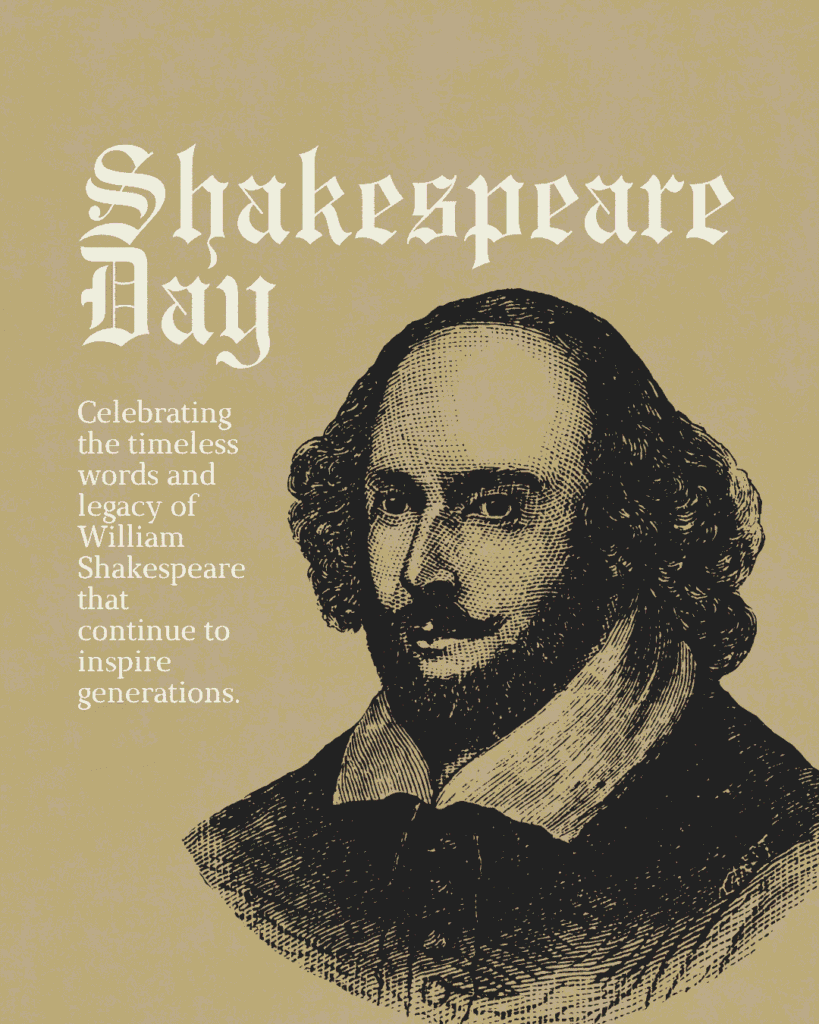
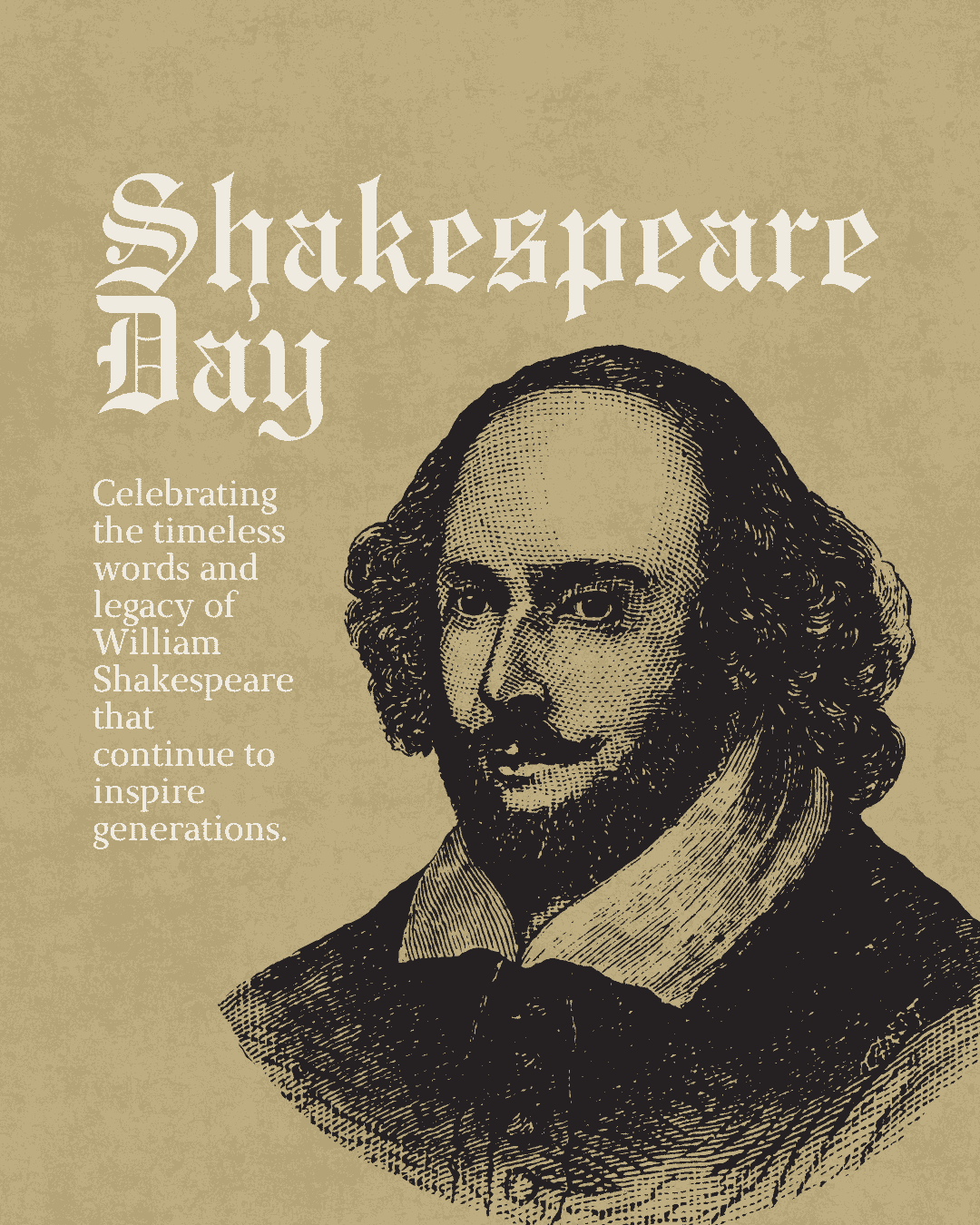
There is a beautiful irony in using a low-brow comic verse form to celebrate the most revered writer in the English language. Shakespeare-themed limericks work precisely because of that tension between high art and humble form. The internal rhyme and wordplay required to pull them off demands real skill. Here is one beloved example that shows how the form handles the Bard:
There was a young man of Stratford-upon-Avon Who thought himself quite the engravin’ He scribbled his plays Got fame and then praise Now his face is on mugs — quite a cravin’
The humor here comes from that classic limerick move — taking something grand and bringing it down to earth in the final line. For a deeper dive into this crossover explore the full Honey-Tongued Limericks about Shakespeare collection on this site.
“All the sector’s a stage, and all of the males and females are merely players.” — William Shakespeare
Limericks About Moby Dick
Melville spent 600 pages chasing a white whale. A great limerick does the same thing in five lines. That is not an insult — it is a tribute to compressed storytelling. The obsession, the hubris, the ocean — all of it can live inside a tight AABBA rhyme scheme if the writer is skilled enough. Consider this example that captures Melville’s epic spirit:
There once was a captain named Ahab Whose hatred of whales was a rehab He chased the white beast From West to the East Till the ocean became his own seabed

It is like fitting an ocean into a teacup. Somehow remarkably it works. See the full Limericks about Moby Dick collection for more proof of what this compact form can carry when pushed to its limits.
“It isn’t down in any map; proper places by no means are.” — Herman Melville
More Famous Limericks Worthy of Mention
The Man from Nantucket holds a unique place in popular culture as perhaps the most notorious limerick in American history. Multiple versions exist and all of them are equally scandalous in construction. Some limericks are so famous they have outgrown the page entirely and become part of everyday cultural reference. The anonymous authorship of these poems gave them a kind of immortality — nobody owns them so everybody claims them and everybody shares them freely.
The cleaner examples deserve just as much respect. Here is Holmes’s theological gem that has endured for over a century:
God’s plan made a hopeful beginning But man spoiled his chances by sinning. We trust that the story Will end in God’s glory, But at present the other side’s winning.
And here is Norman Douglas turning his wit toward psychology and Freud:
The frequenters of our picture palaces Have no use for psychoanalysis; And although Doctor Freud Is distinctly annoyed They cling to their long-standing fallacies.
Both of these prove that the limerick poem is not a one-trick pony. It is a flexible and intelligent form capable of carrying real philosophical weight without losing its charm or its humor.
| Limerick | Author | Theme | Why It Matters |
| Man from Nantucket | Anonymous | Risqué | Most famous American limerick |
| God’s plan | Oliver Wendell Holmes | Theology | Proves limericks can be profound |
| Mathematical limerick | Leigh Mercer | Mathematics | Intellectual landmark |
| Psychoanalysis limerick | Norman Douglas | Psychology | Freudian satire |
| The clean/comical limerick | Anonymous | Meta-humor | Defines the form itself |
Here are three more famous limericks of timeless endurance. The first one is particularly celebrated for its elaborate internal rhyme:
I met a lewd nude in Bermuda who thought she was shrewd: I was shrewder; She thought it quite crude To be wooed in the nude; I pursued her, subdued her, and screwed her.
There once was a young man named Cyril who was held in a wood by a squirrel, and he liked it so good that he stayed in the wood just as long as the squirrel stayed virile.
The mind of the rabbit on sex is seldom, if ever, complicated; For a rabbit in need Is a rabbit indeed, And does just as someone expects.
And finally, here is Leigh Mercer’s astonishing mathematical limerick — perhaps the most intellectually ambitious famous limerick ever written:
A dozen, a gross, and a rating Plus 3 instances the square root of four Divided by seven Plus five times 11 Is 9 squared and no longer a chunk greater.
If you work it out the math actually checks out perfectly. That is the genius of it.
“The maximum wasted of all days is one with out laughter.” — Nicolas Chamfort
Personal and Emotional Limericks
Not every famous limerick reaches for shock or scandal. Some of the most memorable ones reach inward instead. The confessional and personal limerick has a long tradition that often gets overlooked because the bawdy examples dominate the conversation. When the form turns emotional it becomes surprisingly powerful — the tight structure forces the writer to distill feeling into its purest and most honest form.
Love Poems from Lockdown — A Work of Fiction
Constraint breeds creativity. Stuck inside with nothing but time, a rhyming dictionary, and unresolved feelings, people turned to confessional poetry in surprising numbers during lockdown. The limerick was a natural fit — short enough to finish in one sitting, structured enough to impose discipline on raw emotion. Here is one that captures that strange suspended feeling perfectly:
There once was a man stuck at home Who wrote all his feelings in poem The rhymes kept him sane Through the loss and the pain Now the verses are all that he owns
The result was a quiet wave of humor in isolation that was equal parts tender and absurd. Love and limericks make perfect and unexpected sense together when the writer is honest enough to let the form do its work.
“In the depth of winter, I finally learned that within me there lay an invincible summer.” — Albert Camus
How to Write Your Own Limerick
Start with the meter before anything else. Before you think about rhyme or subject matter, get the da-da-DUM rhythm right in your head. Tap your finger on the desk as you read your line aloud. You should feel three beats in the long lines and two in the short ones. Poetic meter is not a technicality — it is the pulse of the entire piece. Get it beating naturally and everything else becomes easier including the rhyme itself.

Write the punchline first. This sounds counterintuitive but it is the single best piece of advice for anyone tackling their first limerick. The final line is the destination and everything else is just the road that gets you there. Pick a name or a place as your anchor — “There once was a man from Chicago” already has personality before you have written a single joke. Your first limerick does not need to be brilliant. It just needs to make you laugh out loud when you read it back. Start there and build backwards from your best line.
Here is a simple original limerick that shows the process in action:
A lim’rick’s not hard to define But it needs to do more than just rhyme It’s the meter that matters The pitters and patters If not you’re just wasting my time
The economy of language required to write a good limerick teaches you more about poetry in five lines than most textbooks manage in five chapters.
“You can’t use up creativity. The more you use, the more you have.” — Maya Angelou
The Future of Limericks
The limerick poem has outlasted every literary trend of the past two centuries and shows no signs of slowing down. Romanticism came and went. Modernism fractured into a dozen movements. The limerick kept going. Today modern limericks thrive on Reddit threads, Twitter feeds, and comment sections across the internet. The form’s natural brevity makes it perfectly suited to digital attention spans and digital poetry has never had a better or more democratic format than this one.
The evolution of poetry rarely follows a straight line and the limerick’s journey proves that beautifully. Consciousness in verse does not require length or complexity — it requires precision and the courage to commit to a single idea. The famous limericks of the next generation will probably look nothing like the ones Edward Lear wrote. But they will still follow the same five-line structure because some things are simply too good to abandon or improve upon.
| Platform | Why Limericks Thrive There |
| Reddit r/Limericks | Community feedback and rapid iteration |
| Twitter / X | Character limit suits the short form perfectly |
| TikTok | Spoken word rhythm equals viral potential |
| Creative writing blogs | SEO-friendly and highly shareable |
| Educational platforms | Perfect teaching tool for poetic meter |
“The most courageous act is still to think for yourself. Aloud.” — Coco Chanel
Frequently Asked Questions About Famous Limericks
What is the most famous limerick ever written?
The most widely recognized famous limerick in American popular culture is the Man from Nantucket. Multiple versions exist and all of them are equally notorious in construction. In literary circles however the anonymous limerick that begins “The limerick packs laughs anatomical” is often cited as the definitive self-referential example of the form. It describes exactly what a limerick is while being one itself — a neat trick that very few poems can pull off convincingly.
What makes a limerick specific from other poems?
A limerick is defined by two things that work together — the AABBA rhyme scheme and the anapest meter. Most short poems use one or the other. The limerick demands both simultaneously. That combination creates a very specific forward momentum that you feel physically when you read it aloud. No other poetic form produces quite the same effect on the reader’s ear or delivers a punchline quite so efficiently.
Who invented limericks?
No single person invented the limerick. The form evolved over centuries with roots traced back to French troubadours in the Middle Ages. Edward Lear is most often credited with popularizing it through his 1846 Book of Nonsense but he did not invent the structure — he simply made it famous. The name “limerick” itself came into common use in the late 1800s though its exact origin is still debated among literary historians today.
What is the AABBA rhyme scheme?
The AABBA rhyme scheme means that lines one, two, and five all share the same end rhyme. Lines three and four share a different shorter rhyme between themselves. So if line one ends with “France” then lines two and five must also end with a word that rhymes with it. Lines three and four might end with “run” and “fun.” The result is a tight circular structure that feels completely satisfying to the reader’s ear every single time.
Are all famous limericks dirty or rude?
No. The famous limericks most people know tend to be bawdy or risqué but the form itself carries no such requirement. Oliver Wendell Holmes wrote limericks about theology. Leigh Mercer wrote one about mathematics that actually works out correctly. Norman Douglas tackled psychology and Freudian theory with sharp wit. The dirty reputation comes from the most widely shared examples but the form is genuinely flexible and capable of handling any subject with elegance and precision.
How many syllables does a limerick have?
Lines one, two, and five typically carry between seven and ten syllables each. Lines three and four are shorter at five to seven syllables each. However syllable count alone does not make a limerick work — the anapest meter and the placement of stressed syllables is what creates the recognizable rhythm. A line can have the right syllable count but still feel completely wrong if the stresses fall in the wrong places throughout.
What is anapest meter in a limerick?
Anapest meter follows a da-da-DUM pattern where two unstressed syllables are followed by one stressed syllable. In a limerick this pattern repeats two or three times per line depending on line length. You can feel it most clearly by reading a limerick out loud and tapping your finger on the stressed beats. That forward galloping rhythm is the heartbeat of every great limerick ever written in the English language.
Can limericks be used in academic writing?
Limericks are not typically used in formal academic writing but they have a strong place in educational settings. Teachers regularly use the limerick poem to teach poetic meter, rhyme scheme, and the economy of language to students of all ages. Several mathematicians and scientists have used limericks to explain complex concepts in accessible ways — Leigh Mercer’s famous mathematical limerick is the single best example of the form serving a genuinely intellectual and educational purpose.
Conclusion
From medieval French troubadours to Reddit comment threads, famous limericks have covered an extraordinary amount of ground without ever losing what makes them special. They are short, yes. Often rude, certainly. But underneath the wordplay and the punchlines sits a genuinely sophisticated poetic form — one that demands precision, timing, and a real feel for how language moves. The AABBA rhyme scheme and the anapest meter are not just rules. They are the reason a great limerick feels inevitable the moment you hear it. The economy of language the form demands is a lesson every writer can learn from regardless of the genre they work in.
So here is the real question. Which famous limerick is your favorite? And more importantly — have you tried writing one yet? You already know the structure. You understand the rhythm. All you need now is a name, a place, and one genuinely good idea. Start there. You might surprise yourself more than you expect.