
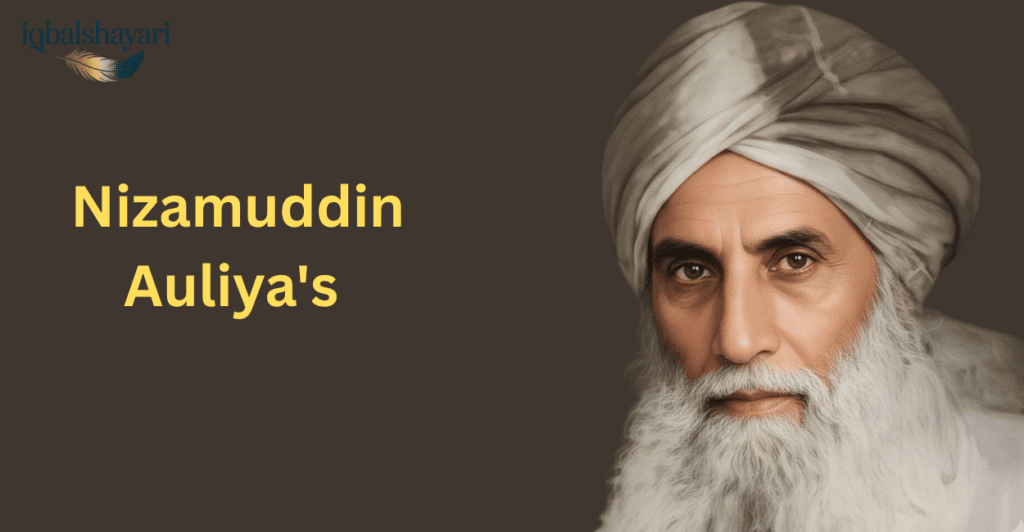
Introduction: Delhi’s Revered Sufi Saint and His Sacred Shrine
The narrow lanes of Nizamuddin West in Delhi lead to one of India’s most spiritually significant sites—the dargah of Hazrat Nizamuddin Auliya, a Sufi saint whose message of universal love and compassion continues to resonate seven centuries after his death. Born in 1238 CE in Badaun, Uttar Pradesh, Nizamuddin Auliya became the fourth master of the Chishti Order in India, transforming Delhi into a center of Islamic mysticism and interfaith harmony during the tumultuous period of the Delhi Sultanate.
Nizamuddin Auliya, often called Mehboob-e-Ilahi (Beloved of God), lived through the reigns of seven sultans yet maintained complete spiritual independence. His khanqah (spiritual hospice) became a sanctuary where people of all religions—Muslims, Hindus, Christians, and others—gathered for spiritual guidance, free meals through the langar tradition, and teachings that emphasized serving humanity above all else.
The Life and Legacy of Hazrat Nizamuddin Auliya
Nizamuddin’s early life was marked by hardship. His father died when he was just five years old, prompting his mother to relocate the family to Delhi for better opportunities. The young Muhammad bin Ahmad showed extraordinary spiritual inclination from childhood, spending long hours in prayer and study of Islamic jurisprudence and theology.
At age 20, a pivotal moment arrived when he traveled to Ajodhan (present-day Pakpattan, Pakistan) to meet Baba Farid Ganj-e-Shakar, the renowned Chishti master. The meeting transformed his life. Baba Farid accepted him as a disciple, and for six years, Nizamuddin underwent rigorous spiritual training that included meditation, fasting, and service to the poor.
When Baba Farid sent him back to Delhi in 1265 CE with instructions to spread Sufi teachings, Nizamuddin established his khanqah in what is now Nizamuddin West. This humble center grew into the most influential Sufi establishment in medieval India, attracting scholars, poets, musicians, and seekers from across the subcontinent.
The Saint and the Sultans
Nizamuddin Auliya’s relationship with political power defines much of his historical significance. He lived during the reigns of seven Delhi Sultanate rulers, including the powerful Alauddin Khilji and Ghiyasuddin Tughlaq. Unlike many religious figures who sought royal patronage, Nizamuddin maintained absolute independence, refusing gifts from rulers and supporting his khanqah entirely through community donations.
The most famous confrontation occurred with Sultan Ghiyasuddin Tughlaq, who objected to Nizamuddin’s construction of a stepwell and sent threatening messages. Nizamuddin’s response—”Hunooz Dilli door ast” (Delhi is still far away)—became legendary. The sultan died before reaching Delhi, and his threat was never realized. This incident exemplified Nizamuddin’s principle that spiritual authority exists independently of temporal power.
Understanding the Chishti Order and Sufi Philosophy
The Chishti Sufi Order originated in Chisht, Afghanistan, but found its most fertile ground in the Indian subcontinent. Khwaja Moinuddin Chishti brought the order to Ajmer in the 12th century, establishing principles that would define South Asian Sufism for centuries.
Nizamuddin inherited and expanded these core Chishti principles:
- Sama: The practice of spiritual listening through devotional music and poetry to induce states of divine ecstasy
- Sabr: Patience in facing life’s hardships without complaint
- Shukr: Gratitude to God in all circumstances
- Tawakkul: Complete trust in divine providence
- Khidmat: Selfless service to all humanity regardless of religion or status
What distinguished Nizamuddin’s approach was his radical inclusivity. During an era of religious tension, his khanqah welcomed Hindu jogis, Christian travelers, and people from all social classes. His disciple Amir Khusro, the legendary poet-musician, embodied this synthesis by creating new art forms that blended Persian, Arabic, and Hindi languages with Indian musical traditions.
The Teachings That Transcend Time
Nizamuddin Auliya’s philosophy centered on Ishq-e-Haqiqi (divine love) and Hubb-e-Insan (love for humanity). He taught that the palace of divine love has thousands of doors, and each person enters through a different one—a metaphor for respecting diverse spiritual paths.
His famous saying, “Whoever goes to sleep with a full stomach while his neighbor is hungry is not a true believer,” reflects his commitment to social justice. The langar at his khanqah served free meals to hundreds daily, a practice that continues at the dargah today.
Nizamuddin also emphasized zuhd (asceticism), living in voluntary poverty despite being able to access considerable wealth through donations. He wore simple clothes, slept on reed mats, and devoted himself entirely to prayer, teaching, and serving others.
The Nizamuddin Dargah: A Living Spiritual Heritage
The Nizamuddin Dargah complex in South Delhi stands as a testament to centuries of devotion. When Nizamuddin Auliya died on April 3, 1325 CE, his followers immediately constructed a simple tomb over his grave. Over subsequent centuries, Mughal emperors and devotees added marble structures, creating the architectural ensemble visitors see today.
The main tomb features a white marble dome added in 1608 CE, with the original red sandstone structure visible beneath. The cenotaph is draped in embroidered cloth (chaddar), and devotees touch its marble boundary while offering prayers and making wishes.
Adjacent to Nizamuddin’s tomb lies the grave of Amir Khusro (1253-1325), who died just six months after his beloved master. This proximity symbolizes the perfect spiritual bond between teacher and disciple. Khusro’s poetry, much of which expresses his devotion to Nizamuddin, is recited and sung at both tombs.
Architectural Highlights of the Complex
The Jamat Khana Mosque, built immediately after Nizamuddin’s death in 1325 CE, represents one of Delhi’s oldest surviving mosques. Its seven arched prayer chambers and red sandstone construction showcase early Indo-Islamic architecture.
The baoli (stepwell) that caused the conflict with Sultan Ghiyasuddin Tughlaq still exists, though no longer in use. This multi-tiered stepped structure demonstrates medieval water management systems.
Chaunsath Khamba (Sixty-Four Pillars), built in 1623-24 CE, features white marble construction and originally served as a tomb for Mirza Aziz Koka, Akbar’s foster brother. Its unique architectural design makes it a study subject for historians.
The complex also houses tombs of Mughal emperor Muhammad Shah, the famous Urdu poet Mirza Ghalib, and several other notable figures, making it a dense repository of Delhi’s cultural history.
The Magical Thursday Qawwali Experience
Every Thursday evening, as the sun sets over Delhi, the Nizamuddin Dargah transforms into a theater of devotion. The tradition of qawwali—Sufi devotional music—has continued unbroken for over 700 years, making it one of the world’s longest-running musical traditions.
Qawwali uses poetry, rhythm, and vocal power to induce spiritual states. The performers, called qawwals, belong to hereditary families who have served the dargah for generations. Groups like the Warsi Brothers and Meraj Ahmed Nizami Qawwal maintain repertoires that include compositions by Amir Khusro and other classical Sufi poets.
Thursday is considered auspicious because it precedes Jummah (Friday), the holiest day in Islam. The performances begin after Maghrib (sunset prayers) and can continue for hours, sometimes past midnight during special occasions.
What to Expect at Qawwali Night
Arriving early is essential—devotees start claiming spots on the marble courtyard 30-60 minutes before sunset. The atmosphere builds gradually as hundreds gather, sitting cross-legged on the floor facing Nizamuddin’s tomb.
When the qawwals begin, the first songs are typically slower, establishing the spiritual mood. As the evening progresses, the tempo increases, and the poetry becomes more ecstatic. Famous compositions like “Chaap Tilak” (attributed to Amir Khusro) and “Man Kunto Maula” often appear in the repertoire.
Listeners express appreciation by offering money during performances—small notes (₹10-100) are common. This isn’t payment but rather a traditional form of spiritual participation and support for the qawwal families.
The emotional intensity can be overwhelming. It’s not uncommon to see devotees weeping, swaying, or entering trance-like states. This sama (spiritual listening) represents the core of Chishti practice—using beauty and art as pathways to divine experience.
Planning Your Visit to Nizamuddin Dargah
The dargah welcomes visitors of all faiths year-round. Located in Nizamuddin West, South Delhi, it’s easily accessible via Delhi Metro’s Yellow Line. The nearest stations are Jor Bagh (1.2 km away) and Hazrat Nizamuddin Railway Station (500 meters).
Visiting hours run from approximately 5:00 AM to 10:00 PM daily, with no entry fee. The complex operates on donations, making it accessible to everyone regardless of economic status.
Essential Visitor Guidelines
Modest dress is mandatory. Women must cover their heads with a scarf or dupatta and wear clothing that covers shoulders and knees. Men should wear long pants and shirts—shorts are not permitted. This isn’t about restricting visitors but showing respect for the sacred space.
Footwear must be removed before entering the tomb area. Shoe-keeping services charge a small fee (₹5-10), or you can carry your shoes in a bag. The marble floors can be hot in summer and cold in winter, so socks are recommended.
Photography is generally allowed in outer courtyards but restricted near the main tomb chamber. Always ask permission before photographing worshippers, and never use flash photography in prayer areas.
Best Times to Visit
For a peaceful experience, early morning (6:00-8:00 AM) on weekdays offers relative solitude. The golden morning light illuminates the marble structures beautifully, and you can observe morning prayers without crowds.
If you want the full cultural-spiritual experience, Thursday evening is unmissable despite the crowds. Arrive by 5:30 PM to secure a good spot for qawwali.
Avoid the first week of April unless you specifically want to experience the Urs (death anniversary celebration). This festival attracts 50,000-100,000 pilgrims and features continuous qawwali, extended langar service, and intense crowds.
The Amir Khusro Connection: Poetry, Music, and Devotion
No discussion of Nizamuddin Auliya is complete without understanding Amir Khusro (1253-1325), perhaps the most celebrated disciple in Sufi history. Born in Patiyali, Uttar Pradesh, to a Turkic father and Indian mother, Khusro embodied the cultural synthesis that defined medieval India.
Khusro revolutionized multiple art forms. He pioneered the ghazal in India, composed in Persian, Arabic, Hindi, and created hybrid forms. Traditional accounts credit him with inventing the sitar and tabla, though these claims are debated by scholars. His poetry collections include thousands of verses, many expressing devotion to his spiritual master.
The relationship between Nizamuddin and Khusro represents the ideal of Sufi discipleship—complete devotion, spiritual transformation, and creative expression. When Nizamuddin fell ill, Khusro was performing at the court in Bengal. Sensing his master’s condition, he rushed back to Delhi but arrived too late. Khusro survived his master by only six months, dying of grief, and was buried at his feet according to his wish.
Khusro’s compositions form the backbone of qawwali repertoire even today. Songs like “Chaap Tilak Sab Cheeni” (You’ve taken away my senses) use romantic metaphors to express spiritual longing—a hallmark of Sufi poetry.
Nizamuddin in Contemporary Context
Seven centuries after his death, Nizamuddin Auliya’s relevance hasn’t diminished. In an era of religious polarization, his dargah remains a space where diversity is celebrated. Muslims, Hindus, Sikhs, Christians, and people of all backgrounds come seeking blessings, attending qawwali, or simply finding peace.
The Nizamuddin Basti (settlement) surrounding the dargah is a 700-year-old living heritage site. Narrow lanes house traditional craftspeople, musicians, and families who have served the dargah for generations. However, urban development pressures threaten this historic neighborhood, making conservation efforts crucial.
Organizations like the Aga Khan Trust for Culture have undertaken restoration projects, including the adjacent Sunder Nursery and Humayun’s Tomb complex. The Nizamuddin Urban Renewal Initiative aims to balance heritage preservation with improving residents’ quality of life.
The Dargah’s Social Impact Today
The tradition of langar continues, with hundreds fed daily through community donations. This isn’t charity in the conventional sense but rather the Sufi principle that serving humanity is serving God.
The dargah also provides informal education, with children from the basti learning Quranic recitation, Urdu poetry, and qawwali traditions. While not a formal institution, this transmission of knowledge maintains cultural continuity.
Practical Information for American Visitors
For travelers from the United States visiting Delhi, Nizamuddin Dargah offers an accessible entry point into India’s spiritual heritage. Unlike many tourist sites, there’s no language barrier to meaningful experience—the atmosphere speaks for itself.
Currency considerations: Entry is free, but keep small denominations of Indian rupees (₹10-100 notes) for optional offerings and shoe-keeping. Most visitors spend ₹50-200 total.
Safety: The area is generally safe, with police presence due to the site’s religious importance. However, pickpockets operate during crowded times, particularly Thursday evenings and during Urs. Keep valuables secure and avoid displaying expensive cameras or jewelry.
Time allocation: Allow 1-2 hours for a standard visit, or 3-4 hours if attending qawwali. Combining with nearby Humayun’s Tomb (UNESCO World Heritage Site, 700 meters away) makes for a rich half-day experience.
Food and water: Bring bottled water, especially in summer when temperatures exceed 40°C (104°F). Nearby restaurants serve traditional Muslim cuisine—kebabs, biryani, and korma. Karim’s Nizamuddin outlet offers authentic Mughlai food in hygienic conditions.
Transportation from major Delhi hotels: Uber and Ola ride-hailing apps work reliably and are the easiest option. From central Delhi (Connaught Place area), expect 20-30 minutes depending on traffic. Always confirm the destination as “Nizamuddin Dargah” or “Hazrat Nizamuddin Railway Station.”
Nearby Attractions Worth Exploring
The Nizamuddin area forms part of Delhi’s rich heritage corridor. Within walking distance, Humayun’s Tomb represents the architectural precursor to the Taj Mahal, with stunning Mughal gardens and dozens of smaller monuments scattered throughout the complex.
Sunder Nursery, a 90-acre heritage park adjacent to Humayun’s Tomb, showcases restoration at its finest. Fifteen Mughal-era monuments sit within landscaped gardens, offering peaceful walks away from Delhi’s chaos. Entry costs ₹50 for Indian residents and ₹100 for international visitors.
The Nizamuddin Basti itself rewards exploration. Heritage walks organized by groups like INTACH (Indian National Trust for Art and Cultural Heritage) provide context and access to spaces not typically open to visitors. These walks often include interactions with hereditary qawwal families, artisans, and longtime residents.
Mirza Ghalib’s tomb and the Ghalib Academy (dedicated to the famous Urdu poet) are also within the basti. While Ghalib lived in the 19th century, well after Nizamuddin’s time, his choice to be buried near the dargah reflects the saint’s enduring cultural significance.
Understanding Dargah Etiquette and Customs
First-time visitors often worry about making cultural mistakes. While the dargah atmosphere is welcoming, understanding basic etiquette enhances the experience and shows respect.
Silence near the tomb: The main tomb chamber is a place of prayer and contemplation. Maintain quiet voices and avoid casual conversations. If you need to speak, step away to the courtyard.
Accepting offerings: Devotees sometimes distribute tabarruk (blessed food, usually sweets) near the tomb. Accepting this is part of the blessing tradition—refusal might cause offense. If you have dietary restrictions, accept gracefully and give it to someone else later.
Gender considerations: While the dargah welcomes women, certain times may have restricted access to the innermost chamber. This varies, and staff will guide you. Women typically sit separately during qawwali, though this isn’t strictly enforced.
Offering protocol: If you wish to offer something, bring flowers (no garlands), incense sticks, or a chaddar (decorative cloth sheet, available near the entrance for ₹50-200). Place offerings respectfully at the tomb’s boundary or give them to attendants who will place them properly.
The concept of mannat: Many visitors come to make mannat (spiritual wishes or vows). The tradition involves making a wish at the tomb and promising to return with an offering if the wish is fulfilled. This isn’t required but explains why you’ll see people bringing offerings of gratitude.
The Spiritual Teachings: Accessible Wisdom for Modern Life
Nizamuddin Auliya’s teachings weren’t recorded systematically like those of some spiritual teachers, but his sayings and practices have been preserved through hagiographies like “Fawaid al-Fuad” and “Siyar al-Auliya.”
His emphasis on service over ritual remains powerfully relevant. In one famous anecdote, when asked whether performing pilgrimage (hajj) or feeding the hungry was more meritorious, Nizamuddin responded that feeding one hungry person brings more divine pleasure than a hundred pilgrimages.
Nizamuddin taught that divine love isn’t exclusive or discriminatory. When criticized for accepting Hindu disciples, he explained that the essence of spirituality transcends religious labels—what matters is the sincerity of the seeker’s heart.
His principle of spiritual independence—refusing royal patronage while maintaining dignity and service—offers a model for maintaining values under pressure. He proved that principled stands don’t require aggression or confrontation, just steady adherence to core beliefs.
Frequently Asked Questions
Can non-Muslims visit Nizamuddin Dargah?
Yes, absolutely. Nizamuddin Dargah welcomes people of all faiths and backgrounds. The Sufi tradition emphasizes universal love and inclusivity. Hindus, Sikhs, Christians, and visitors from all religions regularly come to seek blessings and experience the spiritual atmosphere. The only requirements are modest dress and respectful behavior, which apply to everyone regardless of religion.
What is the dress code for women visiting the dargah?
Women must cover their heads with a scarf or dupatta and wear modest clothing that covers shoulders and knees. Long skirts or pants with long-sleeved or at least elbow-length tops work well. Leggings alone aren’t sufficient—pair them with a long tunic (kurti). Many women wear traditional Indian clothing like salwar kameez, which satisfies all requirements comfortably.
Is it safe for solo female travelers to visit Nizamuddin?
Yes, the dargah itself is safe, with regular police presence due to its religious significance. However, solo women should visit during daylight hours for their first trip. For Thursday night qawwali, going with a group is recommended. The Nizamuddin Basti lanes can be confusing and crowded, so having company helps with navigation and provides additional security in densely packed areas.
How long should I spend at Nizamuddin Dargah?
A basic visit takes 1-2 hours, allowing time to see the main tomb, Amir Khusro’s grave, and explore the courtyard. If attending Thursday qawwali, plan for 3-4 hours total, including waiting time before the performance begins. For a comprehensive experience including nearby attractions like Humayun’s Tomb, allocate a half-day (4-5 hours).
When is the best time to avoid crowds at the dargah?
Early morning (6:00-8:00 AM) on weekdays (Monday-Wednesday) offers the most peaceful experience. Late evenings after 8:00 PM on non-Thursday nights are also relatively quiet. Avoid Thursdays entirely if you want solitude, and never visit during the first week of April when the Urs festival brings massive crowds of 50,000+ pilgrims.
What is the significance of Thursday qawwali performances?
Thursday evening is considered spiritually auspicious in Islamic tradition as it precedes Jummah (Friday), the holy day of congregational prayer. The qawwali tradition at Nizamuddin has continued every Thursday for over 700 years, making it one of the world’s oldest continuous musical traditions. The performances use devotional poetry and music to induce spiritual states, representing the Chishti practice of sama (spiritual listening).
Can I take photographs inside Nizamuddin Dargah?
Photography is generally allowed in the outer courtyards and architectural areas, but restricted near the main tomb chamber where people are praying. Always ask permission before photographing individuals, particularly women and those in prayer. Flash photography is discouraged throughout the complex. Respectful, non-intrusive photography of architecture and the general atmosphere is acceptable. Videography requires specific permission from dargah management.
Conclusion
Nizamuddin Auliya represents a spiritual tradition that emphasizes love over law, service over ritual, and inclusion over exclusion. His dargah in Delhi isn’t merely a historical monument but a living spiritual ecosystem where centuries-old practices continue with remarkable vitality.
For visitors—whether spiritual seekers, cultural enthusiasts, or curious travelers—the dargah offers something profound: a glimpse into a tradition that has successfully maintained its core values while adapting to changing times. The sight of people from diverse backgrounds sitting together during qawwali, united by music and shared humanity, embodies Nizamuddin’s teaching that divine love’s palace has thousands of doors.
In planning your visit, remember that the dargah experience isn’t about checking off a tourist attraction. It’s about opening yourself to an atmosphere charged with seven centuries of devotion, allowing the space to affect you rather than simply observing it. Whether you stay for twenty minutes or three hours, whether you understand Urdu poetry or not, the dargah’s essence communicates through presence rather than comprehension.
Nizamuddin Auliya’s famous words—”The love for God is such a palace that it has thousands of doors, and each person enters from a different door”—invite us to respect diverse paths while pursuing our own spiritual journey. In 2026, as in 1326, that message remains both revolutionary and necessary.