
Introduction: Who Defined Partition Literature
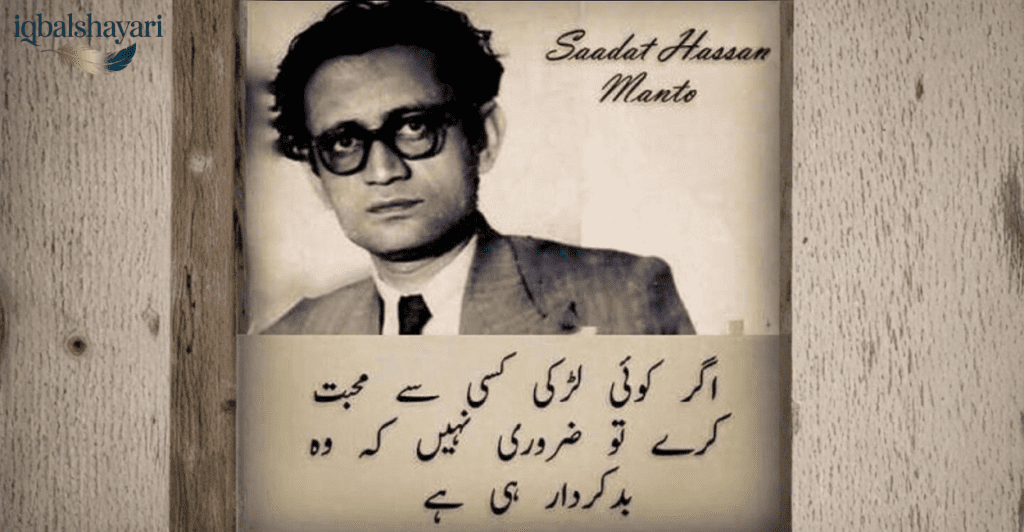
Saadat Hasan Manto (1912-1955) was an Indo-Pakistani Urdu writer regarded as the greatest short story author in Urdu literature. He wrote over 250 stories, primarily about India’s 1947 partition, depicting sexual violence and communal riots with brutal honesty. He faced six obscenity trials but was never convicted.
Understanding Manto means understanding one of the most powerful literary voices to emerge from the traumatic division of the Indian subcontinent. His unflinching narratives continue to resonate today, making him essential reading for anyone interested in South Asian literature, partition literature, or the human cost of political upheaval.
Who Was Saadat Hasan Manto?
Manto was born on May 11, 1912, in Samrala, a small village near Ludhiana in Punjab. Coming from a Kashmiri family, his early life was marked by academic struggles—ironically, he failed his Urdu examination multiple times despite later becoming the language’s master storyteller.
The turning point came when he met Abdul Bari Alig, a scholar who introduced him to Russian literature and the works of Victor Hugo and Oscar Wilde. This exposure transformed Manto’s perspective and ignited his passion for writing. He began translating French and Russian stories into Urdu, developing the distinctive style that would later define his career.
In the 1930s, Manto moved to Bombay (now Mumbai), where he entered the thriving film industry. He worked as a screenwriter and dialogue writer for several production companies, including Imperial Film Company and Bombay Talkies. This period exposed him to diverse characters—prostitutes, pimps, struggling actors, and social outcasts—who would populate his later stories.
His close friendships with film personalities like Ashok Kumar and Shyam Chadda provided both material and emotional support. During this time, Manto also joined the Progressive Writers’ Association, a left-leaning literary movement that championed social realism and challenged conservative norms.
The Partition Decision That Changed Everything
When India gained independence in 1947, the subcontinent was divided into India and Pakistan along religious lines. This partition unleashed unprecedented communal violence, with millions displaced and estimates of up to two million killed in riots and massacres.
Manto opposed the division but ultimately decided to migrate to Pakistan with his wife Safia and daughters. The decision haunted him. Unlike many who saw clear political lines, Manto witnessed only senseless bloodshed and the destruction of centuries-old communities.
He arrived in Lahore in 1948, expecting opportunities but finding instead a conservative society suspicious of his bold writing. The vibrant cosmopolitan culture of Bombay was replaced by a more restrictive environment. Manto struggled financially, increasingly turning to alcohol as his circumstances deteriorated.
His writings about partition captured what official histories often glossed over: the sexual violence against women, the psychological trauma, the arbitrary nature of newly drawn borders, and the absurdity of sudden religious identity imposed on mixed communities.
Manto’s Most Famous Stories
Toba Tek Singh stands as Manto’s masterpiece and one of the finest short stories in any language. The BBC included it among the 100 greatest stories ever written. Set in a mental asylum during partition, it tells of inmates being exchanged between India and Pakistan. The protagonist, Bishan Singh, refuses to choose either country, instead standing in the no-man’s land between borders until he collapses and dies.
The story’s genius lies in its metaphor: the “sane” politicians who drew arbitrary lines appear more insane than the asylum inmates. Toba Tek Singh perfectly captures the madness and tragedy of partition in just a few pages.
Thanda Gosht (Cold Meat) remains one of Manto’s most controversial works. It depicts a man recounting to his lover how he participated in communal riots and raped a Sikh girl—only to realize she was already dead. The story’s raw confrontation with sexual violence during partition led to one of Manto’s obscenity trials. Yet its power lies in showing the psychological devastation violence inflicts on perpetrators themselves.
Khol Do (Open It) tells the story of Siraj, a father searching for his daughter Sakina during partition chaos. When volunteers find her unconscious, they place her on a stretcher. At the doctor’s request to “open the window,” the traumatized girl, conditioned by repeated assault, mechanically begins unfastening her clothes. The story ends there, its horror amplified by what remains unsaid.
Bu (Odor) and Hatak (Insult) both explore prostitution and sexuality with a humanity rarely afforded to marginalized women. Manto refused to moralize or judge his characters, instead presenting them as complex individuals navigating difficult circumstances.
His essay series Letters to Uncle Sam showcased his wit and political commentary, offering satirical observations on international politics and Pakistan’s relationship with the United States.
The Obscenity Trials: Fighting for Literary Freedom
Manto faced six obscenity trials—three during British rule in India and three after independence in Pakistan. Stories like Thanda Gosht, Khol Do, Bu, and Kali Shalwar (Black Trousers) were deemed immoral by authorities who argued they corrupted public morals.
Each trial followed a similar pattern. Prosecutors claimed Manto’s explicit content served no literary purpose. Manto countered that he was merely holding up a mirror to society’s ugliness. His famous response became a rallying cry for artistic freedom: “If you find my stories dirty, the society you are living in is dirty. With my stories, I only expose the truth.”
Remarkably, Manto was never convicted. Courts recognized the literary merit and social commentary embedded in his work. However, the trials took their toll emotionally and financially, contributing to his declining health and increasing alcoholism.
The freedom of expression debates Manto sparked remain relevant today. His struggles mirror contemporary conflicts between artistic liberty and social conservatism across South Asia and beyond.
Literary Style: What Made Manto Different
Manto’s writing style revolutionized Urdu short stories. He favored extreme brevity, often telling complete stories in just 3-5 pages. Every word carried weight; he eliminated all unnecessary description, focusing instead on dialogue and action that revealed character.
His narrative voice maintained complete neutrality. Unlike many writers who guide readers toward moral judgments, Manto presented situations and characters without commentary. This technique forced readers to confront their own prejudices and assumptions.
The psychological insight in Manto’s stories came from his deep empathy for marginalized people. Whether writing about prostitutes, criminals, or victims of violence, he portrayed them as fully human—flawed, complex, and worthy of dignity.
Dark humor frequently appeared in his work, particularly in his sketches and essays. This wasn’t humor that trivialized tragedy but rather acknowledged the absurdity inherent in human suffering.
Manto wrote primarily in Urdu, using colloquial language that captured how ordinary people actually spoke. This accessibility made his stories resonate with both common readers and literary elites.
Death and Posthumous Recognition
Manto’s heavy drinking finally destroyed his health. He died of liver cirrhosis on January 18, 1955, at just 42 years old. His funeral was sparsely attended—many who had praised his genius avoided association with the controversial writer.
Before his death, Manto reportedly composed his own epitaph: “Here lies Saadat Hasan Manto, and with him lie buried all the secrets and arts of short story writing. Under tons of earth he lies, still wondering whether he is a greater short story writer than God.”
Recognition came slowly after his death. The Government of Pakistan posthumously awarded him the Nishan-e-Imtiaz, the country’s highest civilian honor, on August 14, 2012, during his birth centenary celebrations.
Today, Manto is studied in universities across Pakistan, India, and internationally. His works appear in countless English and Hindi translations. The Rekhta Foundation has digitized his complete works, making them freely accessible online.
Two major biographical films brought Manto to new audiences: a 2015 Pakistani film directed by and starring Sarmad Khoosat, and a 2018 Bollywood production featuring Nawazuddin Siddiqui and directed by Nandita Das. Both explored his struggles with censorship and personal demons.
Where to Buy Manto Books in Pakistan
If you’re in Pakistan and want to purchase Manto’s works, several options exist across different price ranges.
Sang-e-Meel Publications in Lahore remains the most authoritative publisher of Manto’s complete works. Their editions range from Rs. 750 for single story collections to Rs. 14,600 for the complete kulliyat (collected works). You can visit their shop at 23-Shahrah-e-Pakistan, Lower Mall, Lahore, or order through their website.
Daraz.pk, Pakistan’s largest e-commerce platform, offers the best deals on Manto books. Prices start from Rs. 399 for paperback collections and average Rs. 1,067-1,743 for comprehensive editions. They deliver nationwide, making this convenient for buyers outside major cities.
For physical bookstores, Urdu Bazaar in Lahore and Tariq Road in Karachi have numerous shops stocking Manto’s works. Liberty Market in Lahore also features several bookstores with good Urdu literature sections.
KitabDeal.com specializes in Pakistani books and offers home delivery with cash-on-delivery options. Their Manto collection includes both budget and premium editions.
For digital access, Rekhta.org provides free online reading of Manto’s complete works in original Urdu script. This platform has become invaluable for preserving and democratizing access to Urdu literature.
Where to Buy Manto Books in India
Indian readers have multiple purchasing channels depending on format preferences and language requirements.
Flipkart offers the widest selection of Manto books in India, with prices ranging from ₹189 to ₹1,050. Both Urdu originals and Hindi/English translations are available. They frequently run discounts, especially during major sale events.
RekhtaBooks.com ships across India and specializes in quality Urdu literature. Their Manto editions range from ₹500-1,009 and include both original texts and annotated versions with explanatory notes helpful for new readers.
Amazon.in stocks various Manto titles, with English translations particularly well-represented. Kindle editions start at ₹0 for titles included in Kindle Unlimited, making this the most budget-friendly option for digital readers.
Physical bookstores in Delhi’s Ansari Road, Mumbai’s Mohammad Ali Road, and Lucknow’s Aminabad areas maintain dedicated Urdu literature sections where Manto is prominently featured.
University bookstores at Jamia Millia Islamia and Aligarh Muslim University stock academic editions suitable for students.
A Beginner’s Guide to Reading Manto
For first-time readers, Manto’s extensive bibliography can seem overwhelming. Here’s a strategic approach to discovering his genius.
Start with Toba Tek Singh. At just a few pages, it’s accessible yet profound, introducing Manto’s style without the explicit content that might shock unprepared readers. This story works as both partition commentary and universal human allegory.
Next, read Khol Do to understand how Manto depicted violence against women during partition. While disturbing, it’s essential to grasping why he faced such controversy and why his work matters.
Thanda Gosht should come third, after you’ve acclimated to Manto’s direct approach. This story requires emotional preparation due to its graphic subject matter, but it exemplifies his refusal to sanitize historical trauma.
Explore his sketches and essays, particularly Letters to Uncle Sam, for lighter fare showing Manto’s humor and political observations. These provide relief from the intensity of his fiction while revealing his personality.
Finally, dive into comprehensive collections organized by theme. Partition stories, Bombay stories, and character sketches each offer different facets of his artistry.
Content warnings are worth noting. Many Manto stories contain depictions of sexual violence, communal atrocities, and psychological trauma. They’re recommended for mature readers (16+) who can process difficult historical content.
Comparing the 2015 and 2018 Manto Films
Both biographical films offer valuable insights into Manto’s life, though they take different approaches.
The 2015 Pakistani film directed by Sarmad Khoosat (who also starred as Manto) was made in Urdu with a more intimate, raw aesthetic. It focused heavily on Manto’s personal struggles with alcoholism, his courtroom battles, and his deteriorating relationship with Pakistani society. Khoosat’s performance captured Manto’s self-destructive tendencies and artistic integrity.
The 2018 Bollywood production featured Nawazuddin Siddiqui in the title role, directed by Nandita Das. Made in Hindi with higher production values, it emphasized Manto’s Bombay years and relationships with film industry figures. The courtroom scenes received particular attention, highlighting the legal arguments around artistic freedom.
Which to watch first? For Urdu speakers interested in a more personal, character-driven portrait, the 2015 version offers authenticity. For those seeking a broader historical canvas with English subtitles widely available, the 2018 film provides better accessibility.
Both films struggled with the same challenge: how to depict a writer whose power lay in words rather than dramatic action. Neither fully captures what makes reading Manto so compelling, but both succeed in introducing his significance to audiences unfamiliar with Urdu literature.
Why Manto Matters Today
Manto’s relevance extends far beyond historical interest. In an era of increasing censorship across South Asia and globally, his battles for free expression resonate strongly.
Contemporary debates about “offensive” content mirror the accusations Manto faced. His principled stance—that uncomfortable truths must be told, that art serves society by exposing its failures—provides a framework for current discussions about art, politics, and morality.
The partition traumas Manto documented remain unresolved. India and Pakistan continue their troubled relationship, with communal tensions periodically erupting into violence. Manto’s stories remind us of the human cost when political divisions harden into hatred.
His treatment of marginalized people—particularly women and sex workers—offered dignity to those society preferred to ignore. This approach influenced generations of South Asian writers who followed, from Ismat Chughtai to contemporary feminist authors.
Modern writers cite Manto as inspiration for confronting difficult subjects honestly. His economy of language and psychological depth remain benchmarks of short story craft.
Social media has given Manto new life. His quotes about hypocrisy, freedom, and human nature circulate widely, often without attribution. His observation that “the man who raised a stone against a woman was not a man” resonates in discussions about gender violence.
Frequently Asked Questions
What is Manto’s most famous story?
Toba Tek Singh is universally recognized as Manto’s masterpiece. This short story about a mental asylum inmate during partition perfectly captures the absurdity of dividing people along religious lines. The BBC included it among the 100 greatest stories in literature. Its protagonist, who refuses to choose between India and Pakistan, has become an enduring symbol of the tragedy and madness of partition.
Why was Manto tried for obscenity?
Manto faced six obscenity trials for stories depicting sexual violence, prostitution, and partition atrocities. Authorities argued his explicit content corrupted public morals. Stories like Thanda Gosht, Khol Do, and Bu were deemed indecent. Manto defended himself by arguing he only reflected society’s ugliness honestly, without sensationalism. Courts ultimately recognized his literary merit and never convicted him, though the trials damaged him financially and emotionally.
How did Manto die?
Manto died of liver cirrhosis on January 18, 1955, at age 42. Years of heavy alcohol consumption destroyed his health. His final years in Lahore were marked by poverty, professional isolation, and declining physical condition. Despite his obvious illness, he continued writing until shortly before his death. His funeral was poorly attended, as many who admired his work avoided association with the controversial writer.
Can I read Manto’s works online for free?
Yes, Rekhta.org offers free access to Manto’s complete works in original Urdu script. The platform has digitized hundreds of his stories, essays, and sketches. You can read them on any device with internet access. Rekhta also provides audio recordings of many stories, read by professional voice artists. This has made Manto accessible to a global Urdu-reading audience. Some English translations are also available through Project Gutenberg and other public domain sources.
Which Manto translation is best for English readers?
Khalid Hasan’s translations are widely considered the gold standard for English readers. His “Mottled Dawn” collection captures Manto’s directness and economy of language effectively. Aatish Taseer has also produced respected translations that maintain literary quality. When purchasing, check the translator’s name—quality varies significantly. Avoid machine translations, which fail to capture Urdu’s nuances. For serious study, reading summaries in Urdu alongside English translations helps understand what may be lost in translation.
Is Manto suitable for teenagers?
This depends on the teenager’s maturity and the specific story. Toba Tek Singh and some of Manto’s lighter sketches are appropriate for ages 14+. However, stories dealing with sexual violence and graphic partition atrocities (Thanda Gosht, Khol Do) are better suited for ages 16-18+, ideally with historical context provided by teachers or parents. Many schools in Pakistan and India include selected Manto stories in literature curricula for older students, with appropriate content warnings and discussion frameworks.
Why did Manto move to Pakistan during partition?
Manto opposed partition but felt compelled to migrate to Pakistan in 1948. As a Muslim from Ludhiana, he faced pressure from both sides. Despite his cosmopolitan worldview and close Hindu and Sikh friends, the communal violence made staying in Bombay increasingly difficult. He hoped Lahore would offer opportunities and that Pakistan would embrace progressive artistic values. Instead, he found a more conservative society suspicious of his bold writing, leading to professional and personal struggles that defined his final years.
How many stories did Manto write?
Manto wrote approximately 250 short stories collected in 22 published volumes during his lifetime. Beyond fiction, he authored numerous essays, radio plays, film scripts, and character sketches (khaka). His prolific output is even more remarkable considering his short life—just 42 years—and the fact that his most productive period spanned only about 20 years. The exact count varies by source because some works exist in multiple versions, and classification between stories, sketches, and essays can be ambiguous.
Where is Manto buried?
Manto is buried in Miani Saheb Graveyard in Lahore, Pakistan. His grave has become a pilgrimage site for literature lovers, particularly during his birth and death anniversaries. The simple headstone reportedly bears an inscription reflecting his own words about lying beneath the earth still wondering whether he was a greater storyteller than God. The Lahore literary community regularly holds commemorative events at his graveside, and visitors often leave flowers and pay respects to Urdu’s master storyteller.
What makes Manto different from other partition writers?
Manto distinguished himself through brutal honesty that other partition writers avoided. While contemporaries like Khushwant Singh provided historical scope and Intizar Husain explored existential themes, Manto focused unflinchingly on sexual violence, communal brutality, and psychological trauma. He refused to moralize, instead presenting human behavior—both terrible and compassionate—without judgment. His extreme brevity, psychological depth, and empathy for marginalized victims set him apart. Most significantly, he wrote from direct observation rather than historical distance, capturing the immediate chaos and confusion of partition as it unfolded.
Conclusion
Saadat Hasan Manto remains one of the most important literary voices of the 20th century, not just in Urdu literature but in world literature. His fearless examination of human nature during crisis, his defense of artistic freedom against censorship, and his compassionate portrayal of society’s outcasts established standards of literary courage that continue inspiring writers globally.
For readers in Pakistan and India, Manto offers more than historical insight. He provides a mirror reflecting ongoing challenges: communal tensions, censorship debates, and the treatment of marginalized communities. His work reminds us that the questions raised by partition remain unresolved, demanding continued engagement and understanding.
Beginning your Manto journey requires only curiosity and openness to challenging perspectives. Whether purchasing collections from Daraz, Flipkart, or Sang-e-Meel, or accessing free resources through Rekhta, the investment of time rewards readers with profound insights into humanity’s capacity for both cruelty and resilience.
As Manto himself wrote in one of his final letters: “I wonder if man really is so evil. If you knew me, you would know that I am not cynical. I have hope for man. But that hope is often shaken, and I’m afraid it might die altogether.” His stories keep that hope alive by refusing to look away from darkness while insisting on the dignity of every human soul.
Red More: Ashfaq Ahmed Biography