
Introduction: Dil Ko Chhu Lene Wali Poetry for Every Pain
There are moments when silence says more than words — but even silence needs a shape. That shape, in the Urdu-speaking world, has always been sad shayri.
Sad shayri in Urdu is not simply poetry about being unhappy. It is a centuries-old tradition of giving language to feelings that ordinary conversation cannot hold — the dard of a broken relationship, the gham of losing someone forever, the quiet weight of tanhai at the end of a long day. From the streets of Old Delhi to the literary cafes of Lahore, Urdu sad poetry has been the emotional backbone of two nations and their shared cultural memory.
Whether you are searching for a dard bhari shayri to post as your WhatsApp status, trying to understand what Ghalib truly meant, or simply sitting alone and needing someone to have felt what you feel — this collection is for you.
What Is Sad Shayri and Why Does It Matter?
Sad shayri (غمگین شاعری) is Urdu poetry that expresses sorrow, heartbreak, longing, grief, or despair. It draws from a literary tradition rooted in Persian poetry, Sufi philosophy, and Mughal court culture — a tradition that treated emotional pain not as weakness, but as evidence of depth.
The genius of Urdu sad poetry is its precision. Where English might say “I miss you,” Urdu says “teri yaad ne chain le liya” — your memory has taken away my peace. The difference is not just linguistic. It is emotional resolution. Urdu shayri does not describe pain from a distance. It lives inside it.
This is why sad shayri in Urdu continues to dominate WhatsApp statuses in Karachi, Instagram reels in Delhi, and Facebook posts across the Urdu-speaking diaspora from London to Toronto. The words are old, but the feelings are permanent.
The Historical Roots of Urdu Sad Poetry
Urdu sad poetry did not begin in heartbreak. It began in longing — specifically, the Sufi concept of ishq (love) as a spiritual journey toward the divine. Persian poets like Rumi and Hafiz established the ghazal form and its emotional vocabulary, which Urdu poets then inherited and made entirely their own.
The classical period of Urdu shayri reached its peak in 18th and 19th century Delhi and Lucknow. Poets of this era — writing under the declining shadow of the Mughal Empire — gave dard and gham an almost philosophical weight. Loss was not just personal. It was civilizational.
Then came 1947.
The Partition of British India produced some of the most devastating Urdu poetry ever written. The forced separation of communities, the violence, the displacement — all of it poured into verse. Faiz Ahmed Faiz, imprisoned for his political beliefs, wrote sad shayri that was simultaneously personal and collective. That tradition of grief encoded in beautiful language continues today in both Pakistan and India.
Major Forms of Sad Shayri in Urdu
Understanding the form helps you appreciate the feeling. Urdu sad poetry does not come in one shape.
Ghazal (غزل) is the most prestigious form — a sequence of self-contained couplets sharing a rhyme scheme (qafia) and a repeated word or phrase (radif). Each sher stands alone emotionally, yet the ghazal as a whole creates a cumulative ache.
Sher (شعر) — a single two-line couplet — is the most shareable unit of Urdu poetry. It is what fills WhatsApp statuses and Instagram captions. The best 2-line sad shayri in Urdu captures a complete emotion in two breaths.
Nazm (نظم) is a longer, continuous poem with a narrative arc. It handles complex grief — the kind that cannot be compressed into two lines.
Marsiya (مرثیہ) is elegiac poetry traditionally written to mourn the martyrs of Karbala, but in broader usage, any deeply sorrowful lamentation. It is the form of Urdu sad poetry closest to collective mourning.
The Greatest Poets of Sad Shayri — With Their Verse
Mirza Ghalib — The Master of Beautiful Grief
Mirza Ghalib (1797–1869) is the most quoted Urdu poet in history. His sad shayri balances intellectual brilliance with raw emotional ache — a combination no poet before or after has fully replicated.
Dil dhundhta hai phir wohi fursat ke raat din Baithe rahen tasawwur-e-jaana kiye hue
Meaning: The heart searches again for those leisure days and nights — when I could simply sit, lost in the thought of you.
Ghalib’s dard bhari shayri is timeless precisely because it refuses self-pity. His sorrow is curious, almost defiant. He does not ask why he suffers — he observes it with the eye of someone who finds the human condition fascinating even in its worst moments.
Faiz Ahmed Faiz — When Grief Becomes Resistance
Faiz Ahmed Faiz (1911–1984) is the poet who proved that gham ki shayri need not be private. His sad Urdu poetry expanded personal heartbreak into political consciousness — making judai (separation) carry the weight of an entire nation’s displacement.
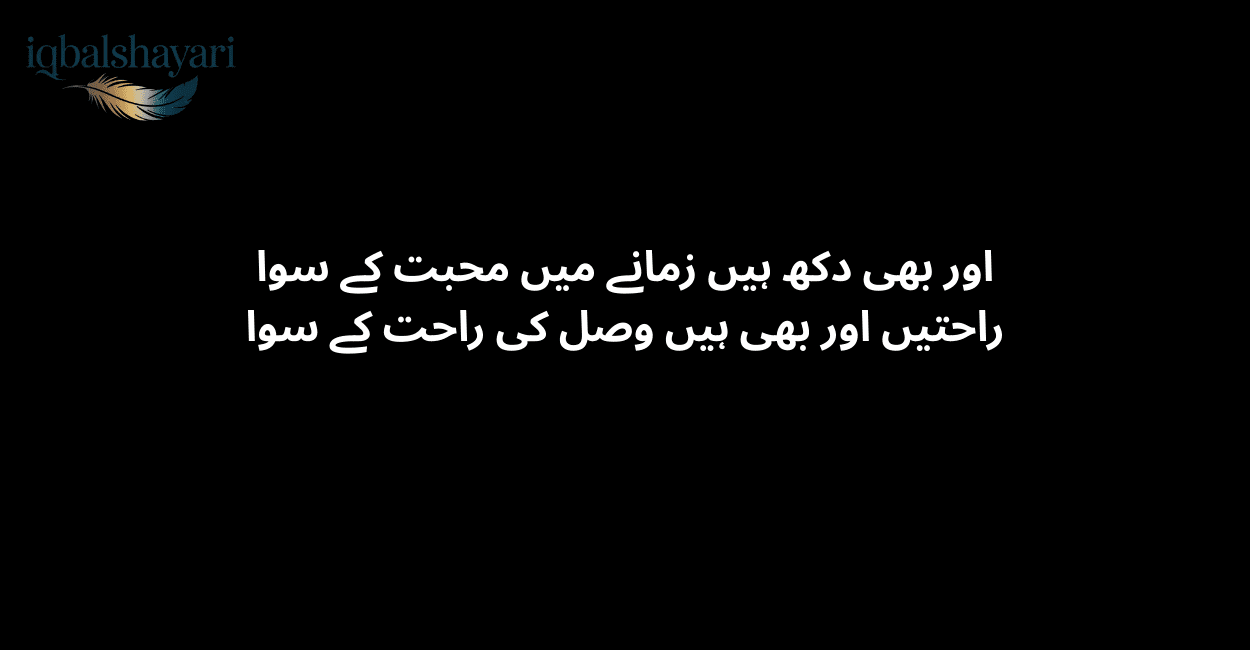
اور بھی دکھ ہیں زمانے میں محبت کے سوا راحتیں اور بھی ہیں وصل کی راحت کے سوا
Aur bhi dukh hain zamaane mein mohabbat ke siwa Rahatein aur bhi hain wasl ki raahat ke siwa
Meaning: There are other sorrows in this world besides love — and other comforts besides the comfort of union.
Written partially during his years of imprisonment, Faiz’s shayri transformed tanhai into solidarity. He is equally beloved in Lahore and Delhi — a poet who belongs to both nations and neither exclusively.
Parveen Shakir — The Sound of Silent Pain
Parveen Shakir (1952–1994) changed Urdu sad poetry by centering the feminine experience with unapologetic honesty. Her heart-touching sad shayri captured what women had long felt but rarely been given permission to say.
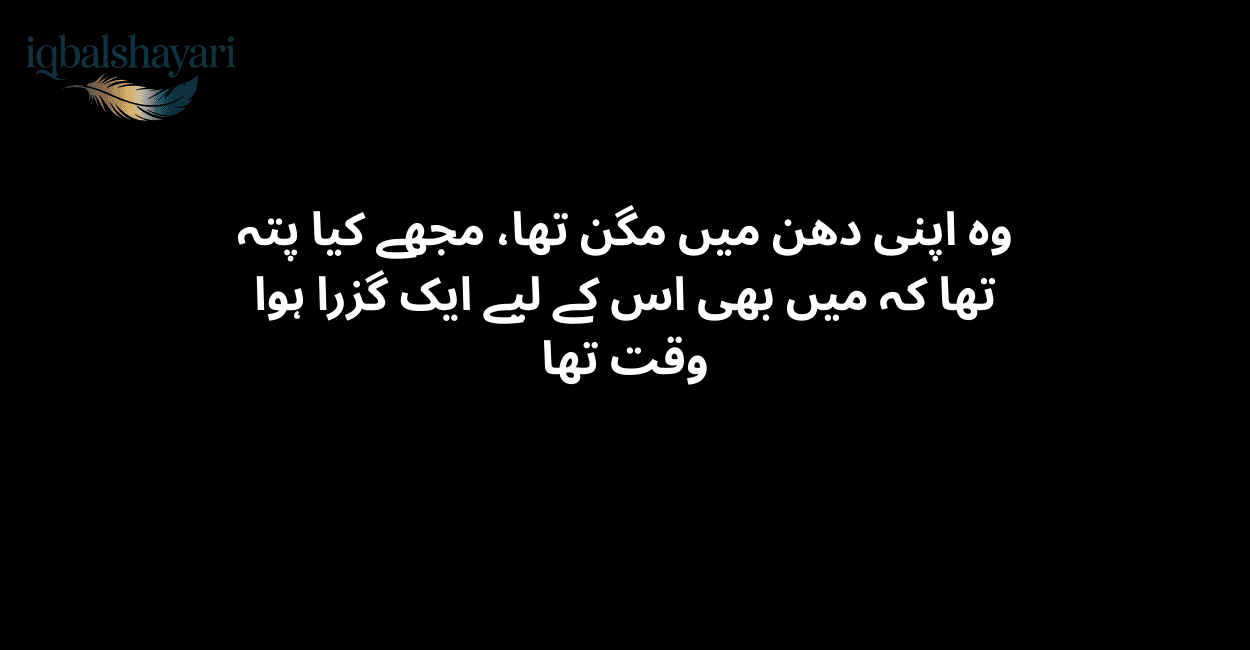
وہ اپنی دھن میں مگن تھا، مجھے کیا پتہ تھا کہ میں بھی اس کے لیے ایک گزرا ہوا وقت تھا
Woh apni dhun mein magn tha, mujhe kya pata tha Ke main bhi us ke liye ek guzra hua waqt tha
Meaning: He was absorbed in his own world — I had no idea that for him, I too was just a time that had passed.
Her collection Khushbu remains one of the most beloved volumes of Urdu sad shayri ever published. She died in a car accident at 42, leaving behind a body of work that feels tragically incomplete and yet somehow perfectly whole.
Jaun Elia — The Poet Who Made Despair Beautiful
Jaun Elia (1931–2002) occupied a space in Urdu sad poetry that no one else has claimed — raw, confessional, philosophically dark, and utterly modern. His collection Shayad is the definitive text of existential gham in Urdu literature.
میں بھی بہت عجیب ہوں، کیوں بھول جاتا ہوں جو لوگ جاتے ہیں وہ واپس نہیں آتے
Main bhi bahut ajeeb hoon, kyun bhool jaata hoon Jo log jaate hain woh wapas nahin aate
Meaning: I am strange indeed — why do I keep forgetting? Those who leave do not come back.
Jaun Elia’s sad shayri dominates among younger audiences across Pakistan and India because it speaks the language of modern loneliness — no metaphorical candles or deserts, just honest devastation.
Ahmad Faraz — The Poet of the Broken Heart
Ahmad Faraz (1931–2008) gave Urdu sad poetry its most romantic register. His bewafa shayri and verses on mohabbat mein dard are among the most recited at mushairae across Pakistan.
رنجش ہی سہی، دل ہی دکھانے کے لیے آ آ پھر سے مجھے چھوڑ کے جانے کے لیے آ
Ranjish hi sahi, dil hi dukhane ke liye aa Aa phir se mujhe chhod ke jaane ke liye aa
Meaning: Come, even if just to hurt me — come, even if only to leave me again.
Best 2-Line Sad Shayri in Urdu for WhatsApp & Instagram
These short sad shayri verses are formatted specifically for sharing — each complete in two lines, each carrying a full emotional world.
جب درد کی حد نہ رہے تو آنسو بھی سوکھ جاتے ہیں کچھ زخم ایسے ہوتے ہیں جو دکھتے نہیں، بس رِستے ہیں
When pain crosses its limit, even tears dry up — Some wounds don’t ache. They simply keep bleeding.
تم نے بھلا دیا تو ہم نے بھی مان لیا بس دل کو سمجھانا ابھی باقی ہے
You forgot me, and I accepted it — Only convincing my heart still remains.
کیا بتائیں کس قدر تنہا ہیں ہم آواز دیتے ہیں تو اپنی گونج آتی ہے
How do I explain how lonely I am — When I call out, only my own echo responds.
محبت میں ہار جانا بھی ضروری ہے کچھ رشتے جیتنے سے نہیں، ٹوٹنے سے مکمل ہوتے ہیں
In love, losing is sometimes necessary — Some relationships are completed not by winning, but by breaking.
Sad Shayri Categorized by Emotion
Judai Shayri — The Pain of Separation
جدائی میں بھی تیری یاد نے ساتھ دیا تو نہ سہی، تیرا خیال تو رہا
Even in separation, your memory stayed beside me — If not you, at least the thought of you remained.
Tanhai Shayri — The Weight of Loneliness
تنہائی بھی عجیب شے ہے، ساتھ نہیں چھوڑتی جب سب چلے جاتے ہیں، یہ آ کے بیٹھ جاتی ہے
Loneliness is a strange companion — it never leaves. When everyone else goes, it comes and sits beside you.
Yaad Shayri — The Ache of Memory
تم کو بھولنے کی کوشش میں یہ ہوا تمہاری یاد اور گہری ہوتی گئی
In the effort to forget you, this is what happened — Your memory only grew deeper.
Maut aur Gham — Grief After Loss
وہ چلے گئے ہمیشہ کے لیے، اور ہم رہ گئے یہ رہنا بھی ایک سزا ہے انہیں یاد کرنے کی
They left forever. We remained. This survival is its own punishment — the act of remembering.
How to Write Your Own Sad Shayri in Urdu
Writing sad shayri is not a skill reserved for scholars. The tradition has always welcomed anyone who carries real feeling. Here is a simple framework:
- Name the emotion specifically. Do not write “I am sad.” Write about the exact moment — the empty chair, the unanswered message, the familiar smell of someone gone.
- Choose one strong metaphor. Classical Urdu shayri built entire worlds on a single image. A candle (shama) consuming itself. Rain (baarish) that falls only on you. A mirror (aaina) that shows what is missing.
- Write a two-line sher first. Do not begin with a ghazal. Begin with one complete thought in two lines that rhyme naturally.
- Read it aloud. Urdu poetry is an oral tradition. If it does not sound beautiful when spoken, revise it until it does.
- Prioritize honesty over cleverness. The most powerful dard bhari shayri is almost always the simplest. Ghalib was complex. Mir Taqi Mir was simple. Both broke hearts equally.
- Study the masters first. Spend time on Rekhta.org reading Faiz, Parveen Shakir, and Jaun Elia before attempting your own verse. Absorption precedes expression.
Where to Read and Share Sad Shayri Online
| Platform | Best Use |
| Rekhta.org | Largest Urdu archive; search by poet, theme, word |
| UrduPoint.com | Categorized shayri for quick WhatsApp sharing |
| YouTube | Mushaira recordings, live recitations |
| #sadshayri #urdushayari #dardshayri | |
| WhatsApp Status | 2-line shers — the dominant format |
For the most authentic experience, search Jashn-e-Rekhta recordings on YouTube — an annual festival held in Delhi and internationally that brings together the finest voices in Urdu sad poetry and classical literature.
FAQs — Sad Shayri in Urdu
Q1: What is the most famous sad shayri in Urdu?
Mirza Ghalib’s “Hazaron khwahishen aisi ke har khwahish pe dam nikle” is arguably the most quoted sad sher in Urdu history. It captures infinite longing in two lines and has remained culturally dominant for over 150 years across both India and Pakistan.
Q2: Who is the best poet for sad shayri in Urdu?
Mirza Ghalib is the pinnacle for intellectual depth. Mir Taqi Mir for emotional simplicity. Faiz Ahmed Faiz for grief with political resonance. Parveen Shakir for feminine longing. Jaun Elia for raw existential dard. Each is “best” depending on what kind of pain you are carrying.
Q3: What does “dard” mean in Urdu shayri?
Dard (درد) literally means pain or ache. In Urdu sad poetry, it carries a deeper meaning — a refined, almost sacred suffering that connects the person feeling it to something greater than themselves. It is not ordinary pain. It is the pain that makes you human.
Q4: What is the difference between ghazal and nazm in sad poetry?
A ghazal consists of self-contained couplets — each sher can stand alone. A nazm is a continuous poem where meaning builds across the entire piece. Sad ghazals are more shareable and memorable. Sad nazm handles emotional complexity that cannot fit in two lines.
Q5: How do I find sad shayri for WhatsApp status?
Rekhta.org and UrduPoint.com are the most reliable sources. Search by emotion — gham, tanhai, judai, bewafai — or by poet name. Two-line shers are ideal for WhatsApp status because they are complete in themselves and fit the format perfectly.
Q6: What is Jaun Elia’s most famous sad shayri?
Jaun Elia’s collection Shayad contains his most celebrated work. His verse “Main bhi bahut ajeeb hoon, kyun bhool jaata hoon / Jo log jaate hain woh wapas nahin aate” is among his most widely shared dard bhari shayri — particularly popular among younger audiences in Karachi, Lahore, and across the Urdu-speaking world online.
Q7: Can I write sad shayri in Urdu even as a beginner?
Absolutely. Begin with a single sher — two lines, one emotion, one honest image. Study Parveen Shakir and Ahmad Faraz for accessible models before attempting Ghalib’s complexity. The Urdu shayri tradition has always made space for new voices willing to feel deeply and write honestly.
Conclusion
Sad shayri in Urdu is one of the oldest and most alive literary traditions in South Asia. It has survived empires, partitions, and the relentless noise of the modern world — because human grief does not go out of style.
Ghalib felt it in 19th century Delhi. Faiz felt it in a Pakistani prison. Parveen Shakir felt it as a woman who loved without apology. Jaun Elia felt it as someone who watched everything he loved slip away. And you — reading this today in Lahore or Delhi, alone with your phone at midnight — you feel it too.
That continuity is the point. Urdu sad poetry does not solve pain. It does something more useful: it proves that someone else felt exactly this, survived it, and made it beautiful.
Find your poet. Memorize your sher. And if the feeling runs deep enough — write your own.