
Introduction: The Complete English Guide to Heartbreak, Grief, and Longing
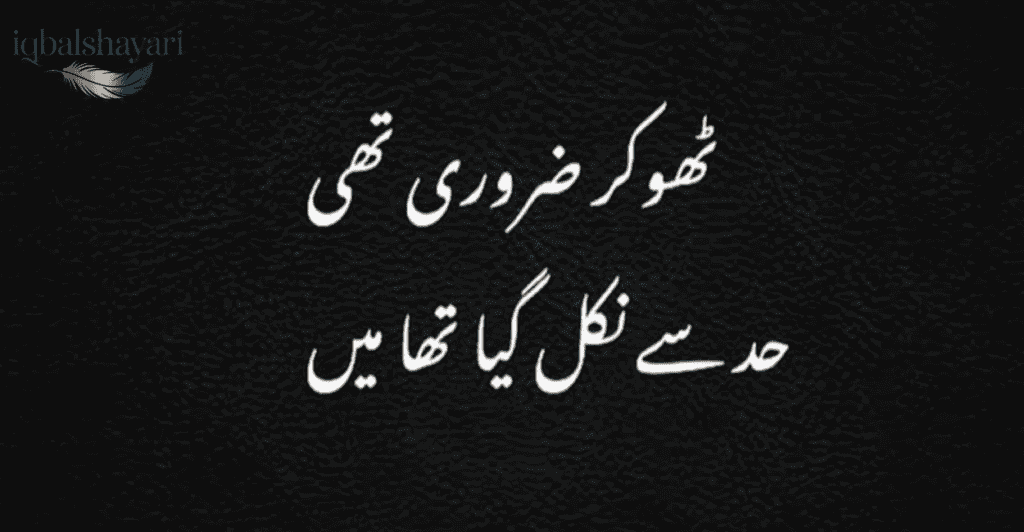
You are sitting somewhere in New York, Houston, or the Bay Area. It is late. The person you loved stopped answering your messages three weeks ago. You reach for something that names what you are feeling — something that goes deeper than an English quote, something inherited from a culture you are still figuring out how to hold. You find a poem. Two lines. And somehow, it says everything.
That is the power of Urdu sad poetry. This guide explains it — fully in English — for everyone who has ever felt its pull without having the full language to understand why.
What Is Urdu Sad Poetry?
Urdu sad poetry is a classical and contemporary form of South Asian verse that channels grief, heartbreak, separation, loneliness, and longing into structured, highly refined language. It has been developed over more than four centuries and remains the dominant emotional literary tradition across Pakistan, India, and the global South Asian diaspora.
The basic unit of this poetry is the couplet — two lines that form a complete, self-contained emotional statement. At its most complex, it exists as the ghazal: a multi-couplet poem built around a repeating end-word that creates a hypnotic, aching rhythm. Think of the ghazal as grief on a loop — the feeling that returns and returns, which is precisely what makes it so accurate.
What separates Urdu sad poetry from simply writing down sad feelings is compression, metaphor, and structure. A single well-crafted couplet can hold the full collapse of a relationship, the specific weight of missing a homeland, or the quiet devastation of being unseen — all in two lines. It is emotional engineering at its finest.
Why Does This Poetry Affect People So Deeply?
Three reasons stand above all others.
First, it names things English cannot. The English word “loneliness” and the Urdu concept of tanhai are not the same thing. Tanhai is not just being alone — it is being unseen even while surrounded by people. The English word “waiting” and the Urdu intezaar are not equivalent. Intezaar carries the specific torture of hoping for someone who may not return. When a language has precise words for your exact emotional state, the poetry built from those words lands differently.
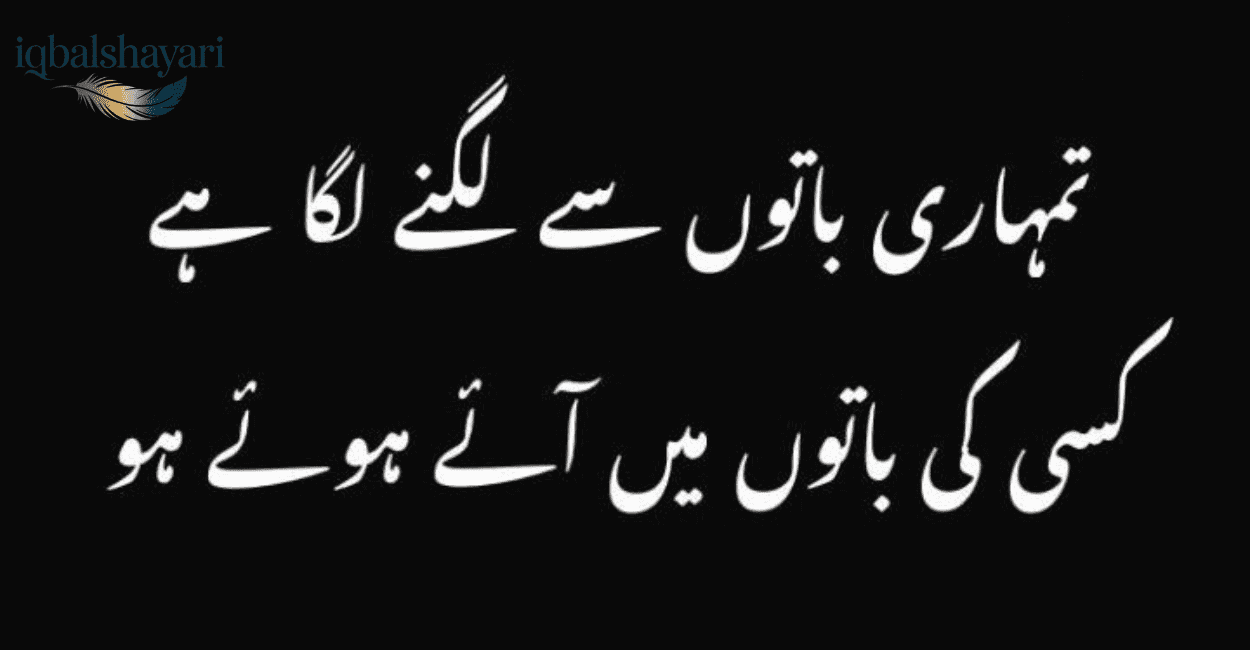
Second, it validates pain without offering solutions. Urdu sad poetry does not tell you to move on, practice gratitude, or look on the bright side. It sits with you inside the grief. For many people — particularly those raised in cultures where emotional expression is not always encouraged — finding a poem that simply says “yes, this hurts, and the hurt is real” is a form of profound relief.
Third, it carries cultural continuity. For South Asian Americans, this poetry connects them to a heritage that migration threatened to thin out. When a second-generation Pakistani American in Chicago finds a couplet that perfectly captures what they are feeling, they are participating in a literary tradition that stretches back to the Mughal courts of the 16th century. That is not a small thing.
The Main Forms of Urdu Sad Poetry
Understanding the structure helps you appreciate what you are reading.
| Form | Description | Emotional Register | Best For |
| Couplet (Sher) | Two self-contained lines | Intense, immediate grief | Social media sharing |
| Ghazal | 5–12+ couplets with rhyme and repeating end-word | Deep, recurring ache | Reading and listening |
| Free Poem (Nazm) | Narrative or free-form poem | Complex, layered sadness | Longer emotional storytelling |
| Quatrain (Rubai) | Four lines, AABA rhyme scheme | Philosophical grief, fate | Reflection and contemplation |
| Fragment (Qita) | Four or more lines without strict opening rules | Specific emotional argument | Targeted situational sharing |
The ghazal is the most celebrated form in Urdu sad poetry. Its genius is in the repeating end-word — called the radif — which creates a returning, circular structure that mirrors the nature of grief itself. Every couplet ends in the same word or phrase, but arrives there from a different emotional angle. It is like circling a wound from multiple directions.
The Major Emotions in Urdu Sad Poetry
Most collections of Urdu poetry organize by poet or format. This section organizes by emotion — because that is how people actually search for it.
Grief and Pain (Dard)
Dard means pain, but in Urdu poetry it is almost a spiritual condition — pain so deep it becomes part of one’s identity. Poetry in this register does not try to fix suffering or explain it. It acknowledges it fully and finds it worthy of beautiful language.
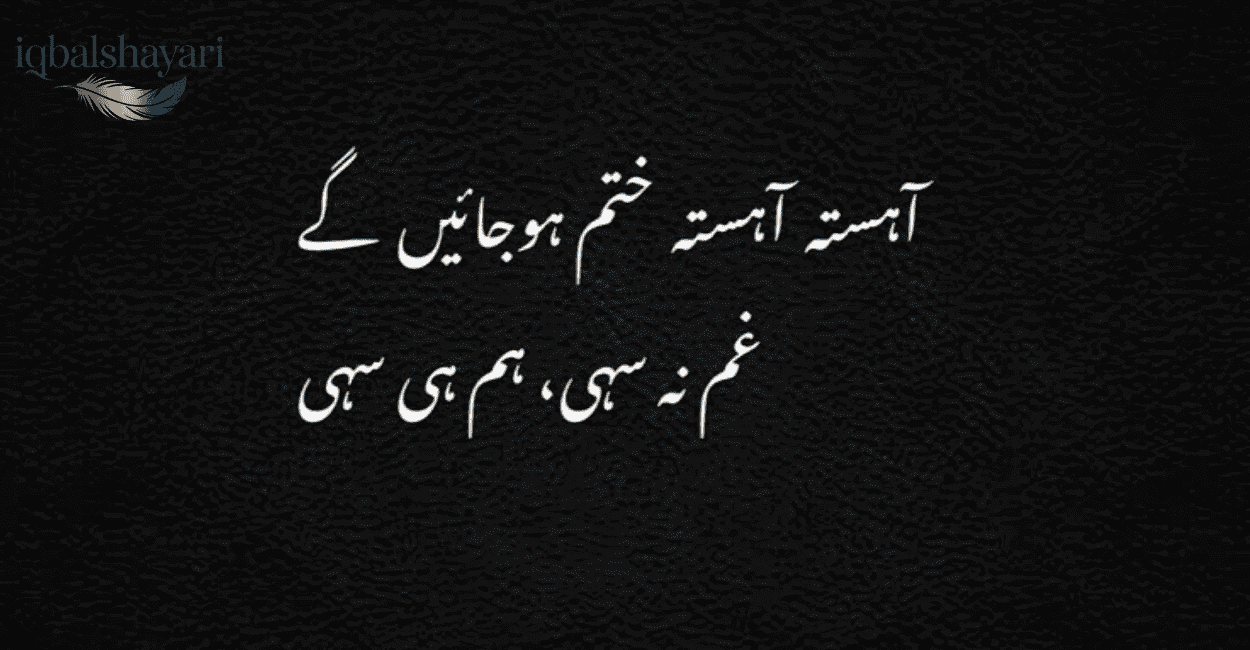
A famous example in translation: “Ask not for a cure for pain — pain itself is my life. The heart where you are absent is my solitude.” This couplet captures the way grief stops being something that happens to you and starts being something you carry inside you permanently.
Another widely shared example: “No one looked at the wounds of the heart — everyone saw only the smile on the face.” This resonates powerfully with diaspora communities where the performance of being okay is both a survival strategy and a source of further isolation.
Separation (Judai)
Separation is the single most dominant theme in all of Urdu literature — and it goes far beyond romantic breakups. It includes the distance between a migrant and their homeland, between a child and the parent left behind, between the self that existed before loss and the self that remains after.
One of the most haunting expressions of this theme in translation: “In your separation, I have become separated from myself. Searching for you, I have lost my own self.” The idea that losing someone causes you to lose your own identity is one that diaspora communities experience in layered ways — the person who leaves, the country left behind, the language growing distant.
Loneliness (Tanhai)
As noted above, tanhai is a more precise concept than the English “loneliness.” It is the experience of being invisible and unseen even in the middle of noise and company. Poetry about tanhai captures something that many second-generation South Asian Americans experience acutely — belonging fully to neither their inherited culture nor their adopted one, feeling like an observer in both.
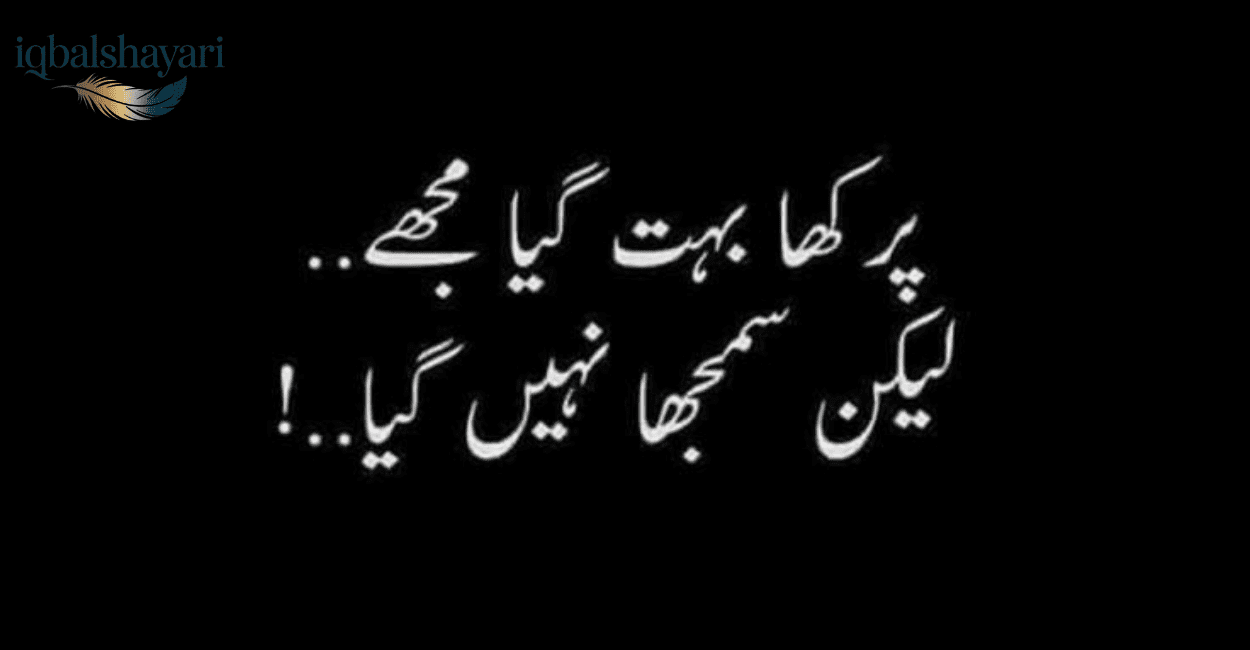
“Even in crowds I am alone — this is my nature. Even in noise, silence is my comfort.” This type of couplet resonates because it reframes isolation not as a failure but as a particular way of being in the world.
Betrayal (Bewafai)
Bewafai literally translates as unfaithfulness, but in Urdu poetry it carries the full weight of broken trust — the specific devastation of being abandoned by someone who promised loyalty. What makes Urdu poetry on this theme particularly powerful is that it often captures the injustice of it: the one who stayed being blamed by the one who left.
“They left calling me unfaithful — and even then said nothing. It was only I who had opened my heart in the name of love.” This couplet speaks directly to the experience of being gaslit in a relationship — of having the story rewritten so that the loyal person becomes the failure.
Waiting (Intezaar)
Intezaar — waiting — sits in the emotional space between hope and despair. It is not yet grief, because the possibility of return still exists. But it is not peace either. Poetry about intezaar captures the specific torture of checking your phone, listening for a knock, watching the door.
“Sleep does not come in the nights of waiting. Eyes watch the road while morning arrives, slowly.” The slowness of morning in this couplet is the key detail — time distorts when you are waiting for someone who may not come.
The Poets Who Built This Tradition
Urdu sad poetry was created by specific human beings whose own suffering gave them the language to speak for millions. Knowing the person behind a poem deepens your understanding of it.
Mirza Ghalib (1797–1869) is the poet most associated with Urdu sad poetry in the Western imagination. His specialty was existential pain — the philosophical grief of wanting what cannot be had, of loving in a universe indifferent to love. His collected works, the Diwan-e-Ghalib, contain couplets that have been quoted, analyzed, and misattributed for nearly two centuries. His most famous theme: the thousand desires, each worth dying for, none of them satisfied.
Mir Taqi Mir (1723–1810) is called Khuda-e-Sukhan — the God of Poetry — by Urdu literary scholars. Where Ghalib was philosophical, Mir was viscerally personal. His grief was not abstract; it was the grief of an actual broken heart, described with such precision that readers across centuries feel it as their own. He is considered the deepest well of dard in the entire tradition.
Faiz Ahmed Faiz (1911–1984) brought political consciousness into sad poetry. For Faiz, personal grief and collective suffering were inseparable. His most celebrated works describe the pain of living under oppression, of loving someone while the world around you burns, of being imprisoned for believing in justice. His poem Hum Dekhenge — “We Shall See” — became an anthem of resistance movements across South Asia.
Ahmad Faraz (1931–2008) is the poet most relevant to modern heartbreak. His language is contemporary, his emotional range direct, and his couplets on betrayal and lost love are among the most quoted in South Asian social media. His collection Dard Aashob (roughly translating to “Storm of Pain”) remains essential reading for anyone processing a breakup.
Parveen Shakir (1952–1994) was one of the few prominent female voices in classical Urdu poetry and remains among the most beloved. Her specialty was the particular kind of feminine grief that comes from loving completely in a world that does not fully permit it. Her imagery — roses, rain, waiting at windows — is delicate without being weak. Her collection Khushbu (Fragrance) is considered a landmark of 20th-century Urdu literature.
Jaun Elia (1931–2002) is the poet of beautiful self-destruction. Based in Karachi, he wrote in a voice of radical honesty about addiction, despair, failed love, and the absurdity of existence. His collection Shayad (Perhaps) reads like a conversation with your darkest thoughts at 3 AM — and somehow makes them survivable by making them exquisite.
Nasir Kazmi (1925–1972) specialized in quiet melancholy — the grief of ordinary moments. A rainy afternoon. An empty chair. The smell of someone who is no longer there. His poetry does not shout its pain; it whispers it.
Munir Niazi (1928–2006) brought surrealism and mysticism into sad poetry. His imagery is sometimes haunting, sometimes dreamlike, always precisely aimed at emotions that resist direct description.
Urdu Sad Poetry and the American Desi Experience
There is a particular kind of loneliness that second-generation South Asians in the United States carry that does not have a clean English equivalent. You understand the language of your parents when they speak it. You feel the old songs in your chest. But you grew up here, your writing is in English, and the culture you inherited lives in you as feeling rather than fluent expression.
When heartbreak comes — and it does come — English feels insufficient. “I miss you” does not hold what the Urdu concept of intezaar holds. “Betrayal” does not carry the weight of bewafai. You find yourself reaching for poetry that lives in the part of you your American upbringing did not fully form — and finding, in those poems, something that names you more accurately than anything you could write yourself.
This is not a failure of identity. It is its complexity. Urdu sad poetry was built by people navigating impossible situations: poets watching empires fall, survivors of the 1947 Partition processing unspeakable loss, migrants writing letters home from countries that did not yet feel like home. Your experience of being between cultures is not foreign to this tradition. It is central to it.
The South Asian Diaspora and Community
Urdu poetry is not only a solitary experience. The mushaira — a public poetry gathering where poets recite and audiences respond — is one of the oldest forms of literary community in South Asian culture. These events are held regularly in cities with large South Asian diaspora populations across the United States.
New York and New Jersey host multiple mushaira events annually through Pakistani and Indian cultural associations. Houston has a large Pakistani community that organizes regular cultural evenings centered on poetry and music. Chicago’s South Asian student associations and community centers hold poetry nights throughout the year. The Bay Area — particularly Fremont and San Jose — has one of the densest South Asian diaspora populations in the country and a strong Urdu literary community. Dallas hosts growing numbers of cultural events as its Pakistani community expands.
Searching for “Urdu poetry event near me,” “South Asian poetry night” followed by your city, or “Pakistani cultural association” followed by your city will surface events in your area. Many are now also live-streamed for diaspora members across time zones.
How to Share Urdu Sad Poetry on Social Media
Urdu sad poetry has found one of its most viral modern forms on social media — and not only among older generations. Young South Asian Americans are creating TikToks, Instagram Reels, and aesthetic posts with poetic couplets that collectively generate tens of millions of views every month.
On WhatsApp, the two-line couplet is the dominant format. Short, complete, emotionally precise — it fits the status format perfectly. The most shareable couplets are those that feel personal but universal, naming a specific emotion without being so specific that they lose general resonance. Post between 9 and 11 PM for maximum visibility.
On Instagram, couplets paired with aesthetic photography — rain, candles, empty streets, fading light — perform exceptionally well. Adding an English translation in the caption dramatically expands reach among diaspora audiences who feel the poetry but need the meaning confirmed. Relevant hashtags include: #SadPoetry, #UrduPoetry, #HeartbreakPoetry, #SouthAsianPoetry, #DiasporaPoetry, and names of individual poets.
On TikTok and Reels, the most effective format is a slow emotional recitation — voice-over style — over ambient music, with the text of the poem appearing gradually on screen. The hook must be in the first two seconds: lead with the most emotionally striking line.
On Facebook, the audience skews slightly older within the diaspora. Four-line poems with full English translations perform best here, particularly when the poet is credited — diaspora audiences of that generation often recognize names like Faiz, Ghalib, and Faraz and engage more readily when they appear.
How to Write Your Own Sad Poetry in the Urdu Tradition
You do not need to be a scholar of classical Urdu literature to write in this tradition. Many contemporary diaspora poets compose in English or in a natural blend of English and Urdu — code-switching intentionally, creating something new from the inheritance they carry.
Here is a simple process to start:
Step 1: Choose one specific emotion. Not “sadness” — something more precise. The feeling of seeing someone’s name appear on your phone screen three months after they left. The way a particular song makes an absence feel physical. Specificity is the foundation of all good poetry, and this tradition demands it.
Step 2: Write it plainly first. Before you think about structure or rhyme, write the feeling in the most direct language you have. Get the truth on the page before you shape it.
Step 3: Compress it. Take your plain statement and find its essence. Can you say it in two lines? In ten words? Compression is the art.
Step 4: Find the music. Read your lines aloud. This tradition is oral before it is written. If it flows when spoken, it is working. If it sounds awkward aloud, revise until it doesn’t.
Step 5: Try a rhyme or a repeating element. A repeated final word — even in English — creates the ghazal-like hypnotic effect. Try ending two or three couplets with the same word and see what emotional weight that repetition carries.
Step 6: Share it. Urdu poetry was never meant to be private. The tradition is communal. Your couplet belongs to whoever it helps.
Mistakes to Avoid
Forcing rhyme at the cost of meaning is the most common error. A technically rhyming couplet that says nothing true is worse than an honest unrhymed line. Meaning always comes first.
Translating directly from English produces hollow results. This tradition has its own idioms — concepts like judai, tanhai, and dard carry cultural weight that English equivalents cannot fully substitute. Work from the feeling, not from a translation.
Sharing poetry without attribution is both disrespectful and unreliable. The poet behind a couplet matters. If you know the source, name it. If you are unsure, say so rather than guessing.
How to Verify Whether a Poem Is Authentic
Misattribution in Urdu poetry is one of the most widespread problems in digital South Asian culture. Couplets composed by unknown or minor poets are routinely credited to Ghalib, Iqbal, or Faiz — sometimes through genuine confusion, often because a famous name lends viral credibility.
Ghalib and Iqbal are the two most commonly misquoted poets on the internet. Dozens of sentimental couplets circulate under Ghalib’s name that appear nowhere in his verified collected works. Lines attributed to Iqbal sometimes contradict his known philosophical positions. So-called Faiz quotations occasionally use vocabulary inconsistent with his style and era.
To verify a poem: Search the first line on Rekhta.org, which is the most authoritative online Urdu poetry database and includes English interface options. Cross-reference against the poet’s collected works. If no verified source exists, credit the poem as “poet unknown” — this is accepted and respected in literary communities. For contemporary poets, check their official social media accounts directly.
Sharing verified poetry with correct attribution is a form of respect for the tradition and for your audience. In communities where Urdu literary knowledge is taken seriously, incorrect attribution is noticed and undermines credibility.
Urdu Sad Poetry and Emotional Wellbeing
There is a reason people reach for poetry during grief rather than self-help guides. Poetry does not offer solutions. It offers recognition — the profound relief of having your exact feeling named by someone who felt it too, sometimes centuries before you were born.
Mental health practitioners recognize this as bibliotherapy: the use of literature for emotional processing and healing. Urdu sad poetry functions in exactly this way for millions of South Asians. The ghazal form, with its repeating end-word, mirrors the actual structure of grief — the thought that returns, and returns, and returns until you have fully moved through it.
The tradition also normalizes sitting inside pain rather than rushing to escape it. In a culture of quick fixes and productivity-as-healing, poetry that says “this hurts, and that is enough to say right now” is genuinely countercultural and genuinely useful.
That said, if you find yourself returning exclusively to the darkest poetry during prolonged difficult periods, it can be a signal that human connection would also help — a trusted friend, a community gathering, or a professional. Poetry holds grief. It does not have to hold it alone.
Frequently Asked Questions
What is Urdu sad poetry and why is it popular in the USA?
Urdu sad poetry is a centuries-old South Asian literary tradition that expresses grief, heartbreak, separation, and longing through structured verse. It is popular among South Asian diaspora communities in the USA because it names emotional experiences that English does not fully capture, and because it connects second-generation Americans to a cultural heritage carried through feeling even when language has partially faded.
Who are the most famous Urdu sad poets?
The most celebrated poets of grief and sadness in the Urdu tradition are Mirza Ghalib, Mir Taqi Mir, Faiz Ahmed Faiz, Ahmad Faraz, Parveen Shakir, Jaun Elia, Nasir Kazmi, and Munir Niazi. Each has a distinct emotional specialty: Ghalib for philosophical grief, Mir for raw heartbreak, Faiz for political-romantic sadness, Faraz for modern breakups, Parveen Shakir for feminine longing, and Jaun Elia for dark, nihilistic honesty.
What is the difference between a couplet, a ghazal, and a free poem in Urdu poetry?
A couplet is a self-contained two-line unit that makes a complete emotional statement. A ghazal is a structured poem made of five to twelve or more couplets, all following the same rhyme scheme and ending in the same repeating word. A free poem (nazm) is a narrative or unstructured poem without the strict rules of the ghazal. Couplets are shareable; ghazals are experienceable; free poems are readable.
Which Urdu poet is best for heartbreak specifically?
Ahmad Faraz is the most directly relevant for modern romantic heartbreak — his language is contemporary, precise, and emotionally honest about the specific pain of being left. Jaun Elia is better for darker, more nihilistic stages of grief. Parveen Shakir is essential for longing and the particular grief of loving without being fully loved in return. Ghalib suits moments when heartbreak raises larger questions about the nature of love and desire itself.
Can I write Urdu-tradition poetry in English?
Yes. Many contemporary diaspora poets write in English or blend English and Urdu, intentionally code-switching to create something new from their inherited tradition. The emotional principles of the tradition — compression, specificity, honest acknowledgment of pain, the recurring image or word — translate into any language. The tradition belongs to you in whatever language you hold it.
How do I find Urdu poetry events near me in the United States?
Search “South Asian poetry night” or “Urdu mushaira” followed by your city name. Pakistani and Indian cultural associations, Islamic community centers, and university South Asian student associations are the primary organizers of these events. New York, Houston, Chicago, the Bay Area, and Dallas have the most active scenes. Many events are also live-streamed.
How do I know if a poem attributed to Ghalib or Faiz is actually theirs?
Search the first line on Rekhta.org, which indexes verified classical Urdu poetry with English interface options. If the couplet does not appear there or in the poet’s known collected works, treat the attribution as unverified. Credit it as “poet unknown” rather than guessing. Ghalib and Iqbal are the most frequently misattributed poets in digital South Asian culture.
What makes Urdu sad poetry different from English sad poetry?
The primary difference is specificity of emotional vocabulary. Urdu has precise words for emotional states that English groups together under broad terms. The concept of judai (separation carrying cultural, romantic, and geographic dimensions simultaneously), intezaar (waiting between hope and despair), and tanhai (loneliness felt even in the presence of others) have no exact English equivalents. Poetry built from this vocabulary names pain with a precision that feels, to those who have been shaped by that culture, like being fully seen.
Conclusion
Urdu sad poetry has survived the fall of the Mughal Empire, colonial suppression, the trauma of the 1947 Partition, and the scattering of entire communities across the world. It is now finding new life in the phones and hearts of South Asian Americans who grew up between languages, between cultures, between the world their parents came from and the one they were born into.
That survival is not accidental. This poetry holds something that most modern emotional language cannot: the willingness to sit fully inside pain, to give it structure without diminishing it, to make it beautiful without pretending it is not real. In an era that often treats grief as something to be optimized away, poetry that simply says “you are allowed to feel this completely” is both rare and necessary.
Whether you came to this guide needing words for a specific pain, wanting to understand a tradition you inherited, or looking to find community in it — you are part of something that goes back four centuries and forward into whatever comes next.