Introduction:
A good quote does something a longer explanation can’t. It says one true thing, plainly, and lets you sit with it. That’s the appeal behind Urdu quotes: short lines on life, faith, or simply getting through a hard day, meant to be read once and remembered.
This page brings together Urdu quotes across a few different moods: life and wisdom, Islamic sayings, and quick one-liners for status updates, each with Roman Urdu and a plain English meaning so nothing gets lost for readers who don’t read the script.
You’ll also see how a quote is different from shayari, since the two get mixed up constantly online. Every quote here is either genuinely sourced or clearly marked as written for this page, not pulled from somewhere and passed off as someone else’s words.
At a glance: This page introduces Urdu quotes as their own category, distinct from shayari, short standalone lines of wisdom rather than rhymed verse. It opens by drawing that line clearly, quotes versus poetry, then explains where these lines actually come from, ashaar and aqwal, the classical Urdu terms, before pointing out that a lot of the best-known ones come from novelists and essayists, not poets at all.
From there it moves into quotes about life, one from Mushtaq Ahmad Yusufi on what hardship eventually reveals, one from Hajra Masroor on resolve and cowardice, and a cross-verified Iqbal line about fertile soil that shows up consistently enough to trust. A short Islamic Sayings section follows, two Quranic lines on patience and trust, correctly cited by surah and ayah, kept brief since a fuller page on that topic is planned separately.
It closes with quick one-liners built for status updates, and an FAQ addressing script, misattributed poets, and quotes that get passed off as Urdu when they’re really translated from English. Every quote is either properly sourced, with a note on how that sourcing was checked, or clearly marked as written for the page.
What Are Urdu Quotes?
An Urdu quote is a short, standalone line meant to capture one idea or feeling clearly, life advice, a spiritual thought, or just something honest about how things are. Unlike a full ghazal or nazm, it doesn’t need rhyme, meter, or multiple connected lines. It just needs to say something true in a few words.
How Quotes Differ From Shayari
Shayari follows specific poetic forms: sher, ghazal, nazm, each with its own rules around rhyme and rhythm. A quote doesn’t have to follow any of that. It can be a single sentence, a piece of dialogue, or a line pulled from a longer piece of writing. For a full breakdown of how Urdu’s poetic forms actually work, our poetry page covers that in depth.
Ashaar and Aqwal — Where These Quotes Come From
Urdu has its own words for this kind of writing. Ashaar refers to verses or couplets, closer to poetry. Aqwal means sayings, wisdom passed down in short, memorable form, closer to what English speakers mean by “quotes,” sometimes called aqwal-e-zareen, “golden sayings,” when they carry real weight. Some of what gets shared online as “Urdu quotes” is really ashaar in disguise; some of it is genuine aqwal. Both are covered on this page. Rekhta’s prose-quotes archive is one of the better places to see the difference for yourself, since it keeps proper attribution that most collections drop.
Quotes from Urdu Writers and Poets
Not every Urdu quote comes from a poet. Some of the most quoted lines in Urdu come from novelists, critics, and essayists writing about life itself, not verse. Mushtaq Ahmad Yusufi and Hajra Masroor, both quoted further down this page, are exactly that kind of source, credited by name here, unlike many pages that strip the name away entirely.
Urdu Quotes at a Glance
| Category | Tone | Best For |
| Life Quotes | Reflective, grounded | General sharing, captions |
| Islamic Sayings | Spiritual, faith-centered | Religious reflection |
| One-Liners | Quick, punchy | Status updates |
Life quotes in Urdu tend to come less from poets and more from writers reflecting on what they’ve actually lived through, which is part of why they read differently from shayari. These carry the weight of prose, not verse: direct observation rather than metaphor.
Quotes on Facing Hard Times
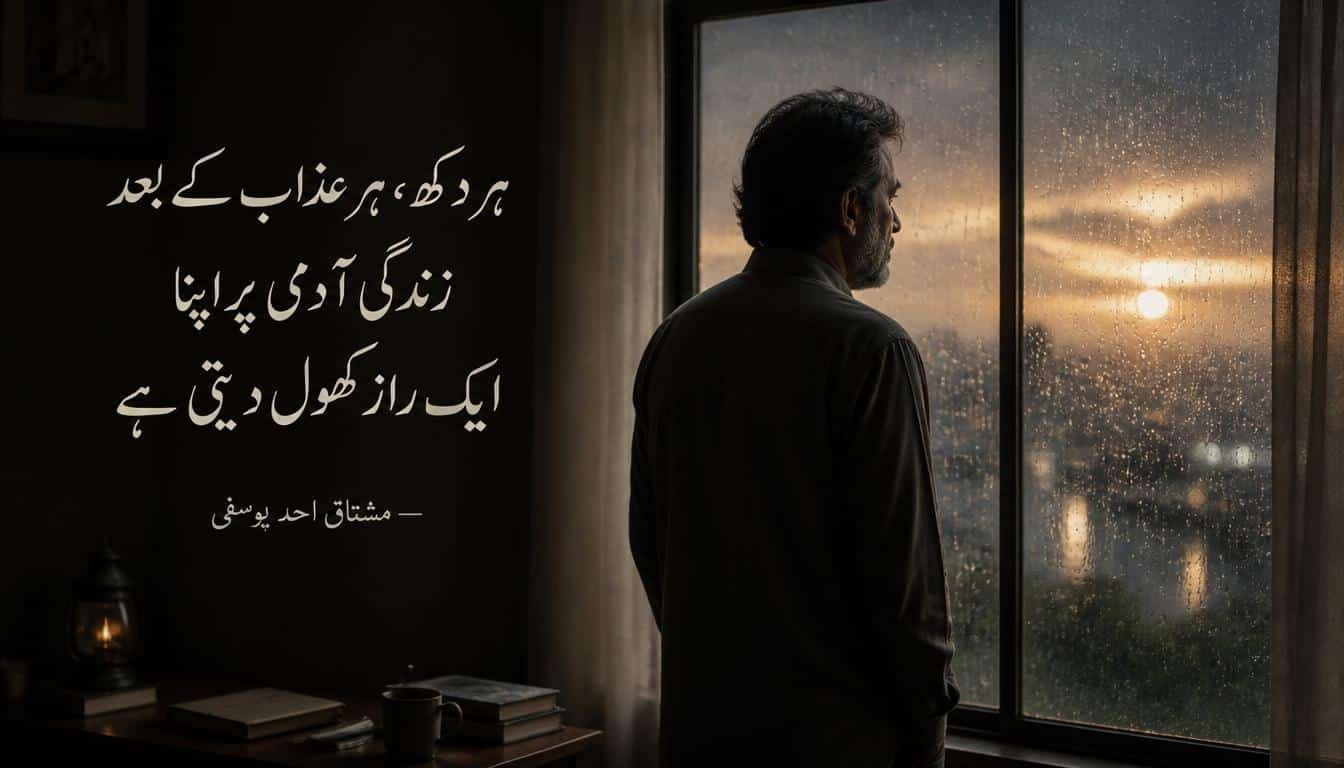
Mushtaq Ahmad Yusufi, one of Urdu’s most celebrated prose writers, put it this way:
ہر دکھ، ہر عذاب کے بعد زندگی آدمی پر اپنا ایک راز کھول دیتی ہے
Har dukh, har ‘azaab ke baad zindagi aadmi par apna eik raaz khol deti hai. (After every sorrow, every hardship, life opens one of its secrets to a person.) — Mushtaq Ahmad Yusufi
Quotes on Self-Belief
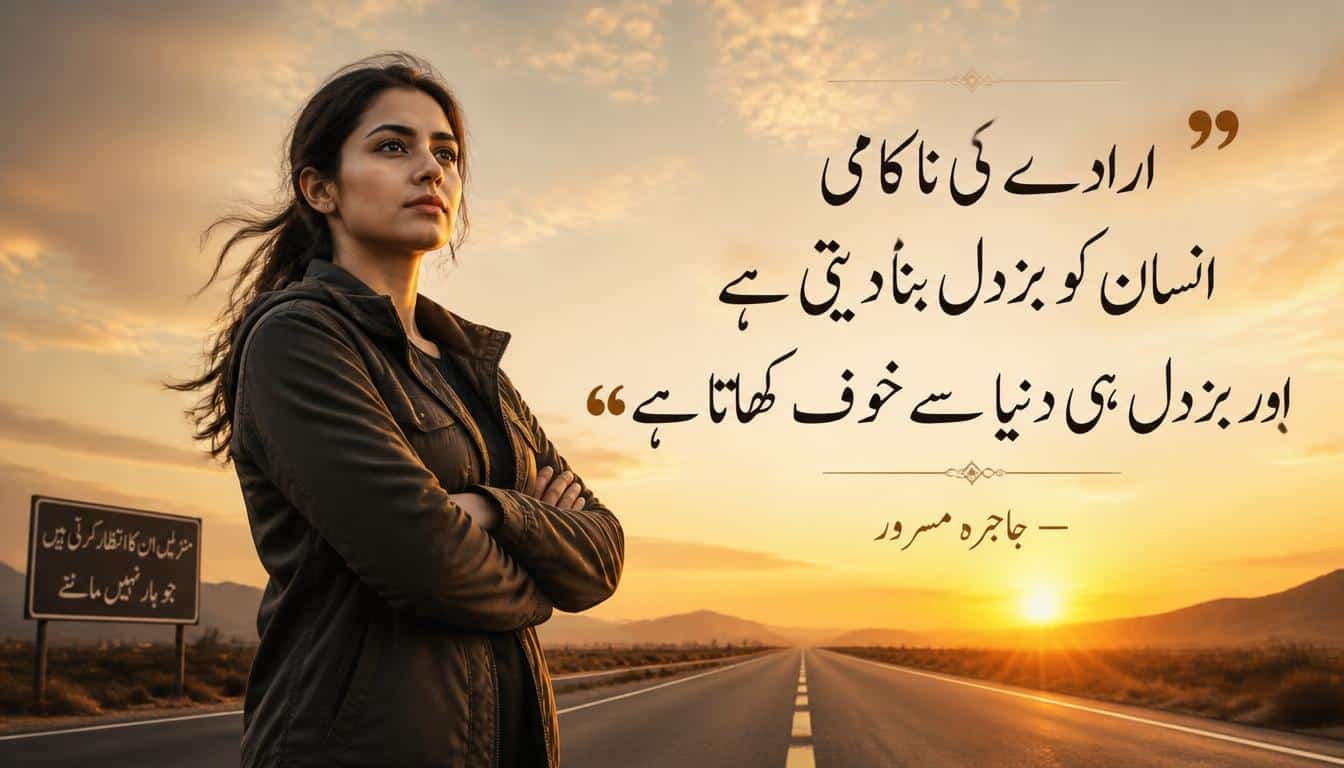
Short story writer Hajra Masroor wrote something sharper about the link between resolve and fear:
ارادے کی ناکامی انسان کو بزدل بنا دیتی ہے اور بزدل ہی دنیا سے خوف کھاتا ہے
Iraade ki naakaami insaan ko buzdil bana deti hai aur buzdil hi duniya se khauf khaata hai. (A failure of will makes a person a coward, and it’s the coward who fears the world.) — Hajra Masroor
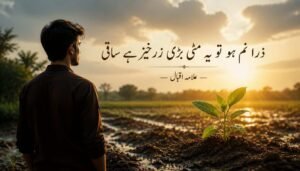
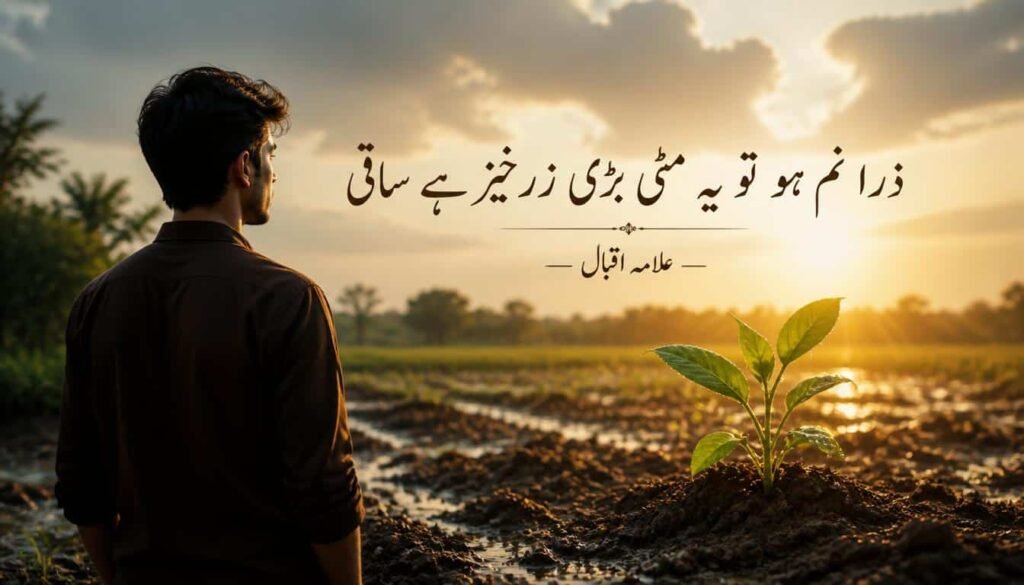
Allama Iqbal made a similar point through a simpler image, one line that’s shown up consistently enough across sources to be confidently attributed to him:
ذرا نم ہو تو یہ مٹی بڑی زرخیز ہے ساقی
Zara num ho to yeh matti bari zarkhez hai saqi. (Just a little moisture, and this soil turns fertile, saqi.) — Allama Iqbal
Islamic Sayings
Islamic quotes in Urdu often come straight from the Quran itself, translated and shared as short, memorable reminders. This section only scratches the surface, and if you want to read either ayah in its full context rather than as an isolated line, Quran.com has the complete verses in Arabic, Urdu, and English side by side. A full page dedicated to Islamic quotes, with proper Quranic and Hadith sourcing, is coming as its own page on this site.
Quotes on Faith and Trust in Allah
بے شک اللہ صبر کرنے والوں کے ساتھ ہے
Beshak Allah sabr karne walon ke saath hai. (Indeed, Allah is with those who are patient.) — Quran, Surah Al-Baqarah 2:153
اور جو شخص اللہ پر بھروسہ کرے تو وہ اس کے لیے کافی ہے
Aur jo shakhs Allah par bharosa kare to woh uske liye kafi hai. (And whoever puts their trust in Allah, He will be sufficient for him.) — Quran, Surah At-Talaq 65:3
Short One-Liners for Status
Some quotes aren’t meant to be read slowly. They’re built for a status update or a caption, short enough to register in a second, still carrying some weight. These lines are written for this page and not attributed to any writer or poet.
Quick Motivational Lines
محنت کبھی ضائع نہیں جاتی
Mehnat kabhi zaya nahi jaati. (Hard work is never wasted.)
آج کا دن بھی گزر جائے گا، بس ہمت رکھو
Aaj ka din bhi guzar jayega, bas himmat rakho. (This day will pass too, just hold on to your courage.)
Reflective One-Liners
خاموشی بھی کبھی کبھی سب سے بڑا جواب ہوتی ہے
Khamoshi bhi kabhi kabhi sabse bada jawab hoti hai. (Sometimes silence is the biggest answer of all.)
ہر انسان کے اندر ایک کہانی چھپی ہوتی ہے جو وہ کبھی نہیں سناتا
Har insaan ke andar ek kahani chhupi hoti hai jo woh kabhi nahi sunaata. (Every person carries a story inside them that they never tell.)
Frequently Asked Questions
Do Urdu quotes have to be written in Urdu script?
No. While Urdu script is the traditional way to write these quotes, Roman Urdu, the same words spelled out in English letters, is just as common, especially online. Most readers searching for Urdu quotes are comfortable with either, which is why every quote on this page includes both.
Are Urdu quotes always written by famous poets?
No, and this is a common misconception. A lot of the best-known Urdu quotes come from novelists, essayists, and critics writing in prose, not poets writing in verse. Mushtaq Ahmad Yusufi and Hajra Masroor, both quoted earlier on this page, are prose writers, not poets.
Is it okay to share an English quote translated into Urdu as an “Urdu quote”?
Not really, or at least not honestly. A translated quote is still someone else’s original words in a different language, and presenting it as an authentic Urdu quote, without crediting the original speaker, misrepresents where it actually came from. If a quote was originally said in English, the honest approach is to say so.
How do I know if an Urdu quote’s attribution is genuine?
A lot of quote collections online credit lines to writers or poets without any real verification, or leave them completely unattributed. If a source doesn’t clearly say where a quote comes from, it’s worth treating that attribution with some caution. On this page, every quote is either genuinely sourced or clearly marked as written for this page.
A quick note on sourcing: the writer and poet quotes on this page were checked against Rekhta’s archive and other cross-referenced sources before being credited, not copied from a single unverified listicle. The one-liners under “Short One-Liners for Status” are original to this page and not attributed to anyone. Nothing here is presented as a named person’s words unless that attribution holds up.
Explore More:
Quotes are just one way Urdu carries meaning in a few words. If it’s verse you’re after, rhythm, rhyme, and the emotional weight that comes with shayari, our poetry page breaks down how those forms actually work, and our shayari collection covers the full range of moods, from love to loss.
Conclusion
Urdu quotes cover a lot of ground, from a writer’s hard-earned observation about life to a single Quranic line about trusting in Allah to something quick enough for a status update. What ties them together isn’t rhyme or form; it’s honesty in a few words, and honesty in where those words actually came from.
This page kept to just a few categories: life, faith, and short one-liners, each with real sourcing wherever it existed. For the fuller emotional range that comes with rhyme and verse, the shayari and poetry pages linked above are the next place to look.