
Introduction:
Punjabi love shayari is short, rhythmic poetry about love, longing, and loyalty, written in the language of Punjab. It can be a playful two-line couplet for a crush or a quiet verse for someone who is far away. This page gives you original lines in Shahmukhi and Roman script, each with an English meaning, so you know what a line says before you send it.
The Quick Picks also come in Gurmukhi. You will also find a script guide, the main themes, and the Heer Ranjha tradition behind Punjabi love poetry. Every line here is original and labelled that way, and a classic verse is credited only when its source is confirmed. Pick a mood below and copy what fits.
At a Glance: Punjabi love shayari is short, rhythmic poetry about love, longing, and loyalty. This page offers about 60 original couplets and captions in Shahmukhi and Roman script, each with an English meaning, and the quick picks also appear in Gurmukhi. Every line is original. Lines are grouped by mood: first confessions and playful crush lines, romantic verses for a girlfriend, boyfriend, husband, or wife, and sad shayari about separation and one-sided love.
The article also explains how Punjabi is written in three scripts, how to say “I love you” and “I miss you” in Punjabi, and the main themes of union, separation, and devotion. A history section covers the Heer Ranjha qissa, Waris Shah, Bulleh Shah and Shiv Kumar Batalvi, with a warning about misattributed verses. Final sections show how to share lines as a status and write your own couplet, and explain how lines are labelled and corrected.
Punjabi Love Shayari You Can Send Today
These are short, ready-to-send lines for a text, a card, or a quiet moment with someone you care about. Every line below is original to this page, written for IqbalShayari.com, and none is borrowed from a classic poet. Each one comes with its English meaning, so you can check the feeling before you send it.
Two-Line Couplets for Any Message
A couplet suits a message that needs more room than a caption. The two lines rhyme, so the second one lands like an answer to the first. These six work for a first message, an anniversary note or a late-night text. Each is shown in Shahmukhi, Gurmukhi and Roman.
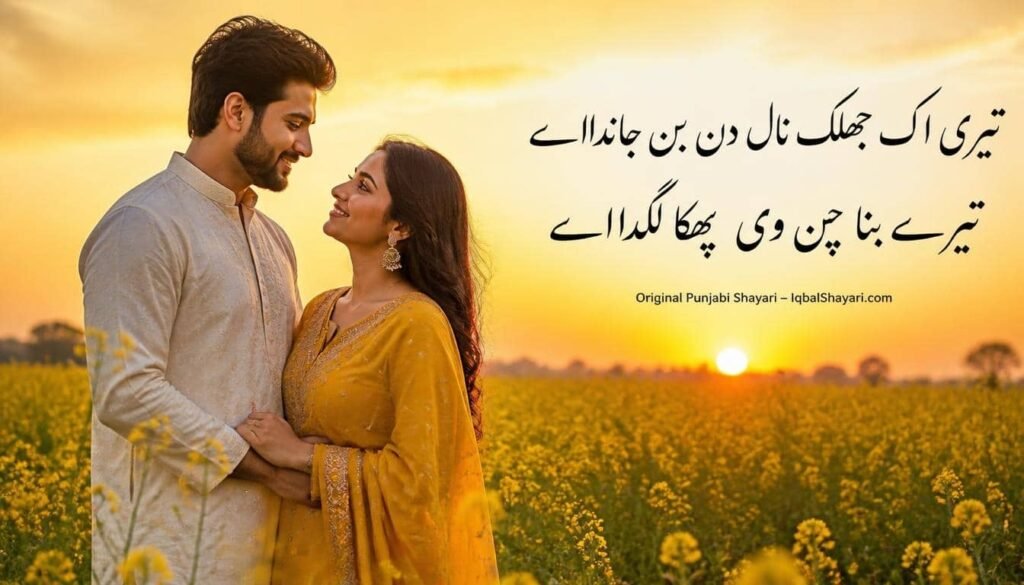
1. تیری اک جھلک نال دن بن جاندا اے، تیرے بنا چن وی پھکا لگدا اے۔
ਤੇਰੀ ਇੱਕ ਝਲਕ ਨਾਲ ਦਿਨ ਬਣ ਜਾਂਦਾ ਏ, ਤੇਰੇ ਬਿਨਾਂ ਚੰਨ ਵੀ ਫਿੱਕਾ ਲੱਗਦਾ ਏ।
Teri ik jhalak naal din ban janda e, Tere bina chann vi phikka lagda e.
Meaning: One glimpse of you makes my whole day. Without you, even the moon looks pale.
2. دل دی گل زبان تے آؤندی نہیں، تیرے سامنے آ کے کہہ ہندی نہیں۔
ਦਿਲ ਦੀ ਗੱਲ ਜ਼ੁਬਾਨ ਤੇ ਆਉਂਦੀ ਨਹੀਂ, ਤੇਰੇ ਸਾਹਮਣੇ ਆ ਕੇ ਕਹਿ ਹੁੰਦੀ ਨਹੀਂ।
Dil di gal zubaan te aundi nahin, Tere saahmne aa ke keh hundi nahin.
Meaning: What is in my heart never reaches my tongue. Standing in front of you, I cannot say it.
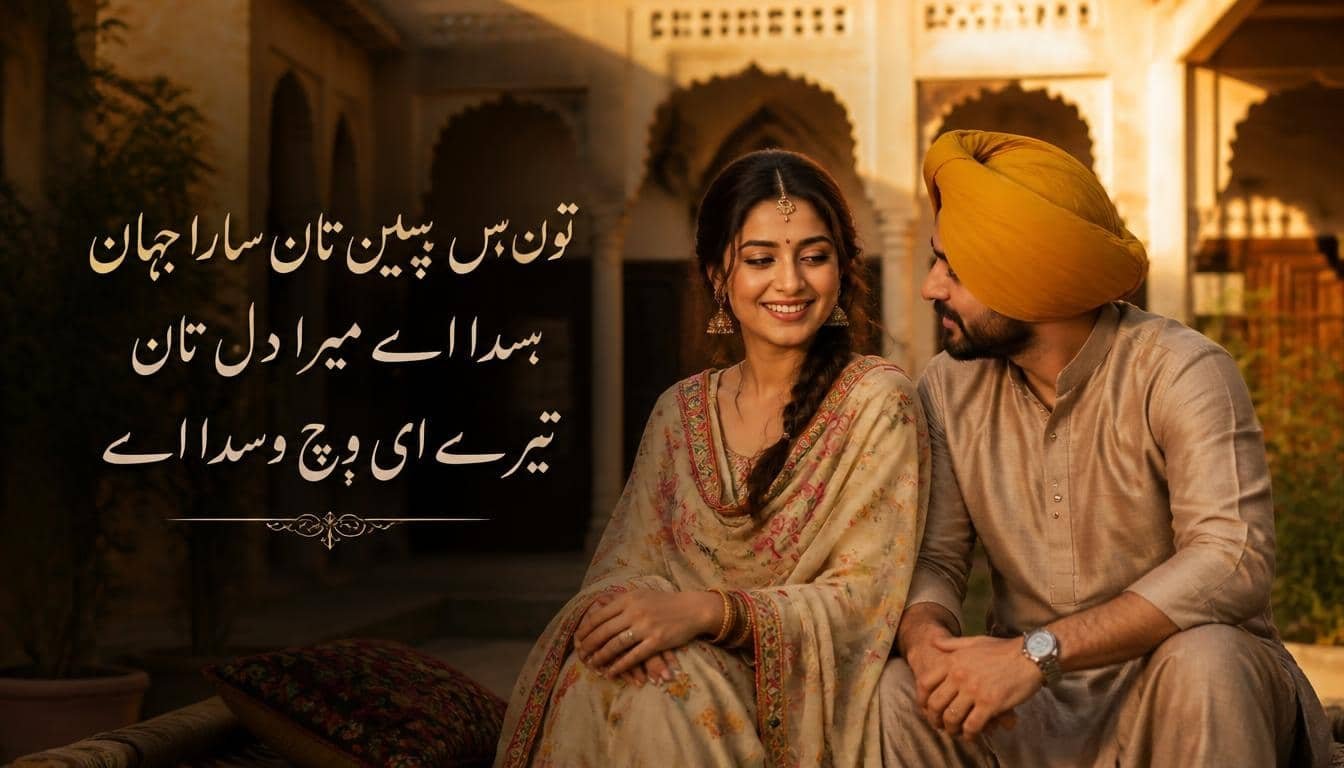
3. توں ہس پئیں تاں سارا جہان ہسدا اے، میرا دل تاں تیرے ای وچ وسدا اے۔
ਤੂੰ ਹੱਸ ਪਏਂ ਤਾਂ ਸਾਰਾ ਜਹਾਨ ਹੱਸਦਾ ਏ, ਮੇਰਾ ਦਿਲ ਤਾਂ ਤੇਰੇ ਹੀ ਵਿੱਚ ਵੱਸਦਾ ਏ।
Tu hass paen taan sara jahaan hassda e, Mera dil taan tere hi vich vassda e.
Meaning: When you laugh, the whole world seems to laugh. My heart lives inside you.
4. ساری دنیا دے میلے پھکے نے، تیرے نال دو پل وی میلے نے۔
ਸਾਰੀ ਦੁਨੀਆ ਦੇ ਮੇਲੇ ਫਿੱਕੇ ਨੇ, ਤੇਰੇ ਨਾਲ ਦੋ ਪਲ ਵੀ ਮੇਲੇ ਨੇ।
Saari duniya de mele phikke ne, Tere naal do pal vi mele ne.
Meaning: Every fair in the world looks dull. Two moments with you are a fair of their own. Reading note: a mela is a lively fair. The line says time with you feels like a festival.
5. نہ منگاں میں چن تارے، نہ سونا چاندی، بس تیرا ساتھ مل جاوے، ایہو میری آزادی۔
ਨਾ ਮੰਗਾਂ ਮੈਂ ਚੰਨ-ਤਾਰੇ, ਨਾ ਸੋਨਾ-ਚਾਂਦੀ, ਬੱਸ ਤੇਰਾ ਸਾਥ ਮਿਲ ਜਾਵੇ, ਇਹੋ ਮੇਰੀ ਆਜ਼ਾਦੀ।
Na mangaan main chann-taare, na sona-chaandi, Bas tera saath mil jaave, eho meri aazaadi.
Meaning: I ask for no moon or stars, no gold or silver. Your company is all the freedom I need.
6. تیری یاد آئی تاں مسکان آ گئی، چپ بیٹھے دل تے جان آ گئی۔
ਤੇਰੀ ਯਾਦ ਆਈ ਤਾਂ ਮੁਸਕਾਨ ਆ ਗਈ, ਚੁੱਪ ਬੈਠੇ ਦਿਲ ਤੇ ਜਾਨ ਆ ਗਈ।
Teri yaad aayi taan muskaan aa gayi, Chup baithe dil te jaan aa gayi.
Meaning: Your memory arrived, and a smile came with it. A silent heart came back to life.
One-Line Captions for Status and Stories
A caption has to carry its feeling in a few words, so it works best beside a photo, a story, or a short status. These six are gender-neutral, so they suit a girlfriend, boyfriend, wife, or husband without changing a word.
- تیرے نال ہر راہ گھر جاپدا اے۔ / ਤੇਰੇ ਨਾਲ ਹਰ ਰਾਹ ਘਰ ਜਾਪਦਾ ਏ।
Tere naal har raah ghar jaapda e.
Meaning: With you, every road feels like home.
- دل میرا، ناں تیرا۔ / ਦਿਲ ਮੇਰਾ, ਨਾਂ ਤੇਰਾ।
Dil mera, naa tera.
Meaning: The heart is mine. The name on it is yours.
- تیرا ساتھ مل گیا، ہور کی چاہیدا۔ / ਤੇਰਾ ਸਾਥ ਮਿਲ ਗਿਆ, ਹੋਰ ਕੀ ਚਾਹੀਦਾ।
Tera saath mil gaya, hor ki chaida.
Meaning: I have your company. What more could I want?
- تیری مسکان میری سبھ توں وڈی دولت۔ / ਤੇਰੀ ਮੁਸਕਾਨ ਮੇਰੀ ਸਭ ਤੋਂ ਵੱਡੀ ਦੌਲਤ।
Teri muskaan meri sabh ton vaddi daulat.
Meaning: Your smile is my greatest wealth.
- عشق ہولی ہولی ہندا اے، پر پورا ہندا اے۔ / ਇਸ਼ਕ ਹੌਲੀ-ਹੌਲੀ ਹੁੰਦਾ ਏ, ਪਰ ਪੂਰਾ ਹੁੰਦਾ ਏ।
Ishq hauli-hauli hunda e, par poora hunda e.
Meaning: Love grows slowly, but it grows completely.
- توں نیڑے تاں سبھ کجھ ٹھیک اے۔ / ਤੂੰ ਨੇੜੇ ਤਾਂ ਸਭ ਕੁਝ ਠੀਕ ਏ।
Tu nere taan sabh kujh theek e.
Meaning: When you are near, everything is fine.
What Is Punjabi Love Shayari?
Punjabi love shayari is poetry about love, written in Punjabi and usually shared as short couplets or single lines. The word shayari is best known from Urdu poetry, where a shayar is a poet who writes couplets called sher. Punjabi writers use the same word for love verses in their own language. This section explains what such verses talk about and which script they are written in.
Themes You Will Find: Union, Separation and Devotion
Most Punjabi love verses return to three feelings. The first is union: the joy of meeting, a smile, a shared moment. The second is separation, which Punjabi calls judai, where the poet waits for someone who is far away or has gone. The third is devotion, where love is loyal and steady, sometimes with a spiritual tone. A single line can mix them, so a verse about waiting may also be a promise to stay faithful.
Love Shayari in Punjabi Language: Gurmukhi, Shahmukhi and Roman Script
Which script is Punjabi written in? Punjabi uses more than one script. Gurmukhi is the official script of the Punjabi language in Indian Punjab, and tradition credits the second Sikh Guru, Guru Angad, with standardising it in the 16th century. Shahmukhi is the Perso-Arabic script used for Punjabi in Pakistan, written right to left like Urdu. Roman script writes Punjabi in English letters, which most people use on phones and social media. The sound and meaning stay the same. Only the writing changes.
Here is one line from this page in all three scripts:
- Gurmukhi: ਦਿਲ ਮੇਰਾ, ਨਾਂ ਤੇਰਾ।
- Shahmukhi: دل میرا، ناں تیرا۔
- Roman: Dil mera, naa tera.
- Meaning: The heart is mine. The name on it is yours.
A reader in Lahore and a reader in Amritsar can enjoy the same verse in the script they know. When you share a line, pick the script your reader reads most easily.
The Beginning of Love: Crush, Confession and Playful Lines
Love usually starts small: a look, a message that takes too long to arrive, a sentence you rehearse and then forget. Punjabi has warm, direct ways to say these first feelings, and it also has playful ones for a crush. This section covers the words for a first confession and the light lines for a crush.
How Do You Say “I Love You” in Punjabi? First-Confession Lines
How do you say “I love you” in Punjabi? A man says Main tainu pyaar karda aan and a woman says Main tainu pyaar kardi aan. In Shahmukhi, that is میں تینوں پیار کردا آں and میں تینوں پیار کردی آں. The verb changes with the speaker’s gender, which is why the two forms differ. Spoken Punjabi also varies by region, so you may hear haan in place of aan.
How do you say “I miss you”? Say Mainu teri bahut yaad aundi e (مینوں تیری بہت یاد آؤندی اے). It works for anyone, so the verb needs no gender change.
Punjabi has several words for love. Pyaar (پیار) is the everyday word. Ishq (عشق) usually suggests deeper, more intense love. Mohabbat (محبت) is also common in poetry. Choose the one that matches the weight of what you want to say.
If you want something softer than the plain sentence, these six original lines suit a first confession. They are gender-neutral, so anyone can use them.
- مینوں تیرے نال پیار ہو گیا اے۔
Mainu tere naal pyaar ho gaya e.
Meaning: I have fallen in love with you.
- تینوں ویکھ کے دل دی دھڑکن ودھ جاندی اے۔
Tainu vekh ke dil di dhadkan vadh jandi e.
Meaning: My heartbeat rises when I see you.
- بس تیرا ساتھ چاہیدا اے۔
Bas tera saath chaida e.
Meaning: I only want your company.
- دل نے تیرا ناں لے لیا اے، ہن میں کی کراں۔
Dil ne tera naa le leya e, hun main ki karaan.
Meaning: My heart has taken your name. What can I do now?
- جے توں ہاں کہہ دیویں، تاں میری دنیا مکمل۔
Je tu haan keh devein, taan meri duniya mukammal.
Meaning: If you say yes, my world is complete.
- اک گل کہنی سی، پر لفظ مک گئے۔
Ik gal kehni si, par lafz mukk gaye.
Meaning: I had one thing to say, but the words ran out.
Cute and Funny Lines for a Crush
Humour takes the pressure off. A playful line lets you show interest without a heavy confession, and a smile in reply tells you the feeling is welcome. Keep your tone friendly and let the other person answer in their own time.
- تیرا نیٹ ورک اینا چنگا اے، دل ہر ویلے کنیکٹ رہندا اے۔
Tera network eina changa e, dil har vele connect rehnda e.
Meaning: Your signal is so good that my heart stays connected all the time.
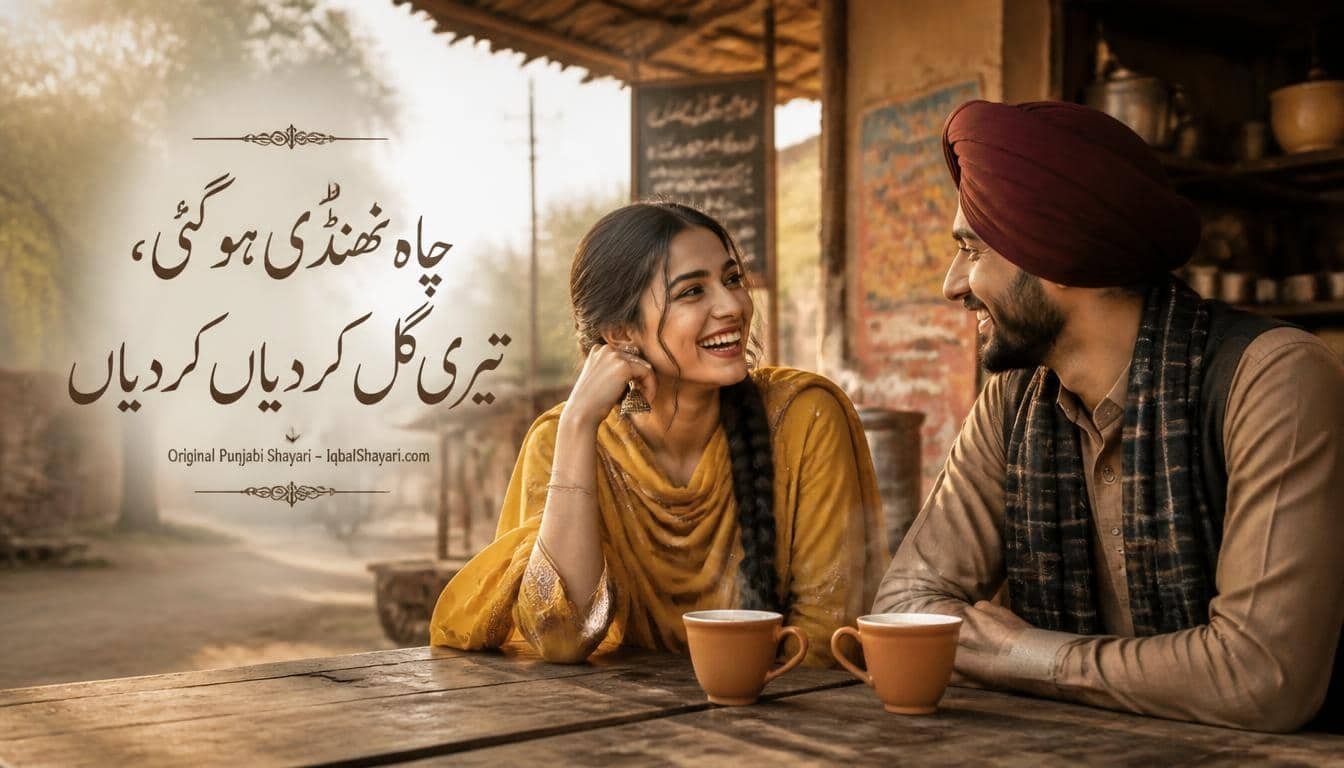
- چاہ ٹھنڈی ہو گئی، تیری گل کردیاں کردیاں۔
Chah thandi ho gayi, teri gal kardiyaan kardiyaan.
Meaning: My tea went cold while I was talking about you.
- دل تیار اے، بس ہمت ذرا ادھار اے۔
Dil tayyar e, bas himmat zara udhaar e.
Meaning: The heart is ready. Only the courage is on loan.
- تیرا ناں سن کے ای چہرے تے میلہ لگ جاندا اے۔
Tera naa sun ke hi chehre te mela lag janda e.
Meaning: Just hearing your name sets up a fair on my face.
- تیرے میسج دا انتظار، روٹی توں وی ودھ اے۔
Tere message da intezaar, roti ton vi vadh e.
Meaning: Waiting for your message matters more than dinner.
- پتہ نئیں توں کی کیتا، ہن ہر گانا تیرے بارے لگدا اے۔
Pata nahin tu ki keeta, hun har gaana tere baare lagda e.
Meaning: I don’t know what you did, but every song now seems to be about you.
Punjabi Love Shayari for Your Partner
Love between partners changes over time. In a new relationship, the words are about longing and nervous excitement. In a long marriage, they are about patience, home and being understood without speaking. This section keeps those two stages apart, so you can find a line that fits where you are today.
For a Girlfriend or Boyfriend
In a young relationship, small things carry big feelings: a late reply, a shared laugh, a hand held for the first time. Send one of these with a photo, or keep one for a message that needs a little warmth. They are gender-neutral.
- تیرے بغیر ہر محفل سنسان لگدی اے۔
Tere bagair har mehfil sunsaan lagdi e.
Meaning: Without you, every gathering feels empty.
- توں اوہ خواب ایں جو جاگیاں وی نال رہندا اے۔
Tu oh khwaab ein jo jaagyan vi naal rehnda e.
Meaning: You are a dream that stays with me even when I am awake.
- دو لفظاں دا میسج، تے سارا دن مہکدا رہندا اے۔
Do lafzaan da message, te sara din mehkda rehnda e.
Meaning: A two-word message, and the whole day stays fragrant.
- تیری اکھاں وچ جد وی جھاتی ماراں، اپنے آپ نوں ہور سوہنا پاواں۔
Teri akhaan vich jad vi jhaati maaraan, Apne aap nu hor sohna paavaan.
Meaning: Whenever I look into your eyes, I see a more beautiful version of myself.
- نہ فون چنگا لگدا، نہ ٹی وی، جد توں دور ہوویں۔
Na phone changa lagda, na TV, jad tu door hoveyn.
Meaning: Neither my phone nor the TV feels good when you are away.
- ساڈی گل مکدی نئیں، ایہ ای تے عشق اے۔
Saadi gal mukdi nahin, eh hi te ishq e.
Meaning: Our conversation never ends. That itself is love.
- تیرا ہتھ پھڑ لواں، تاں راہ چھوٹے لگدے نے۔
Tera hath phad lavaan, taan raah chhote lagde ne.
Meaning: When I hold your hand, the road feels shorter.
- چاندنی رات وچ تیرا ناں لکھیا، چن وی شرما گیا۔
Chaandni raat vich tera naa likheya, chann vi sharma gaya.
Meaning: I wrote your name on a moonlit night, and even the moon blushed. Reading note: the blushing moon is personification, where the moon is given a human feeling.
- توں دور وی ایں تاں پاس لگدا ایں۔
Tu door vi ein taan paas lagda ein.
Meaning: Even when you are far away, you feel close.
- ہر سال دا ویلنٹائن تیرے ناں، باقی سارے دن وی۔
Har saal da Valentine tere naa, baaki saare din vi.
Meaning: Every Valentine’s Day is yours, and so are all the other days.
For a Husband or Wife
Marriage brings a quieter kind of love. It lives in the daily routine: tea together, shared worries, a look that needs no explanation. Use these for an anniversary, a birthday, or a plain Tuesday when you want your spouse to know you notice them.
- تیرے نال گزریا ہر پل، میری کمائی اے۔
Tere naal guzriya har pal, meri kamaai e.
Meaning: Every moment spent with you is what I have earned in life.
- تیری چپ وی مینوں سمجھ آ جاندی اے۔
Teri chup vi mainu samajh aa jandi e.
Meaning: I understand even your silence.
- گھر مکان نئیں ہندا، تیرے ہون نال ای گھر بندا اے۔
Ghar makaan nahin hunda, tere hon naal hi ghar banda e.
Meaning: A house is not a home. Your presence makes it one.
- ہور کوئی ہووے نہ ہووے، توں رہویں، ہر خوشی غمی وچ بس میرے نال رہویں۔
Hor koi hove na hove, tu rahveen, Har khushi ghami vich bas mere naal rahveen.
Meaning: Whoever comes or goes, you stay. In every joy and sorrow, stay with me.
- سالاں بعد وی تیری گل نال دل ہولا ہو جاندا اے۔
Saalaan baad vi teri gal naal dil hola ho janda e.
Meaning: Even after years, talking to you makes my heart lighter.
- چاہ دا پہلا گھٹ، تے تیرا خیال۔
Chah da pehla ghutt, te tera khayal.
Meaning: The first sip of tea, and a thought of you.
- ساڈی کہانی وچ ہن وی ہر دن اک نواں ورقہ اے۔
Saadi kahani vich hun vi har din ik nava varqa e.
Meaning: In our story, every day is still a new page.
- جد تھک جاواں، تیرا ناں ای میری راحت اے۔
Jad thak jaavaan, tera naa hi meri raahat e.
Meaning: When I am tired, your name itself is my rest.
- عمراں لنگھ گئیاں پر پیار نئیں گھٹیا، اک ای ناں سی، اک ای رہیا۔
Umraan langh gayiyan par pyaar nahin ghatteya, Ik hi naa si, ik hi reha.
Meaning: Years have passed, but love has not lessened. It was one name, and it stayed one name.
- مینوں ہور کجھ نئیں چاہیدا، بس تیرا ہون کافی اے۔
Mainu hor kujh nahin chaida, bas tera hon kaafi e.
Meaning: I need nothing else. Your being here is enough.
Sad and Separation Shayari in Punjabi
Separation and longing run through Punjabi love poetry, from the old qissas to modern poets. People often send these lines not to spread sadness, but to say a feeling they cannot put into ordinary words. This section covers two kinds: missing someone who is far away, and love that was never returned.
Judai and Intezaar: Lines About Missing Someone
Judai means separation, and intezaar means waiting. Together they describe the long hours after someone has gone, whether abroad, to another city, or out of your life for now. These lines are gender-neutral, so they suit anyone missing a partner, a friend or a family member.
- تیرے جان توں بعد، گھر دیاں کندھاں وی چپ نے۔
Tere jaan ton baad, ghar diyaan kandhaan vi chup ne.
Meaning: Since you left, even the walls of the house are silent.
- دروازے تے نظر رہندی اے، شاید توں آ جاویں۔
Darwaaze te nazar rehndi e, shaayad tu aa jaaveyn.
Meaning: My eyes stay on the door, in case you come back.
- راتاں لمیاں ہو گئیاں نیں، تیرے بنا۔
Raataan lammiyan ho gayiyan ne, tere bina.
Meaning: Nights have grown long without you.
- تیری یاد دا کوئی ویلا نئیں، ہر ویلے آؤندی اے۔
Teri yaad da koi vela nahin, har vele aundi e.
Meaning: Your memory has no fixed time. It comes at every hour.
- چٹھیاں پرانیاں پڑھ کے، تیرا ہاسا یاد آ گیا۔
Chitthiyan puraaniyan padh ke, tera haasa yaad aa gaya.
Meaning: Reading old letters, I remembered your laugh.
- دوریاں دا درد اوہی جانے، جو ہر ویلے راہ تکدا ہووے۔
Dooriyan da dard ohi jaane, Jo har vele raah takda hove.
Meaning: Only the one who keeps watching the road knows the pain of distance. Reading note: raah takna literally means to watch the road. It is the Punjabi way of saying you are waiting for someone.
- تیرے آؤن دی آس نے ہالی دیوا بلدا رکھیا اے۔
Tere aun di aas ne haali deeva balda rakhya e.
Meaning: The hope of your return still keeps the lamp burning.
- فون دی گھنٹی وجے تاں دل ہر واری تیرا ناں لیندا اے۔
Phone di ghanti vaje taan dil har vaari tera naa lainda e.
Meaning: Whenever the phone rings, my heart says your name.
One-Sided Love and Heartbreak
One-sided love is quiet. The feeling is real, but the other person may never know it, or may have given their heart elsewhere. Verses on this subject are usually calm rather than angry. They accept the loss and sometimes find a small lesson in it.
- میں تینوں چاہیا، توں کسے ہور نوں۔
Main tainu chaaheya, tu kise hor nu.
Meaning: I loved you, and you loved someone else.
- اک طرفہ پیار دی اپنی ای خاموشی اے۔
Ik tarfa pyaar di apni hi khamoshi e.
Meaning: One-sided love has a silence of its own.
- تیرا ناں ہر دعا وچ لیا، تینوں خبر ای نئیں۔
Tera naa har dua vich leya, tainu khabar hi nahin.
Meaning: I took your name in every prayer, and you never knew.
- تیرے ہسن دا سبب میں سی، پر تیرے پیار دا مالک کوئی ہور بنیا۔
Tere hassan da sabab main si, Par tere pyaar da maalik koi hor baneya.
Meaning: I was the reason you smiled, but someone else became the owner of your love.
- اوہ نئیں آیا جسدے لئی دروازہ کھلا رکھیا۔
Oh nahin aaya jisde layi darwaaza khulla rakhya.
Meaning: The one I kept the door open for never came.
- دل ٹٹیا تاں آواز نئیں ہوئی، بس خاموشی ودھ گئی۔
Dil tuttya taan awaaz nahin hoyi, bas khamoshi vadh gayi.
Meaning: When my heart broke there was no sound, only more silence.
- تینوں بھلان دی کوشش وچ، تینوں ہور یاد کیتا۔
Tainu bhulaan di koshish vich, tainu hor yaad keeta.
Meaning: In trying to forget you, I remembered you even more.
- ہر ملاقات نوں منزل نئیں ملدی، کجھ بس سبق دیندیاں نیں۔
Har mulaqaat nu manzil nahin mildi, kujh bas sabaq dindiyan ne.
Meaning: Not every meeting reaches a destination. Some only leave a lesson.
The Tradition Behind Punjabi Love Poetry
Punjabi love poetry did not begin with phone captions. It draws on long story-poems, Sufi kafis and folk tales. Knowing a little of this history helps you read a modern couplet with more feeling, and it helps you spot a verse that has been credited to the wrong poet.
Who Wrote Heer Ranjha? The Qissa and Other Forms
Who wrote Heer Ranjha? There is no single author. Damodar Gulati, a poet of Emperor Akbar’s era, is generally credited with the first written Punjabi version, built on an older oral legend. The version that captured the imagination of Punjabis was Waris Shah’s, completed in 1766. Punjabi alone has more than fifty other renditions.
Heer Ranjha is a qissa, a genre of tragic love stories that sits alongside tales such as Laila Majnu and Sassui Punnun. A qissa tells a story in verse, which is why it feels different from a two-line couplet. Waris Shah’s version also carries a second layer: he stated that the story has a deeper meaning, pointing to the human quest for God. This is why Punjabi love verses can sound both romantic and spiritual at once.
One caution matters for anyone sharing verses online. Later poets added their own verses to Waris Shah’s qissa, and one estimate puts the number of forged verses in commonly available copies at 11,069. A line labelled “Waris Shah” on a social media image may therefore not be his. This page names a poet only when the source is confirmed.
Sufi Voices and Modern Punjabi Poets
Sufi poets gave Punjabi love poetry a language of longing that readers still recognise. Bulleh Shah, dated to about 1680–1757 (sources differ by a year), practised a Sufi tradition of Punjabi poetry shaped by poets such as Shah Hussain, Sultan Bahu and Shah Sharaf. He mostly used the kafi form, and his poems carry Sufi themes, including love of the divine. Researchers disagree about details of his birthplace and life.
Modern Punjabi poetry turned toward personal feeling. Shiv Kumar Batalvi (23 July 1936 – 6 May 1973) is known for romantic poetry marked by passion, pathos, separation, and a lover’s agony. His verse play Loona (1965) earned him the Sahitya Akademi Award in 1967, making him its youngest recipient. Amrita Pritam is known for her writing on the Partition of Punjab, including her address to Waris Shah, Ajj Aakhaan Waris Shah Nu. These poets show the range of the tradition, from folk tragedy to Sufi devotion to modern heartbreak. If you want to quote any of them, check the line in a published collection first.
How to Share and Write Punjabi Love Shayari
Shayari is easy to send and easy to get wrong. A line can lose its meaning if the script is hard to read, or it can embarrass you if it is credited to the wrong poet. This section covers the practical side: how to share these lines well, and how to write a couplet of your own.
Can You Use These Lines as Your Status? How to Share Them
Can you use these Punjabi love shayari lines as your status? Yes. The lines on this page are original to IqbalShayari.com, so you can use them as a WhatsApp status, an Instagram caption, or a message to someone you love. A credit to IqbalShayari.com is appreciated when you post them publicly. [Usage wording to be confirmed by the site owner.]
A few habits make a shared line land better:
- Choose the right script. Use Shahmukhi for readers in Pakistan, Gurmukhi for readers in Indian Punjab, and Roman for a mixed audience or a quick text.
- Add the meaning when the reader may not know Punjabi. One short line of English or Urdu is enough.
- Check the verbs. Some Punjabi verbs change with the speaker’s gender, such as karda and kardi. The lines marked gender-neutral on this page avoid the problem.
- Do not attach a famous poet’s name to your own words. If you are not sure who wrote a verse, share it without a credit, or leave it out.
Writing Your Own Punjabi Shayari
You do not need a poet’s training to write a couplet. You need one clear feeling, one picture, and a rhyme. Start by writing the feeling in plain words. Then add an image from daily life, such as rain, tea, a door, or a phone. Finally, end both lines with a matching sound. Many Punjabi verbs end in sounds like -e, -ne, and -aan, which makes rhyming easier. Read the result aloud, since shayari is meant to be heard.
Here is one worked example, built in three steps:
- Plain feeling: بارش ہندی اے تاں توں یاد آؤندی اے۔ Barish hundi e taan tu yaad aundi e. (When it rains, I remember you.)
- Add the images: thunder, rain, lips, heart.
- Shape it into a couplet: بدل گجے تاں تیرا ناں ہونٹھاں تے آیا، مینہ برسیا تے دل نوں تیرا ای سایا۔
Badal gaje taan tera naa honthaan te aaya, Meenh barsya te dil nu tera hi saaya.
Meaning: When the clouds thundered, your name came to my lips. When the rain fell, my heart held only your shadow.
Once you have a draft, ask a Punjabi speaker to read it. A small change in a word can fix a line that almost works.
About This Collection: Authorship and Corrections
Readers should know who wrote what they are about to share. This section explains how the lines on this page are labelled, how you can check a verse yourself, and how to report a mistake.
How Lines Are Labelled and How to Spot a Misattributed Verse
Every couplet and caption on this page is original, written for IqbalShayari.com, and none is credited to a classic poet. When a verse by a known poet is used, it is credited only after the source is confirmed. If the source cannot be confirmed, the verse is left out.
How can you tell if a verse is wrongly credited? Look for these signs:
- A famous poet’s name sits on an image, but no book, collection or date is given.
- The wording sounds modern, with words like “WhatsApp” or “status”, yet it is credited to a poet from centuries ago.
- The same verse appears with different poet names on different sites.
- Nobody can point to a printed collection where the verse appears.
This happens even with the best-known names. As the history section noted, later writers added many verses to Waris Shah’s Heer, so a line carrying his name is not always his. When in doubt, search for the verse in a published edition, or share it without a credit.
Corrections and Updates
Errors in Punjabi text are easy to make, because the language has several scripts and regional spellings. If you spot a wrong spelling, a mistranslated meaning, or a misattributed verse on this page, please tell us. We will check it and correct the page, and we mark updates on the page so readers can see what changed. To report a correction, use [contact page URL needed].
Where to Go Next
This page covers the main moods of Punjabi love poetry. Each mood has more lines than one page can hold, and the next pages go deeper.
More Punjabi Shayari Collections
If one section spoke to you, these collections continue it with longer lists:
- Sad Punjabi shayari for longer lines on judai and intezaar. [URL needed]
- One-sided love shayari in Punjabi for quiet heartbreak. [URL needed]
- Punjabi shayari for a girlfriend or boyfriend for new relationships. [URL needed]
- Punjabi shayari for a husband or wife for anniversaries and everyday thanks. [URL needed]
- Funny Punjabi love shayari for playful messages. [URL needed]
- Punjabi love poets and their verses for confirmed, credited poetry. [URL needed]
Using Punjabi Love Shayari Well
Punjabi love shayari works best when the words match the moment. A short caption can say “I am thinking of you”, a couplet can carry a confession, and a longer verse can hold the ache of waiting. The tradition behind it, from the qissa of Heer Ranjha to Sufi kafis and modern poets, shows how many forms love has taken in Punjabi.
Keep three things in mind when you share a line. Pick the script your reader knows, read the meaning before you send it, and give a poet’s name only when the source is confirmed. Choose a line from this page, change a word or two to make it yours, or write a couplet of your own using the steps above. If you notice a spelling or attribution mistake, let us know so we can correct it